
-
 +86-15258555916
-
 [email protected]

 English
 中文简体
中文简体 русский
 Tiếng Việt
Air-Cooled Condenser and Industrial Air Cooler: Full Guide
Content
- 1 What Air-Cooled Condenser and Industrial Air Cooler Technologies Actually Do
- 2 How an Air-Cooled Condenser Works: Mechanism and Key Components
- 3 Industrial Air Cooler: Applications, Types, and Design Standards
- 4 Air-Cooled Condenser vs. Water-Cooled Condenser: When Air Cooling Is the Right Choice
- 5 Selecting and Sizing an Air-Cooled Condenser or Industrial Air Cooler: Key Design Variables
- 6 Operation, Maintenance, and Performance Monitoring of Air-Cooled Condensers
- 7 Frequently Asked Questions About Air-Cooled Condenser and Industrial Air Cooler
- 7.1 1. What is an Air-Cooled Condenser and how does it work?
- 7.2 2. What is the difference between an Air-Cooled Condenser and an Industrial Air Cooler?
- 7.3 3. Why choose an Air-Cooled Condenser over a water-cooled condenser?
- 7.4 4. What is API 661 and why does it matter for Industrial Air Coolers?
- 7.5 5. How does hot ambient temperature affect Air-Cooled Condenser performance?
- 7.6 6. What causes performance loss in an Industrial Air Cooler over time?
- 7.7 7. What is the difference between induced draft and forced draft in an Air-Cooled Condenser?
- 7.8 8. How is an Industrial Air Cooler sized for a specific process application?
- 7.9 9. Can variable frequency drives reduce operating costs on Air-Cooled Condenser fans?
- 7.10 10. What tube materials are used in Industrial Air Coolers for corrosive process services?
What Air-Cooled Condenser and Industrial Air Cooler Technologies Actually Do
An Air-Cooled Condenser removes heat from a process fluid or refrigerant by passing ambient air across finned tubes or plate coils, rejecting the heat directly to the atmosphere without consuming any water. An Industrial Air Cooler uses the same fundamental air-over-tube heat exchange principle to cool process streams including gas, liquid, or two-phase mixtures in petroleum refining, chemical processing, power generation, and natural gas compression. Both technologies solve the same industrial problem — heat rejection at scale — but they are applied at different points in industrial thermal systems and are sized, configured, and operated according to different design criteria.
The global market for air-cooled heat exchange equipment exceeded USD 4.5 billion in 2023 and is projected to grow at over 5 percent annually through 2030, driven by water scarcity concerns, environmental regulation of cooling water discharge, and the expansion of natural gas processing infrastructure worldwide. For any engineer, plant manager, or procurement professional evaluating heat rejection equipment, understanding the distinction between these two equipment categories and the key specification variables that govern their selection is essential for making cost-effective, reliable choices.
How an Air-Cooled Condenser Works: Mechanism and Key Components
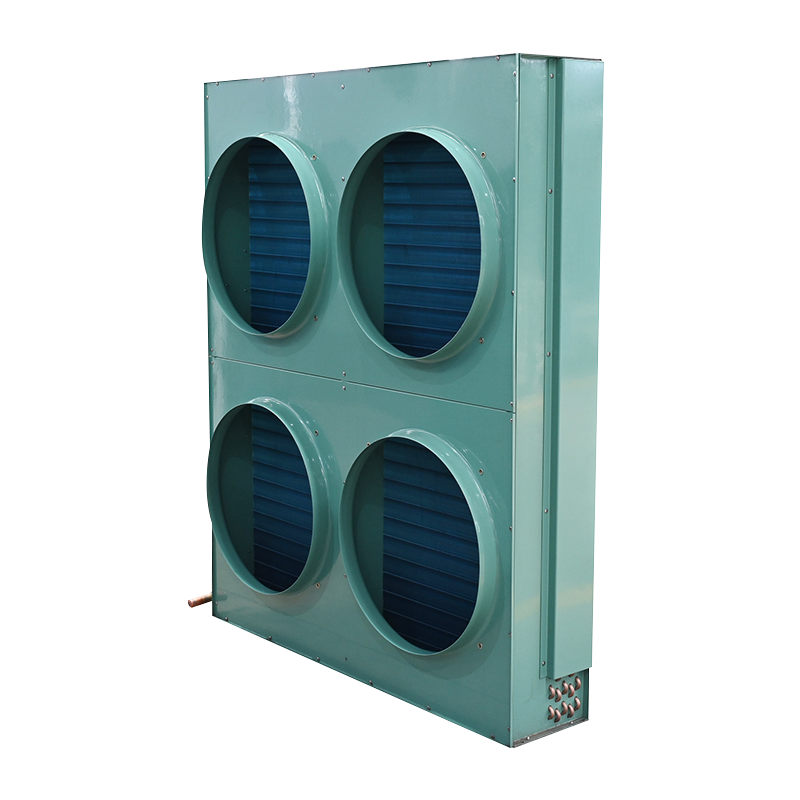
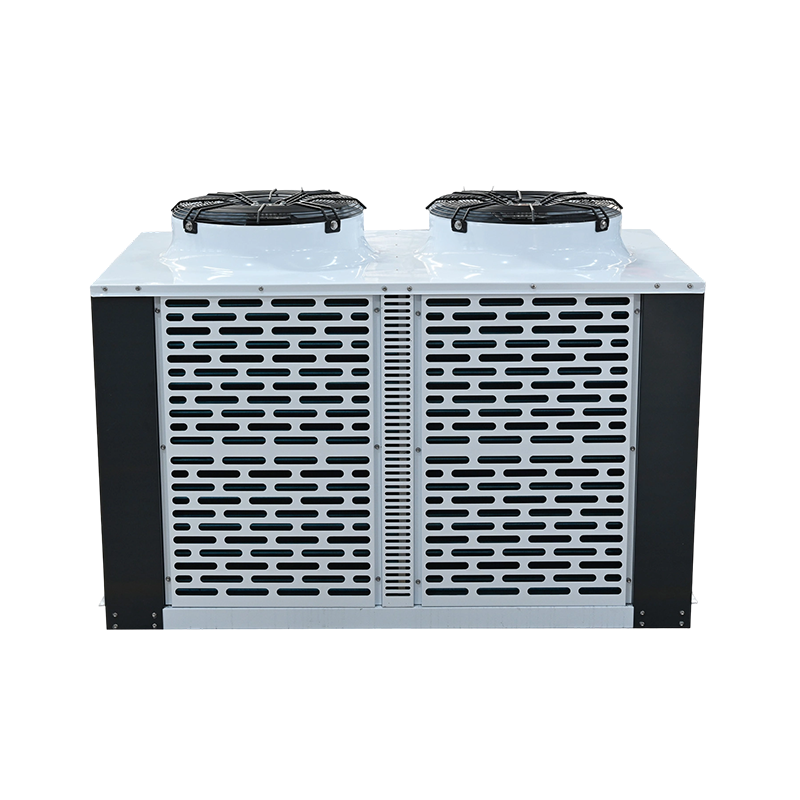
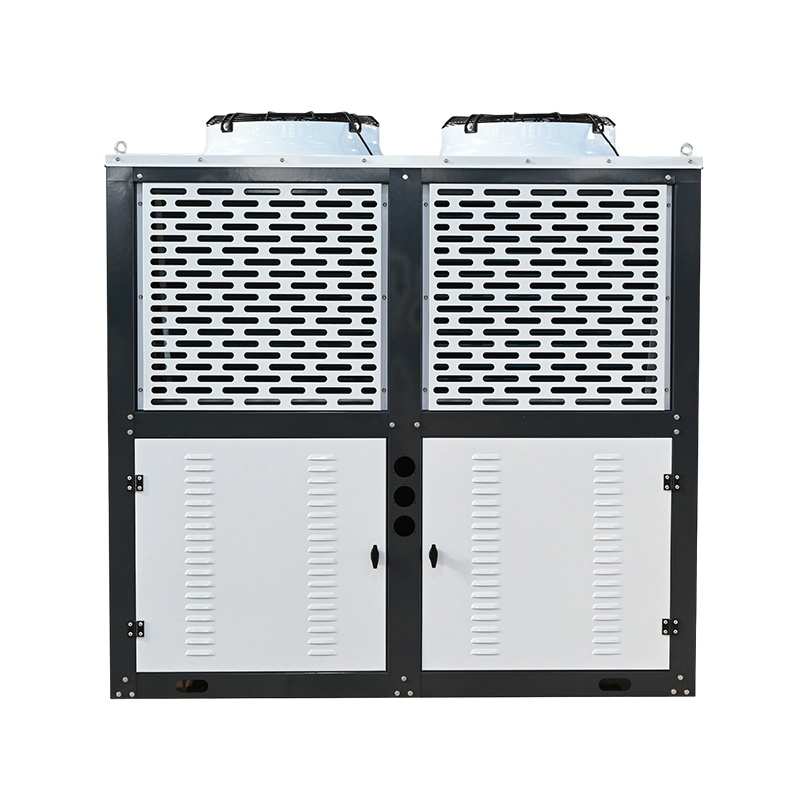
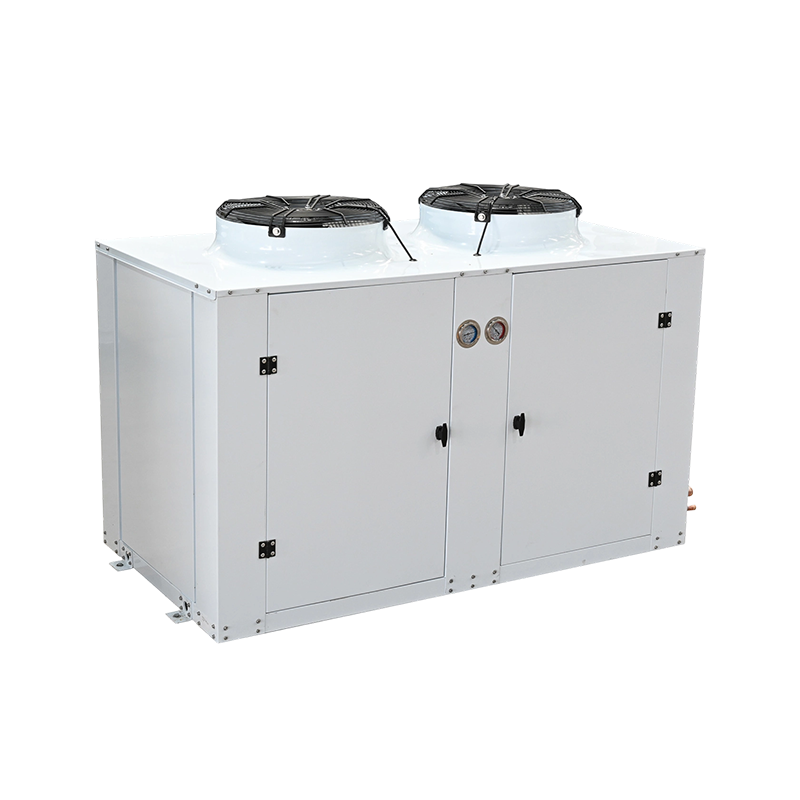
An Air-Cooled Condenser operates on the principle of forced convection heat transfer: a fan or array of fans draws or forces ambient air across a finned heat exchanger surface through which the process fluid flows. The temperature difference between the hot process fluid inside the tubes and the cooler ambient air outside drives heat transfer from the tube wall through the fin surface and into the air stream, which carries the heat away from the unit as the air exits the fan discharge.
Core Components of an Air-Cooled Condenser
Every Air-Cooled Condenser, regardless of size or application, consists of the same functional elements:
- Finned tube bundle: The primary heat transfer surface, consisting of carbon steel, stainless steel, or aluminum tubes with extruded or embedded aluminum fins. The fins increase the air-side surface area by a factor of 15 to 25 compared to bare tube, compensating for the relatively poor heat transfer coefficient of air compared to liquids
- Headers and manifolds: Welded or bolted distribution chambers at each end of the tube bundle that distribute the process fluid uniformly across all tubes and collect it after passing through the bundle
- Fan and drive assembly: Electric motor-driven axial fans that create the airflow across the tube bundle. Fan diameter ranges from 0.6 meters for small refrigeration condensers to 7 meters for large industrial Air-Cooled Condensers in power and process applications
- Plenum or fan stack: The structural housing that channels airflow either upward through the bundle (induced draft) or downward onto the bundle (forced draft) depending on the unit configuration
- Structural frame: Galvanized steel or painted carbon steel support structure that carries the tube bundle and fan assembly at the required elevation above grade for adequate air inlet clearance
Induced Draft vs. Forced Draft Configuration
The two principal fan configurations define the airflow path and have distinct performance implications. In an induced draft Air-Cooled Condenser, the fan is mounted above the tube bundle and pulls air upward through the finned surface. This configuration provides more uniform air distribution across the bundle, better resistance to hot air recirculation, and protects the fan and motor from inlet debris, but places the fan in the hot discharge air stream. In a forced draft configuration, the fan is below the tube bundle and pushes air upward through it, placing the fan in cool inlet air (extending motor and bearing life) but making the system more susceptible to hot air recirculation from the discharge.
Induced draft Air-Cooled Condensers are specified for approximately 70 percent of large industrial installations because their superior airflow uniformity and recirculation resistance outweigh the fan temperature disadvantage in most process environments. Forced draft units are preferred in very high ambient temperature locations where keeping the motor and fan bearings in cooler inlet air extends maintenance intervals.
Dry Bulb Temperature: The Critical Design Parameter
Unlike cooling towers, which can cool process water to temperatures approaching the wet bulb temperature of ambient air, an Air-Cooled Condenser is limited by the ambient dry bulb temperature. The process fluid outlet temperature from an Air-Cooled Condenser can theoretically approach the ambient dry bulb temperature, but in practice a minimum approach temperature of 8 to 15°C is achievable with economic heat transfer surface area. In climates where summer design dry bulb temperatures exceed 40°C, an Air-Cooled Condenser must be specified at the summer peak condition to ensure adequate heat rejection capacity during the hottest operating periods, which drives larger fin surface area and higher fan power requirements compared to units designed for cooler climates.
Industrial Air Cooler: Applications, Types, and Design Standards
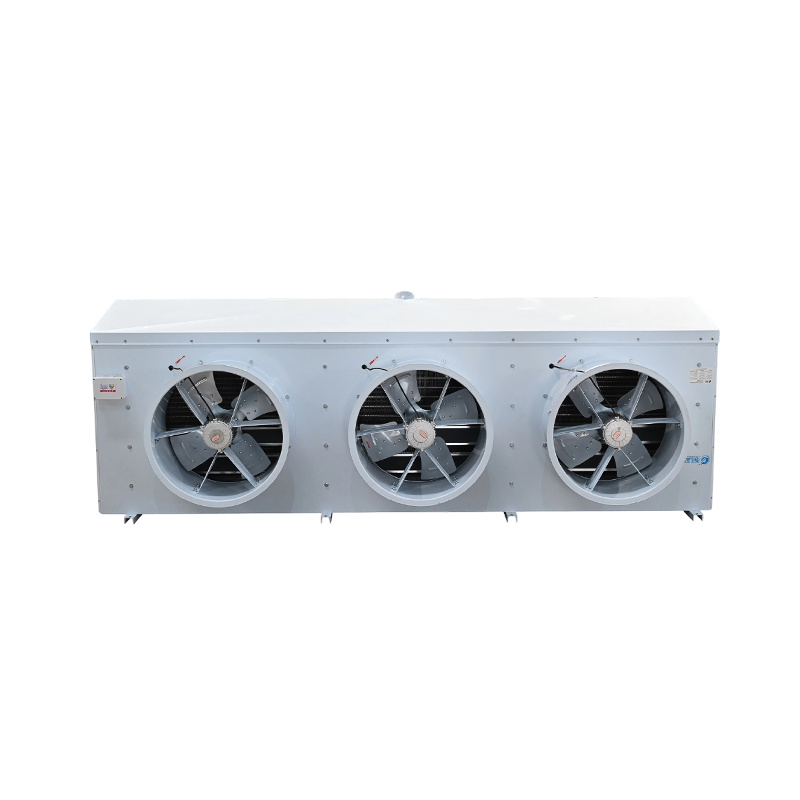
An Industrial Air Cooler, often called an air-fin cooler or air-fin heat exchanger in process industry terminology, is a heat exchanger in which process fluid flows through finned tubes while ambient air is circulated across the fin surface by motor-driven fans. The Industrial Air Cooler is the workhorse heat rejection technology of the petroleum refining, petrochemical, natural gas processing, and power generation industries, where large quantities of heat must be rejected continuously without access to cooling water or where cooling water scarcity or discharge regulations make water-based cooling impractical.
Primary Process Applications of Industrial Air Coolers
The Industrial Air Cooler appears at multiple points in petroleum refining and gas processing flowsheets:
- Overhead condensers on distillation columns: Cooling and condensing the vapor leaving the top of atmospheric distillation, vacuum distillation, and fluid catalytic cracking columns. These are among the largest Industrial Air Cooler installations in any refinery, with individual units carrying duties of 50 to 200 MW of heat rejection
- Gas compression aftercoolers: Cooling compressed natural gas, process gas, or instrument air after each compression stage to remove the heat of compression and reduce the temperature to the next stage inlet specification
- Lube oil and seal oil coolers: Maintaining rotating equipment lube oil and seal oil at design temperatures to protect bearings and mechanical seals in compressors, turbines, and large pumps
- Reactor product coolers: Cooling the effluent streams from catalytic hydroprocessing, reforming, and polymerization reactors before downstream separation steps
- Power plant steam condensers: Air-cooled steam condensers (ACC) at power plants in water-scarce regions, condensing the low-pressure exhaust steam from steam turbines to maximize thermal efficiency and enable water-free power generation
API 661: The Governing Standard for Industrial Air Coolers in Process Service
The American Petroleum Institute standard API 661 (Air-Cooled Heat Exchangers for General Refinery Service) is the primary design, materials, fabrication, inspection, and testing standard for Industrial Air Coolers in petroleum refining, petrochemical, and gas processing applications worldwide. API 661 specifies requirements for tube and header materials, fin geometry, fan performance, noise limits, vibration control, nozzle loads, and testing procedures that together ensure that Industrial Air Coolers delivered to process plants meet a baseline quality and reliability standard.
API 661 compliance is a mandatory procurement requirement for Industrial Air Coolers in any petroleum refinery or petrochemical plant that follows API standards, and most equipment specifications in the Middle East, North America, and Southeast Asian refining sectors require full API 661 compliance as the contractual baseline. Non-API equipment may be specified for lower-criticality applications such as lube oil coolers and instrument air aftercoolers where the cost savings of a commercial-grade unit justify the reduced specification margin.
Fin Tube Geometry: High-Frequency vs. Low-Frequency Fins
The geometry of the fins on the tubes of an Industrial Air Cooler directly controls its heat transfer effectiveness and its susceptibility to fouling. Standard API 661 fin specifications call for aluminum fins with a fin density of 8 to 12 fins per inch and a fin height of 12.7 to 15.9 mm. Higher fin density increases surface area per unit of tube length and therefore reduces the required tube bundle size for a given heat duty, but it also increases the risk of fin plugging by airborne dust, pollen, and process emissions in locations with poor air quality.
For Industrial Air Cooler installations in dusty environments such as cement plants, sand-exposed desert facilities, or locations near coal handling areas, a lower fin density of 5 to 7 fins per inch with wider fin spacing is specified to allow periodic cleaning with high-pressure water or air without the risk of fin damage. Field data from industrial air cooler installations in the Middle East shows that units with 10 to 12 fins per inch in sandy environments lose 15 to 25 percent of their heat transfer capacity within 12 months of operation without regular cleaning, underscoring the importance of matching fin geometry to the site's airborne contamination level.
Air-Cooled Condenser vs. Water-Cooled Condenser: When Air Cooling Is the Right Choice
The selection between an Air-Cooled Condenser and a water-cooled alternative is one of the most consequential decisions in plant utility design. Air-cooled systems eliminate water consumption entirely, a critical advantage in water-scarce regions and in facilities subject to zero-liquid-discharge regulations, but they require more heat transfer surface area, consume more fan power, occupy larger footprints, and cannot achieve the same low process outlet temperatures as water-cooled systems in hot climates.
| Parameter | Air-Cooled Condenser | Water-Cooled Condenser |
|---|---|---|
| Water consumption | Zero (no water required) | High (3 to 5 liters per kWh rejected) |
| Minimum approach temperature | 8 to 15°C above ambient dry bulb | 3 to 8°C above ambient wet bulb |
| Capital cost per MW heat duty | Higher (larger surface area needed) | Lower (water is effective heat sink) |
| Ongoing operating cost | Fan power only; no water treatment | Pump power plus water and chemical cost |
| Maintenance complexity | Fan, bearing, and fin cleaning | Scale, corrosion, biofouling, tube plugging |
| Performance in hot climates | Reduced capacity at high ambient temp | Less sensitive to ambient temperature |
| Environmental risk | Noise; no water discharge risk | Water discharge; Legionella risk in cooling towers |
The decision between air and water cooling is rarely black and white. Many industrial facilities use a hybrid approach in which the base heat rejection load is handled by air cooling and a supplemental evaporative or water-cooled system handles peak summer load periods when ambient temperature pushes the Air-Cooled Condenser beyond its design capacity. This hybrid strategy captures the water savings benefit of air cooling for most of the operating year while ensuring adequate heat rejection capacity during the hottest weeks of the year.
Selecting and Sizing an Air-Cooled Condenser or Industrial Air Cooler: Key Design Variables
Correct sizing of an Air-Cooled Condenser or Industrial Air Cooler requires quantifying several interdependent variables that together determine the required heat transfer surface area, fan power, and overall unit dimensions.
Heat Duty and Mass Flow Rate
The heat duty, expressed in megawatts or million BTU per hour, is the starting point for all sizing calculations. It is derived from the process heat balance: the product of the process fluid mass flow rate, its specific heat (or enthalpy change for condensing fluids), and the required temperature change across the unit. For a condensing application such as an overhead condenser, the heat duty includes both the sensible cooling of the vapor to the dew point and the latent heat of condensation, which together typically account for 80 to 95 percent of the total duty in a vapor-phase condensing service.
Ambient Design Conditions and Site Elevation
The ambient dry bulb design temperature is specified at the 2 percent exceedance level, meaning the temperature that is exceeded only 2 percent of hours in an average year, which typically corresponds to the hottest period of the summer for the site location. For sites in the Arabian Gulf region, design dry bulb temperatures of 46 to 50°C are commonly used, requiring Air-Cooled Condenser surface areas 30 to 40 percent larger than equivalent units designed for 35°C ambient conditions at the same process duty and outlet temperature requirement.
Site elevation above sea level affects air density, which directly affects fan performance and air-side heat transfer coefficient. At an elevation of 1,000 meters above sea level, air density is approximately 88 percent of its sea-level value. This 12 percent density reduction requires 12 percent more volumetric airflow (and correspondingly larger fans or higher fan speed) to deliver the same mass flow rate of cooling air across the tube bundle.
Tube Material and Wall Thickness for Process Fluid Compatibility
The tube material in an Industrial Air Cooler must be compatible with the process fluid at the operating temperature and pressure. Common material selections and their typical applications include:
- Carbon steel A214 or A179: Standard for hydrocarbon services below 400°C without hydrogen or wet H2S. Used in the majority of refinery overhead condensers and product coolers
- Stainless steel 304L or 316L: Specified for services containing corrosive fluids such as water with chlorides, acidic condensates, or chemical process streams requiring corrosion resistance
- Chrome-moly alloy (1.25Cr-0.5Mo, 2.25Cr-1Mo): Required for high-temperature services in hydrocracking, catalytic reforming, and high-pressure steam applications above 400°C where creep and hydrogen embrittlement are design concerns
- Duplex stainless steel 2205: Used in highly corrosive services such as sour water stripping overheads or amine regeneration services where both chloride stress corrosion cracking resistance and sulfide stress cracking resistance are required simultaneously
Fan Power and Noise: Two Often Underweighted Design Criteria
Fan power consumption in a large Industrial Air Cooler installation can be significant. A typical large refinery with 500 MW of air-cooled heat rejection capacity may have 20 to 40 MW of installed fan motor power, representing 4 to 8 percent of the refinery's own-use electrical load. Variable frequency drives (VFD) on air cooler fan motors provide the ability to reduce fan speed and power consumption during cooler ambient conditions when full airflow is not needed to meet process outlet temperature requirements, with demonstrated energy savings of 20 to 40 percent on an annual basis compared to fixed-speed fan operation.
Noise from Air-Cooled Condenser and Industrial Air Cooler installations is a planning and permitting consideration in facilities located near residential areas or in noise-sensitive industrial zones. Large axial fans generate broadband noise in the 75 to 90 dBA range at 1 meter from the fan, and the combined noise level from multiple units in a process plant can be significant at plant fence lines. Noise mitigation options include low-noise fan blade profiles, reduced tip-speed fan designs, acoustic enclosures around motor and gearbox components, and strategic positioning of air cooler bays within the plant layout to use existing structures as noise barriers.
Operation, Maintenance, and Performance Monitoring of Air-Cooled Condensers
Maintaining an Air-Cooled Condenser or Industrial Air Cooler at its design performance requires a disciplined inspection and maintenance program focused on the two most common causes of performance degradation: fin fouling and mechanical deterioration of the fan and drive system.
Fin Fouling: The Primary Cause of Performance Loss
Fins on an Air-Cooled Condenser accumulate dust, pollen, seed fibers, insect debris, and process emissions over time, progressively reducing the airflow through the fin bundle and increasing the air-side heat transfer resistance. Studies of operating air-cooled heat exchangers show that a 1 mm uniform dust layer on the fin surface reduces air-side heat transfer coefficient by 8 to 15 percent, and in severe fouling environments this accumulation can occur within a single operating season. The practical consequence is that the process outlet temperature rises above its design value, potentially triggering high-temperature alarms, reduced throughput, or in condensing services, incomplete condensation with vapor carry-through to downstream equipment.
Fin cleaning frequency should be established based on a site-specific fouling rate assessment during the first year of operation. Most process plant maintenance programs schedule Air-Cooled Condenser fin cleaning during turnaround shutdowns, but facilities in high-fouling environments may require one or two additional in-service cleanings per year using high-pressure water washing or compressed air blowing from the clean side of the bundle (opposite to the normal airflow direction) to dislodge accumulated debris.
Fan and Drive System Maintenance
The fan and drive system of an Industrial Air Cooler requires regular inspection of fan blade pitch angle (for variable pitch fans), blade condition for erosion or impact damage, bearing lubrication and condition monitoring, V-belt tension and wear inspection (for belt-driven units), and gearbox oil level and condition. Fan blade imbalance from erosion, impact damage, or ice accumulation in cold climates is a common cause of excessive vibration that accelerates bearing wear and can cause structural fatigue in the fan stack if left unaddressed.
Vibration monitoring on fan motor bearings using continuous vibration sensors connected to the plant control system provides early warning of developing bearing problems and fan imbalance, allowing corrective action to be scheduled during a planned maintenance window rather than responding to an emergency shutdown. Implementing continuous vibration monitoring on Air-Cooled Condenser fan motors has demonstrated an average reduction of 35 to 50 percent in unplanned downtime events related to fan mechanical failures across multiple refinery and gas plant installations where this technology has been deployed.
Frequently Asked Questions About Air-Cooled Condenser and Industrial Air Cooler
1. What is an Air-Cooled Condenser and how does it work?
An Air-Cooled Condenser is a heat exchanger that rejects heat from a process fluid or refrigerant by passing ambient air across finned tubes containing the hot fluid. Motor-driven fans create forced airflow across the finned surface. The temperature difference between the hot tube-side fluid and the cooler ambient air drives heat transfer from the fluid through the tube and fin surface into the air stream, which carries the heat away from the unit. No water is required at any point in this process.
2. What is the difference between an Air-Cooled Condenser and an Industrial Air Cooler?
Both use the same air-over-finned-tube heat exchange principle, but they are applied differently. An Air-Cooled Condenser is specifically designed to condense vapor-phase process fluid or refrigerant, managing the two-phase condensation process. An Industrial Air Cooler is the broader category that includes any air-fin heat exchanger in process service, including single-phase liquid coolers, gas coolers, and condensers. All Air-Cooled Condensers are Industrial Air Coolers, but not all Industrial Air Coolers are condensers.
3. Why choose an Air-Cooled Condenser over a water-cooled condenser?
The primary reasons to choose an Air-Cooled Condenser are zero water consumption (critical in water-scarce regions and for facilities subject to zero-liquid-discharge regulations), elimination of cooling water system infrastructure and chemical treatment costs, no risk of Legionella from cooling tower operation, and lower ongoing operational complexity. The trade-offs are higher capital cost, larger footprint, and a minimum achievable outlet temperature limited by the ambient dry bulb temperature rather than the lower wet bulb temperature that water-cooled systems can approach.
4. What is API 661 and why does it matter for Industrial Air Coolers?
API 661 is the American Petroleum Institute standard that specifies design, materials, fabrication, inspection, and testing requirements for Industrial Air Coolers in petroleum refining, petrochemical, and gas processing service. Compliance with API 661 is the contractual baseline requirement for Industrial Air Cooler procurement in most refinery and major process plant projects worldwide. It ensures that equipment meets a validated quality and reliability standard and is suitable for the operating pressures, temperatures, and service conditions of industrial process applications.
5. How does hot ambient temperature affect Air-Cooled Condenser performance?
Since an Air-Cooled Condenser uses ambient air as the cooling medium, its performance degrades when ambient temperature rises. At higher ambient temperatures, the temperature difference between the hot process fluid and the inlet air is reduced, which reduces the rate of heat transfer per unit of fin surface area. The practical effect is that the process fluid outlet temperature rises above its design value during hot weather. Units must be sized for the peak summer ambient design temperature to ensure adequate performance during the hottest operating periods.
6. What causes performance loss in an Industrial Air Cooler over time?
The two primary causes of performance degradation are fin fouling (accumulation of dust, pollen, and debris on the fin surface that restricts airflow and increases air-side thermal resistance) and mechanical degradation of the fan and drive system (worn bearings, imbalanced or damaged fan blades, belt wear on belt-drive units). Fin fouling can reduce heat transfer capacity by 15 to 25 percent in high-fouling environments within a single operating season if cleaning is not performed regularly.
7. What is the difference between induced draft and forced draft in an Air-Cooled Condenser?
In an induced draft Air-Cooled Condenser, fans are mounted above the tube bundle and pull air upward through the fin surface. In a forced draft configuration, fans are below the tube bundle and push air upward through it. Induced draft provides more uniform airflow distribution and better resistance to hot air recirculation, making it the preferred choice for approximately 70 percent of large industrial installations. Forced draft places fans in cooler inlet air, extending motor and bearing life, and is preferred in very high ambient temperature locations.
8. How is an Industrial Air Cooler sized for a specific process application?
Sizing requires establishing the heat duty from the process heat balance, specifying the inlet and outlet temperatures for the process fluid and the ambient design dry bulb temperature, selecting the tube material based on process fluid compatibility, and calculating the required air-side surface area using heat transfer correlations for the selected fin geometry. The calculation also accounts for site elevation effects on air density and fan performance, and includes an appropriate fouling resistance allowance for the expected service environment.
9. Can variable frequency drives reduce operating costs on Air-Cooled Condenser fans?
Yes, significantly. Variable frequency drives on Air-Cooled Condenser fan motors allow fan speed to be reduced during cooler ambient conditions when full airflow is not required to meet process outlet temperature specifications. Because fan power varies with the cube of fan speed, a 20 percent reduction in fan speed reduces power consumption by approximately 49 percent. Annual energy savings of 20 to 40 percent compared to fixed-speed fan operation have been demonstrated in industrial installations, making VFD retrofits one of the most cost-effective energy efficiency investments in air-cooled heat exchange systems.
10. What tube materials are used in Industrial Air Coolers for corrosive process services?
For mildly corrosive services, carbon steel is standard. For services containing chlorides or acidic condensates, 316L stainless steel provides adequate corrosion resistance. Duplex stainless steel 2205 is specified for services requiring simultaneous resistance to chloride stress corrosion cracking and sulfide stress cracking. For high-temperature hydrogen-containing services, chrome-moly alloys (1.25Cr-0.5Mo or 2.25Cr-1Mo) are required. The correct material selection should always be based on a formal materials review considering the full composition, temperature, and pressure of the process fluid at operating conditions.
-
When a food-processing plant in a water-scarce region evaluates its refrigeration options, the cond...
READ MORE -
When a food processor plans a new -18°C freezer, the first equipment decision is usually about the ...
READ MORE -
The Operational Mandate of the Air-Cooled Condenser An air-cooled condenser is a direct dry cooling...
READ MORE -
What Is an Industrial Air Cooler and How Does It Work in a Refrigeration System? Picture a medium-s...
READ MORE -
Looking for an affordable, energy-saving alternative to air conditioners for residential, commercia...
READ MORE -
Air-cooled condensers (ACCs) offer a compelling and increasingly well-documented set of advantages o...
READ MORE

- Email: [email protected]
- Phone: +86-15258555916
- Add: 301 Punan Avenue, Pukou Street, Shengzhou City, Shaoxing City, Zhejiang Province.China
Copyright © Zhejiang Lanxi Refrigeration Equipment Co., Ltd. All Rights Reserved.
浙ICP备2022034605号-1
 Custom Refrigeration Equipment Manufacturers
