
-
 +86-15258555916
-
 [email protected]

 English
 中文简体
中文简体 русский
 Tiếng Việt
Maximizing Industrial Efficiency and Water Conservation via Advanced Air-Cooled Condenser Layouts
Content
- 1 The Operational Mandate of the Air-Cooled Condenser
- 2 Thermodynamic Mechanics and Spatial Configurations
- 3 Comparative Analysis of Core Condenser Engineering Formats
- 4 Materials Optimization and Extended Surface Geometry
- 5 Step-by-Step Field Maintenance and Wash Protocol
- 6 Mitigating Environmental and Mechanical Degradation Factors
The Operational Mandate of the Air-Cooled Condenser
An air-cooled condenser is a direct dry cooling heat exchanger engineered to reject thermal energy from a high-pressure refrigerant vapor or steam velocity straight to the surrounding atmosphere without requiring an intermediary liquid medium. By utilizing large mechanical fan arrays to drive ambient airflow across an dense field of finned tubes, this configuration completely eliminates industrial water consumption, water treatment chemicals, and thermal plume discharge. Implementing a modern dry cooling infrastructure reduces plant localized environmental footprint while eliminating the millions of gallons of daily water evaporation typically lost in standard evaporative cooling tower setups.
In power generation, chemical processing, and large-scale commercial HVAC systems, the condenser functions as the primary thermal sink for the entire thermodynamic cycle. While wet cooling configurations struggle with tightening environmental regulations and local water scarcity, direct-to-air thermal rejection provides total operational autonomy. Selecting the proper fin profile, tube geometry, and fan pitch determines whether the system can preserve its design vacuum pressure and heat transfer coefficients during extreme summer peak dry-bulb ambient conditions.
Thermodynamic Mechanics and Spatial Configurations
The heat transfer performance of an air-cooled condenser is governed by the log mean temperature difference (LMTD) between the internal process fluid and the incoming ambient air. Because air has a substantially lower specific heat capacity than liquid water, dry condensers require vast surface areas and immense volumetric air delivery to match the cooling capacity of traditional shell-and-tube setups.
The Classic A-Frame Structural Layout
The dominant structural blueprint for utility-scale dry cooling is the A-frame configuration. Finned tube bundles are arranged in slanted roofs resembling an inverted "V", with large axial fans positioned underneath the apex platform. This roof shape reduces the physical footprint by up to 45% compared to horizontal layouts, optimizes condensate draining via gravity down to the collection header, and shields the delicate fin fields from crosswind distortion and heavy debris accumulation.
Horizontal and V-Bank Modular Arrays
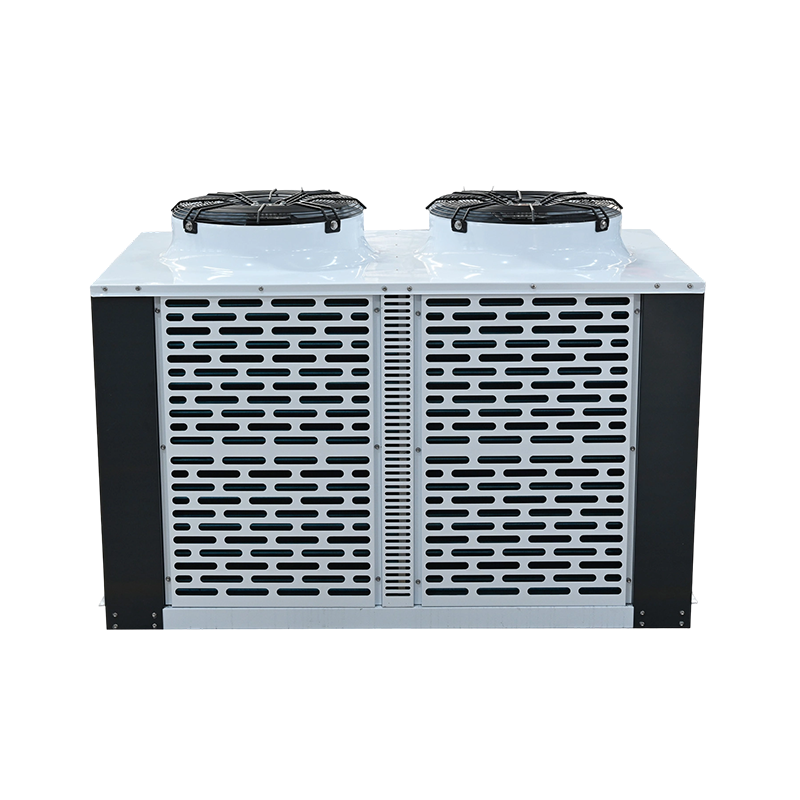
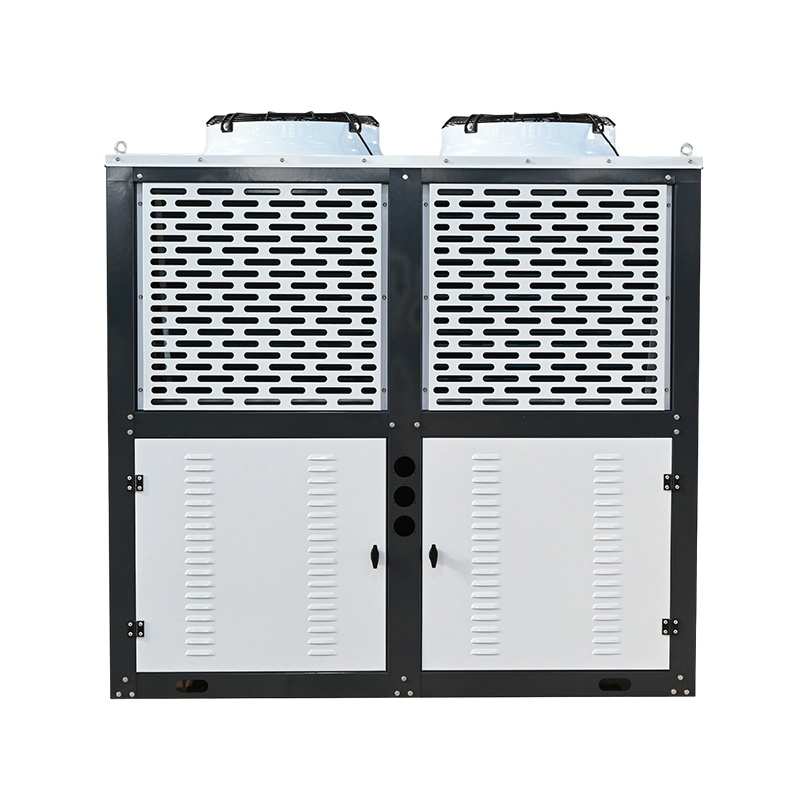
For light industrial facilities and commercial chiller systems, horizontal or standard V-bank arrays are utilized. These flat beds rely on induced or forced draft configurations to draw air through the sides and expel it vertically. While highly accessible for washing and routine maintenance, flat configurations are susceptible to hot air recirculation—a phenomenon where exhausted warm air is drawn back down into the intake, raising the ambient inlet temperature and dropping the thermal efficiency of the core.
Comparative Analysis of Core Condenser Engineering Formats
Selecting an ideal heat dissipation framework requires balancing installation capital expenditure against long-term maintenance overhead and natural resource availability. The table below highlights the operational discrepancies between wet, dry, and hybrid thermal rejection methods.
| Technical Factor Profile | Wet Evaporative Tower | Air-Cooled Condenser (ACC) | Hybrid Adiabatic System |
|---|---|---|---|
| Process Water Consumption | High (Continuous Evaporation) | Zero (Absolute Dry Rejection) | Low (Peak Ambient Shaving Only) |
| Limiting Thermal Threshold | Ambient Wet-Bulb Temperature | Ambient Dry-Bulb Temperature | Approaching Wet-Bulb Limits |
| Parasitic Fan Power Demand | Low to Moderate | High (Large Volume Axial Fans) | Moderate |
| Chemical Water Treatment Costs | Significant (Scale/Biocide Control) | Zero Costs | Minimal to Low |
| Sensitivity to Scaling/Fouling | High Internal Tube Scale | Low (External Airborne Dust Only) | Moderate On Pre-Cooling Pads |
The clear advantage of an air-cooled condenser is its complete freedom from chemical treatment requirements and environmental discharge permits. While wet cooling towers achieve a tighter temperature approach by utilizing wet-bulb cooling boundaries, they expose the plant to ongoing regulatory compliance, legionella testing mandates, and continuous operational resource costs.
Materials Optimization and Extended Surface Geometry
Because air is an inefficient heat transfer fluid compared to water, the external surfaces of the condenser tubes must be extended using specialized fin profiles. The choice of fin geometry and metal substrate directly determines the rate of thermal dissipation and the system's resilience to corrosive environments.
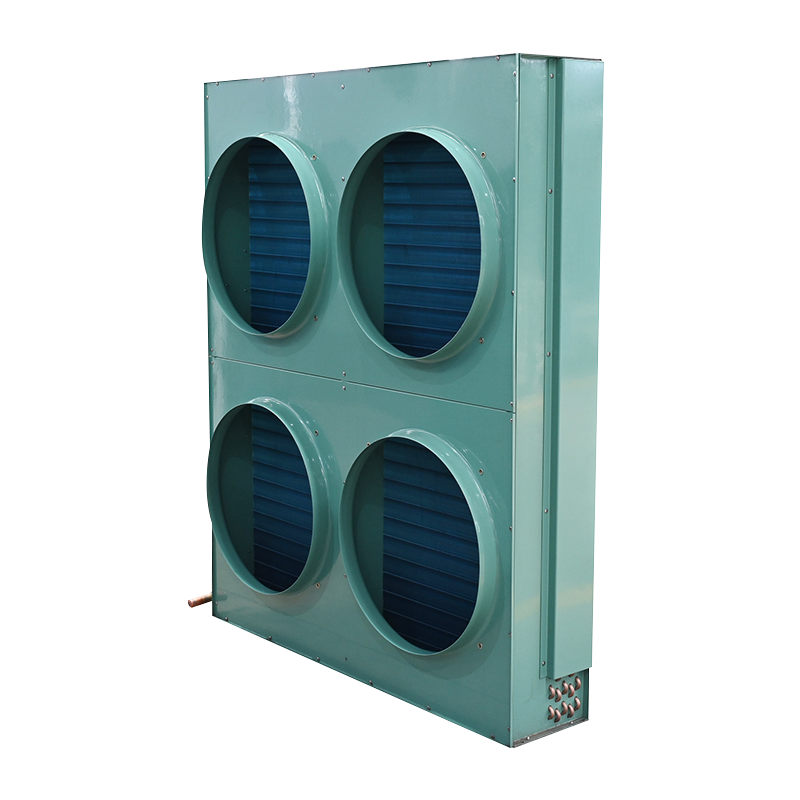
- Single-Tube Flat Profile (Wavy Fin): Utilizes a wide, flattened steel or aluminum core tube welded to continuous corrugated external fins. This profile creates controlled turbulence in the crossflowing air, increasing the convective heat transfer coefficient while minimizing air-side pressure drops.
- Hot-Dip Galvanized Carbon Steel (HDG): Ideal for rugged heavy industrial layouts. Carbon steel tubes are mechanically wrapped with steel fins and completely submerged in a molten zinc bath. This creates a solid metallurgical bond that maximizes conduction and provides excellent protection in harsh chemical environments.
- Bi-Metallic Aluminum-Crimped Tubes: Features lightweight aluminum fins mechanically tensioned over a high-strength carbon steel, stainless steel, or copper base tube. This combines the superior internal pressure rating of the inner tube material with the excellent thermal conductivity and reduced weight of aluminum.
Step-by-Step Field Maintenance and Wash Protocol
Airborne fouling from dust, pollen, and debris acts as an insulative blanket over the fine fin gaps, driving up condensing temperatures and system energy consumption. Executing a semi-annual high-pressure wash protocol restores the system to its baseline heat transfer capability.
- System De-Energization and Isolation: Lock out and tag out all fan motor drives to prevent unintended rotation. Allow internal tube temperatures to cool down to safe ambient levels to prevent thermal shock fractures along the tube-to-header weld seams.
- Dry Debris Removal: Use low-pressure industrial vacuums or soft-bristled brooms to clear out leaves, plastic debris, or large particulate sheets that have collected on the windward side of the fin array.
- Calibrating the Spray Equipment: Adjust pressure washer nozzles to output between 80 and 120 bar max pressure, using a wide flat-spray nozzle. The water stream must be directed perfectly perpendicular (90 degrees) to the fin face; hitting the fins at an angle will bend and crush the delicate metal edges, permanently choking airflow.
- Applying Chemical Cleaners: For coastal or high-grease areas, apply a biodegradable, non-acidic foaming cleaner over the fin core. Allow the solution to dwell for 10 minutes to loosen baked-on environmental films without dissolving the protective zinc or aluminum oxide layers.
- Final Rinsing and Inspection: Flush the core thoroughly with clean, low-mineral water from top to bottom until the discharge run-off is clear. Inspect the array with an industrial comb tool to straighten out any pre-existing bent fins before restarting the main fan drives.
Mitigating Environmental and Mechanical Degradation Factors
Operating large-scale air-cooled heat exchangers exposes the installation to volatile outdoor weather and mechanical stress. Addressing these aerodynamic and thermal issues is critical to preventing unscheduled plant curtailments or structural failures.
High Crosswind Interference Controls
Strong crosswinds can disrupt the uniform plume of air leaving the top of an ACC roof array. Wind striking the periphery creates low-pressure zones underneath the platform, causing fan blade stalling, severe vibration spikes, and air-recirculation loops. Installing perimeter wind screens or solid fabric draft curtains beneath the deck stabilizes intake pressures and maintains cooling consistency during high winds.
Sub-Zero Winter Freeze Protection Logic
In northern latitudes, operating steam-cycle condensers in sub-zero winter temperatures carries a major risk of localized freezing inside the tubes. If steam flow drops or is poorly distributed across the bundles, trapped condensate can freeze instantly, rupturing the tubes. To counter this, systems utilize variable frequency drives (VFDs) to reverse the rotation of select fan modules. Reversing the fans draws warm air back down through the core, safely thawing out vulnerable perimeter tube cells.
-
What Air-Cooled Condenser and Industrial Air Cooler Technologies Actually Do An Air-Cooled Condense...
READ MORE -
Air-cooled condensers (ACCs) offer a compelling and increasingly well-documented set of advantages o...
READ MORE -
When a food-processing plant in a water-scarce region evaluates its refrigeration options, the cond...
READ MORE -
A freezer warehouse holding -30°C rooms loses money quickly once summer heat drives condensing pres...
READ MORE -
When a food processor plans a new -18°C freezer, the first equipment decision is usually about the ...
READ MORE -
Walk into a cold storage room and feel the air near the door. If one corner is warmer than another,...
READ MORE

- Email: [email protected]
- Phone: +86-15258555916
- Add: 301 Punan Avenue, Pukou Street, Shengzhou City, Shaoxing City, Zhejiang Province.China
Copyright © Zhejiang Lanxi Refrigeration Equipment Co., Ltd. All Rights Reserved.
浙ICP备2022034605号-1
 Custom Refrigeration Equipment Manufacturers
