
-
 +86-15258555916
-
 [email protected]

 English
 中文简体
中文简体 русский
 Tiếng Việt
Maintain Your Evaporative Condenser for Long Life and Trouble-free Operation
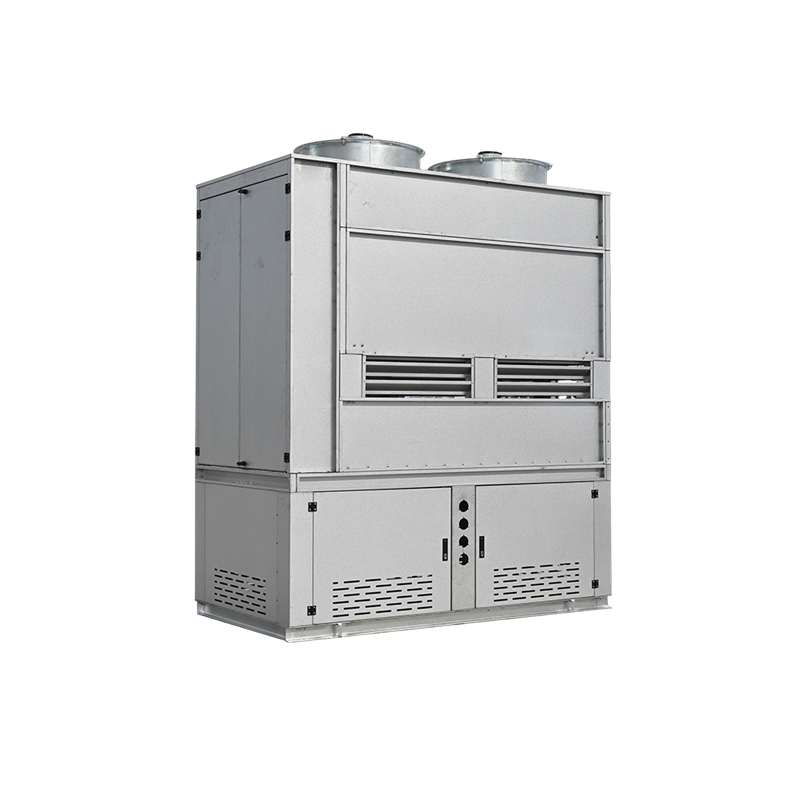
Evaporative condensers are a popular means of refrigerant condensing in industrial applications. They provide low condensing temperatures while maintaining reasonable electrical costs. The efficiency of an evaporative condenser is directly related to the effectiveness of the evaporation. Evaporation can be hindered by a number of factors including, the condenser water quality, the condition of the condenser coils and the condition of the mechanical equipment.
There are two major systems in an evaporative condenser - the recirculated water system and the fan and drive system. It is these two systems, working in concert, that create the evaporative cooling effect. These systems must be maintained for trouble-free and energy efficient operation.
Fan and Drive System
The fan and drive system comprise the moving parts of the condenser. The fan and pump motor will require routine maintenance as well as the fan shaft bearings and the belts that drive the fans. Without these components operating at peak efficiency, the condenser cannot perform as needed.
Recirculated Water System
By definition, evaporative condensers evaporate water. That water, if not properly controlled, can lead to mineral buildup and corrosion. Just as when you boil water on a stove, the impurities that are in the water are left behind when the water evaporates. If left uncontrolled in an evaporative condenser, the minerals will precipitate out of the water and leave a layer of scale on the coil. Scale is perhaps the number one reason condensers lose their efficiency over time. Just a small quantity of scale can have a dramatic effect on condenser performance. Therefore, controlling the level of minerals in the water is very important.
In addition to controlling scale, the water chemistry must be maintained so as not to create a corrosive environment for the evaporative condenser. Many condensers are built from galvanized steel. While zinc provides excellent corrosion resistance for its cost, it is also a reactive metal that must be protected. You only have a finite supply of zinc when the condenser is built and when it’s gone you have to replace the unit, so you don’t want to squander it.
Monitoring the pH of the recirculated water is perhaps the most important aspect of water chemistry maintenance. The pH measures the acidity or alkalinity of the water and is a quick indication of the corrosivity. A very low or very high pH will indicate that the water chemistry is corrosive to galvanized steel.
A high pH may also indicate a condition known as white rust. White rust is the formation of white, porous deposits that are fluffy or waxy and are actually products of zinc corrosion. White rust forms in mostly new condensers operating at pH’s of 8.3 or greater. Preventing white rust is best accomplished through passivation of the condenser in the first weeks of operation. Passivation inhibits white rust formation.
In the end, controlling the water system is as important as lubricating the fan shaft bearings. Neglecting the water system will result in corrosion and premature replacement of the condenser. For instances where the water quality cannot be controlled through the bleed line on the condenser, a reputable water treatment specialist familiar with the local conditions should be consulted to control the hardness, pH etc. of the water.
A well-conceived equipment design, in combination with a sound preventive maintenance program and diligence in monitoring a condenser’s water chemistry, will provide long equipment life and trouble-free operation.
-
While searching for a evaporator and condenser manufacturer, Lanxi Refrigeration is certainly worth ...
READ MORE -
A freezer warehouse holding -30°C rooms loses money quickly once summer heat drives condensing pres...
READ MORE -
In modern industrial refrigeration and HVAC systems, energy efficiency, compact footprint and stabl...
READ MORE -
Looking for an affordable, energy-saving alternative to air conditioners for residential, commercia...
READ MORE -
When a food-processing plant in a water-scarce region evaluates its refrigeration options, the cond...
READ MORE -
Cold Storage Temperature Classification & Basic Cooling Load High temp storage (0~8°C): 100W/...
READ MORE

- Email: [email protected]
- Phone: +86-15258555916
- Add: 301 Punan Avenue, Pukou Street, Shengzhou City, Shaoxing City, Zhejiang Province.China
Copyright © Zhejiang Lanxi Refrigeration Equipment Co., Ltd. All Rights Reserved.
浙ICP备2022034605号-1
 Custom Refrigeration Equipment Manufacturers
