
-
 +86-15258555916
-
 [email protected]

 English
 中文简体
中文简体 русский
 Tiếng Việt
Barrel-Pump Unit vs. Integrated Refrigeration Unit: Industrial Guide
Content
- 1 Mechanical Architecture and Fluid Dynamics
- 2 Thermal Efficiency under Variable Load Profiles
- 3 Footprint Optimization and Installation Logistics
- 4 Maintenance, Serviceability, and Lifecycle Longevity
- 5 Risk Mitigation: Cavitation, Vibration, and System Longevity
- 6 Frequently Asked Questions
- 6.1 What are the primary indicators that my plant requires a standalone barrel-pump unit rather than an integrated unit?
- 6.2 How do environmental regulations affect the choice between these two cooling architectures?
- 6.3 Can an integrated refrigeration unit handle corrosive process chemicals?
- 6.4 What is the typical difference in initial capital expenditure (CAPEX) between the two systems?
- 6.5 Which system offers better scalability if our production capacity increases in the future?
Industrial thermal management and fluid dynamics demand high-performance architectures capable of maintaining precise temperature controls under fluctuating thermal loads. In large-scale chemical processing, food beverage preservation, and pharmaceutical manufacturing, engineering teams frequently evaluate two distinct approaches to fluid circulation and cooling. Selecting between a decentralized barrel-pump unit and a self-contained integrated refrigeration unit defines the facility's long-term energy profile, maintenance schedule, and structural footprint.
The Strategic Verdict: For facilities prioritizing a minimal physical footprint, rapid deployment, and single-source accountability, the integrated refrigeration unit stands as the superior choice. Conversely, for heavy-duty process applications requiring high-volume fluid circulation, exceptional serviceability, and decoupled modular scalability, deploying a dedicated barrel-pump unit paired with remote heat exchangers delivers lower long-term total cost of ownership and superior operational uptime.
Mechanical Architecture and Fluid Dynamics
Understanding the core engineering differences requires looking closely at how fluid and thermal energy move through each system. A standalone fluid transport architecture relies on specialized velocity profiles, whereas packaged thermal systems combine multiple mechanical stages into a single chassis.
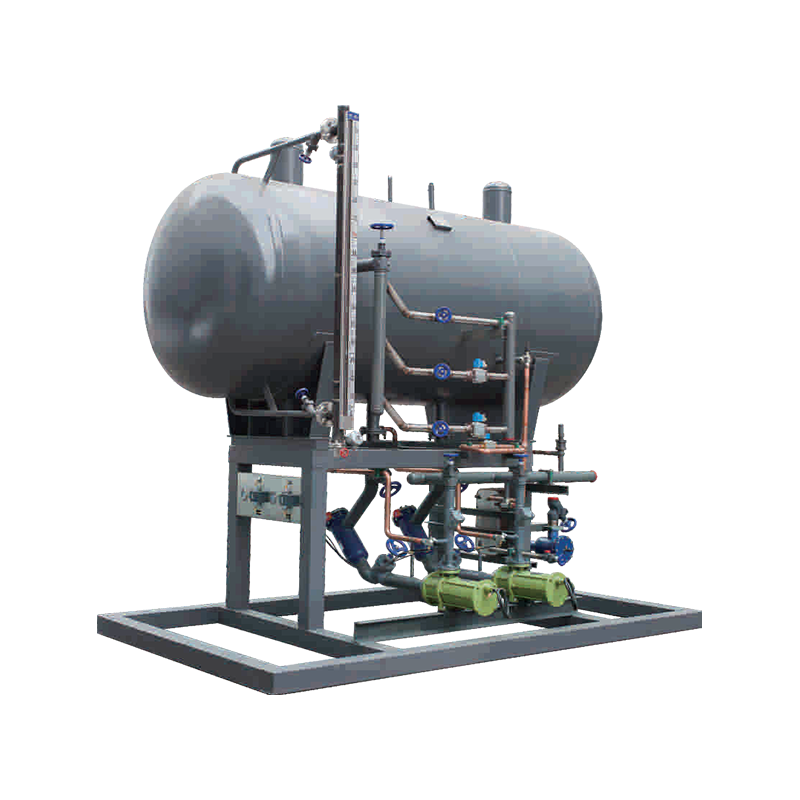
A conventional barrel-pump unit isolates the fluid dynamics from the primary chilling mechanism. It acts as a heavy-duty prime mover, designed specifically to handle high-viscosity fluids or volatile refrigerants at extreme pressures without suffering from cavitation or thermal binding.
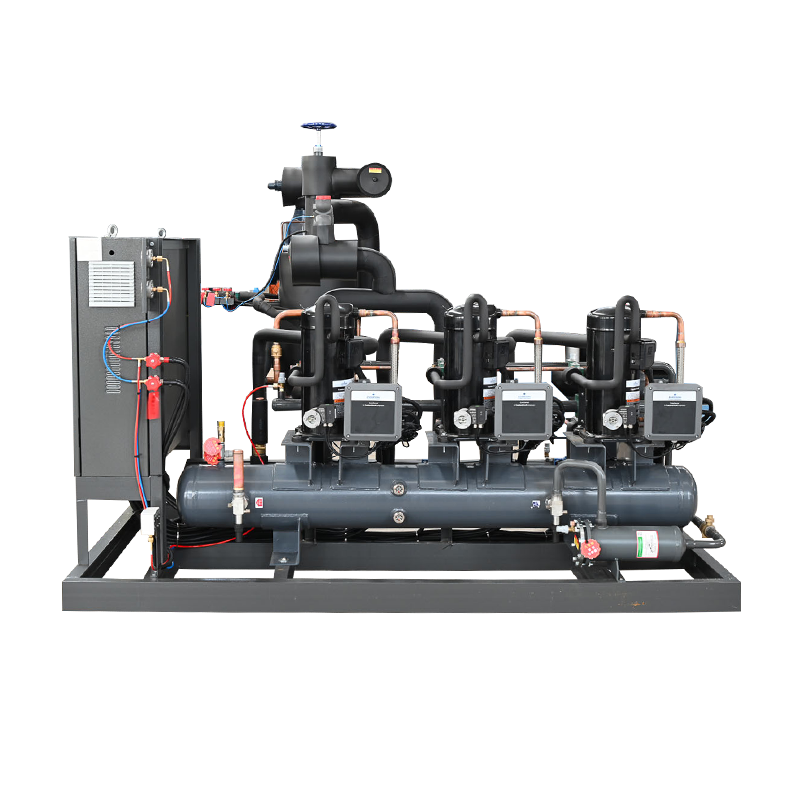
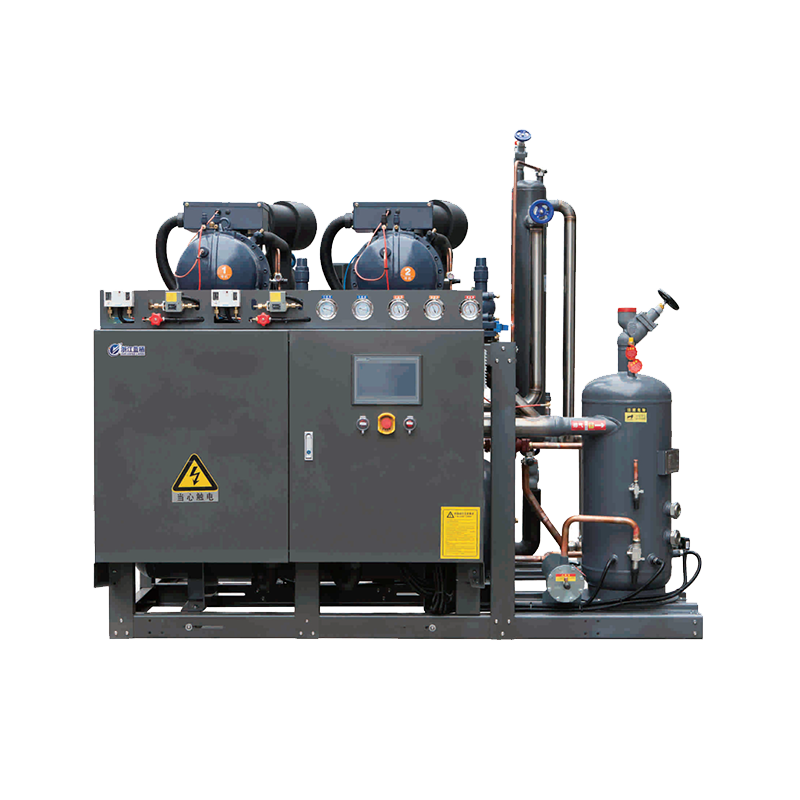
In contrast, an integrated refrigeration unit houses the entire thermodynamic loop—compressor, condenser, expansion valve, and evaporator—alongside internal circulation pumps within a single framework. While this provides an optimized internal balance, the compact internal piping can introduce higher hydraulic friction losses. For instance, pumping a 30% ethylene glycol solution at -10°C through an integrated system often results in a 15% to 20% higher pressure drop across internal bends compared to the straight, high-diameter suction lines typical of a custom-engineered pumping package.
Thermal Efficiency under Variable Load Profiles
Industrial plants rarely operate at a static thermal equilibrium. Processing facilities experience significant batch fluctuations, seasonal ambient air variations, and shifts in production volumes. The ability of the thermal management infrastructure to scale its energy consumption relative to these shifts dictates monthly utility expenditures.
| Operational Metric | Decentralized Barrel-Pump Setup | Packaged Integrated Refrigeration Unit |
|---|---|---|
| System Coefficient of Performance (COP) | 3.8 – 4.5 (Optimized remotely) | 3.2 – 3.9 (Compact constraints) |
| Footprint Density (per kW cooling) | High (Distributed equipment) | Ultra-Low (All-in-one chassis) |
| Installation & Commissioning Time | 10 – 14 Days (On-site piping) | 1 – 2 Days (Plug-and-play) |
| Fluid Cavitation Risk Mitigation | Excellent (High net positive suction head) | Moderate (Internal piping limits) |
| Redundancy Configurations | Easily add parallel standby pumps | Requires complete redundant second unit |
Data gathered from field operations indicates that an integrated refrigeration unit utilizing variable-frequency drive (VFD) screw compressors excels during low-load conditions, turndown ratios can drop safely to 25% of maximum capacity. However, when operating at peak load, a heavy-duty pumping assembly linked to a dedicated, oversized low-pressure receiver vessel yields superior thermal stability, maintaining fluid temperatures within ±0.5°C, whereas integrated units may fluctuate up to ±1.8°C during sudden thermal spikes.
Footprint Optimization and Installation Logistics
Real estate inside modern processing plants comes at a premium. Structural load capacities, ventilation access, and proximity to the main production line heavily influence equipment selection. The physical manifestation of these two systems presents distinct logistical choices for project managers.
Packaged chilling systems are factory-tested, pre-charged with refrigerant, and built on unified structural steel skids. This layout minimizes on-site mechanical welding, electrical conduit runs, and engineering oversight. However, because everything is packed tightly together, the physical weight per square meter is intense, often requiring reinforced concrete pads.
The Integrated Unit Advantage
By keeping all components within one enclosure, the integrated refrigeration unit eliminates long external refrigerant runs. This reduces the overall system refrigerant charge by up to 35%, significantly easing environmental compliance reporting and minimizing potential leak paths throughout the facility.
The Modular Pump Flexibility
A distributed barrel-pump unit allows engineers to place the heavy pumping asset directly adjacent to the process line while positioning the noisy, heat-generating condenser components on the building roof or outdoors, preventing secondary heat accumulation inside the clean production zone.
Maintenance, Serviceability, and Lifecycle Longevity
The total cost of ownership is profoundly affected by how easily technicians can perform routine maintenance, source replacement parts, and repair unexpected mechanical failures. Equipment downtime can cost processing plants thousands of dollars per hour, making serviceability a top priority.
Because an integrated system tightly clusters components, accessing internal components like the evaporator bundle or compressor oil filters often requires removing adjacent piping or electrical trays. This can extend mean time to repair (MTTR). Technicians working on these systems must also possess cross-functional expertise, understanding both complex refrigeration circuits and advanced digital control loops simultaneously.
Separating the fluid moving assembly yields distinct maintenance advantages, particularly in severe duty cycles. A standard industrial circulation loop permits rapid servicing via clear, unobstructed access points:
- Mechanical Seals: Can be inspected and replaced without breaking open any refrigerant circuits or handling hazardous gases.
- Standardized Motor Mounts: Permits the drop-in replacement of common industrial motors within hours using local inventory.
- Isolated Flushing Channels: Allows the internal fluid lines to be chemically cleaned without exposing delicate heat exchanger plates to corrosive descaling agents.
This distinct separation ensures that a mechanical failure within the fluid circulation loop does not automatically compromise the integrity of the primary cooling loop, containing operational risks and safeguarding capital assets.
Risk Mitigation: Cavitation, Vibration, and System Longevity
Managing mechanical vibration and fluid dynamics is critical to achieving a 15-to-20-year equipment lifespan. High-velocity fluids can cause micro-vibrations that lead to pipe fatigue, loose electrical connections, and refrigerant leaks over time.
Dedicated pumping units manage these forces by using massive cast-iron or stainless steel baseplates designed to absorb structural harmonics. Their high Net Positive Suction Head Available (NPSHA) designs inherently suppress cavitation bubbles, which would otherwise erode impellers and damage internal valve seats. Integrated designs must rely on structural dampening pads and compact internal flexible joints. While highly engineered, these internal components face higher wear rates when subjected to continuous 24/7 industrial production schedules.
Frequently Asked Questions
What are the primary indicators that my plant requires a standalone barrel-pump unit rather than an integrated unit?
If your application demands high hydraulic flow rates exceeding 150 cubic meters per hour, involves highly viscous fluids, or features a piping network with extensive vertical rises, a dedicated pumping unit is recommended. Integrated units are generally limited by internal pump curves optimized for shorter, self-contained loops.
How do environmental regulations affect the choice between these two cooling architectures?
Integrated refrigeration units generally hold a tighter, smaller volume of refrigerant because the components are close together. This makes it easier to comply with strict emissions regulations. A decentralized pumping setup requires longer pipe runs to connect components, increasing the volume of refrigerant needed and the potential for leaks.
Can an integrated refrigeration unit handle corrosive process chemicals?
Yes, but it requires specifying premium internal materials like titanium or 316L stainless steel plate heat exchangers during the manufacturing stage. If a highly corrosive fluid damages an integrated unit's internal evaporator, the repair costs and down-time are substantially higher than replacing a modular component in a decentralized loop.
What is the typical difference in initial capital expenditure (CAPEX) between the two systems?
An integrated unit has a higher initial equipment purchase price because it arrives fully engineered and assembled. However, it significantly lowers on-site installation labor costs. A decentralized pumping package features lower upfront component costs but requires substantial on-site mechanical piping, electrical integration, and insulation, which often makes the total initial cost comparable.
Which system offers better scalability if our production capacity increases in the future?
A decentralized pumping architecture offers superior scalability. You can easily add parallel pumps or upgrade to a larger impeller size within the existing pipe network. Scaling an integrated system typically requires purchasing and installing an entirely new secondary chiller skid alongside the original equipment.
-
What Is an Industrial Air Cooler and How Does It Work in a Refrigeration System? Picture a medium-s...
READ MORE -
A Barrel-Pump Unit Is the Most Practical Way to Transfer Viscous or Hazardous Fluids from Drums A b...
READ MORE -
On a 38°C summer afternoon, a food processing plant in eastern China watched its air-cooled condens...
READ MORE -
A cold storage manager in a food plant once called us about a unit that could not pull a 200 square...
READ MORE -
The manufacturer with the lowest quoted price is rarely the one that delivers the lowest total cos...
READ MORE -
The Verdict: Integration Reduces Failure Rates by Half For commercial and industrial cold storage a...
READ MORE

- Email: [email protected]
- Phone: +86-15258555916
- Add: 301 Punan Avenue, Pukou Street, Shengzhou City, Shaoxing City, Zhejiang Province.China
Copyright © Zhejiang Lanxi Refrigeration Equipment Co., Ltd. All Rights Reserved.
浙ICP备2022034605号-1
 Custom Refrigeration Equipment Manufacturers
