
-
 +86-15258555916
-
 [email protected]

 English
 中文简体
中文简体 русский
 Tiếng Việt
Refrigeration Unit Buying Guide: Types, Selection Criteria, and Key Considerations
Content
A cold storage manager in a food plant once called us about a unit that could not pull a 200 square meter freezing room below -18°C in July. The compressor was new, the refrigerant charge looked correct, and the coil was clean. The real problem was that the system had been assembled from mismatched parts: an oversized compressor, an undersized condenser, and an air cooler with fin spacing that was too narrow for the room's humidity load. That experience sums up the most important lesson about refrigeration units: real performance is decided by how well the compressor, condenser, and evaporator work together as one system, not by any single component. Before you buy, define the cooling load, the operating temperature, and the worst-case ambient conditions, and then match every component to those numbers.
What a Refrigeration Unit Actually Does
A refrigeration unit is a mechanical system that removes heat from an enclosed space and rejects it elsewhere. In a mechanical-compression unit, four components handle this work. Low-pressure refrigerant absorbs heat in the evaporator; the compressor raises its pressure and temperature; the condenser releases the heat to air or water; and the expansion device controls the flow back to the evaporator. Capacity is rated in kilowatts or BTU per hour, but those numbers are meaningful only when tied to specific evaporating and condensing temperatures. A unit rated at 20 kW at -10°C evaporating will deliver far less at -40°C. Always confirm the rating conditions and compare units at the same operating point.
The Main Types of Refrigeration Systems
Several physical principles can move heat, and each suits a different application. The table below compares the four common types.
| System type | Working principle | Common applications | Practical considerations |
|---|---|---|---|
| Mechanical compression | Refrigerant vapor is compressed, condensed, expanded, and evaporated in a closed loop | Cold storage, food processing, freezers, most industrial refrigeration | Wide temperature range, high efficiency, scalable from small units to large systems |
| Absorption | A heat source drives the refrigerant cycle instead of a mechanical compressor | Industrial chillers, sites with waste heat or gas supply | Lower electrical demand but lower energy efficiency in most cases |
| Evaporative cooling | Water evaporation cools air directly | Comfort cooling, some process cooling | Simple but limited to temperatures above freezing; high water consumption |
| Thermoelectric | A direct current through a Peltier device moves heat | Small medical, electronics, and sample coolers | No moving parts, but very low capacity and low efficiency |
For food, pharmaceutical, and cold-chain applications, mechanical compression is the dominant approach because it reaches low temperatures reliably at acceptable efficiency. The rest of this article focuses on selecting mechanical-compression units.
Selection Criteria That Decide Real-World Performance
The fastest way to avoid a costly mistake is to define the heat load, the required temperature, and the ambient conditions before opening a catalog. These three inputs fix the compressor size, the condenser capacity, and the air cooler selection, and they should be written into the specification.
Heat Load Comes First
Room volume alone is not the load. The real heat load includes the insulated envelope, product temperature and throughput, door openings, people and forklift traffic, fan heat from the evaporators, and heat added during defrost. A small room that is constantly opened and loaded with warm product may need a larger unit than a larger room that stays closed and steady.
Temperature Range Defines the Unit Class
Units are normally classified by operating range: high temperature for fresh produce and beverage storage, medium temperature for dairy and processing areas, low temperature for frozen food and ice cream, and deep-freeze for pharmaceutical and specialty products. The compressor and evaporator must be selected for the actual duty. A unit chosen for -25°C will fail if the evaporator coil and defrost system were sized for -5°C.
Ambient Conditions Decide the Condenser
Condenser selection is where projects fail most often. An air-cooled condenser sized for a mild 25°C ambient will trip on high pressure at 38°C. Water-cooled condensers need a reliable water supply and water treatment. Evaporative condensers handle hot climates well but need freeze protection in winter. Size the condenser for the hottest ambient condition you will face, not the average.
Compressor Choice Sets the Limits of the Unit
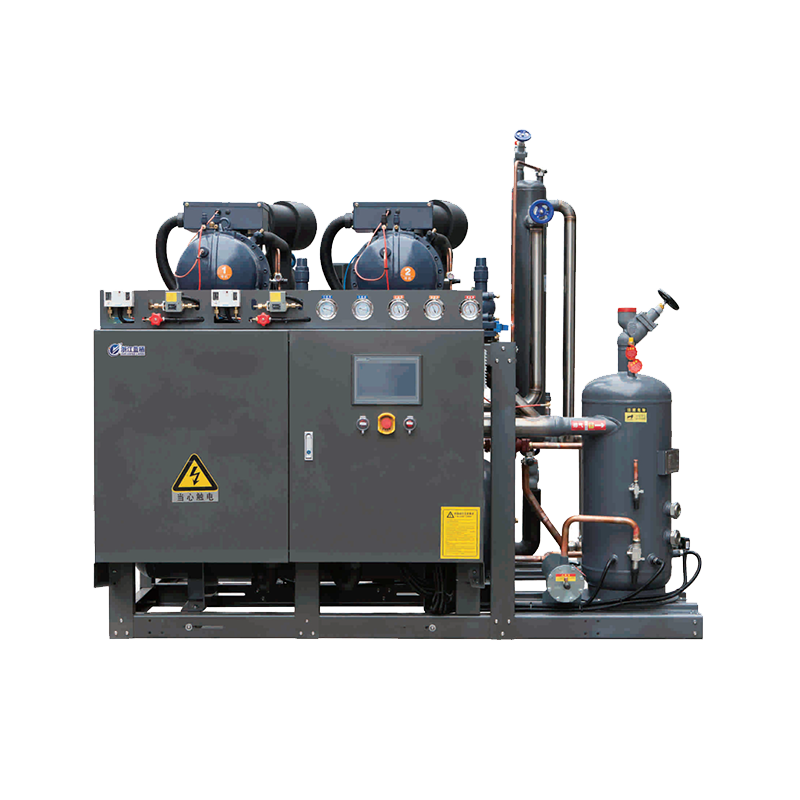
The compressor defines the unit's capacity, efficiency, and longevity. Two families dominate industrial use. Reciprocating piston compressors are simple, affordable, and well matched to smaller capacities and part-load operation. Screw compressors handle larger capacities, run smoothly under continuous load, and stay efficient at high compression ratios, which makes them a common choice for low-temperature cold storage.
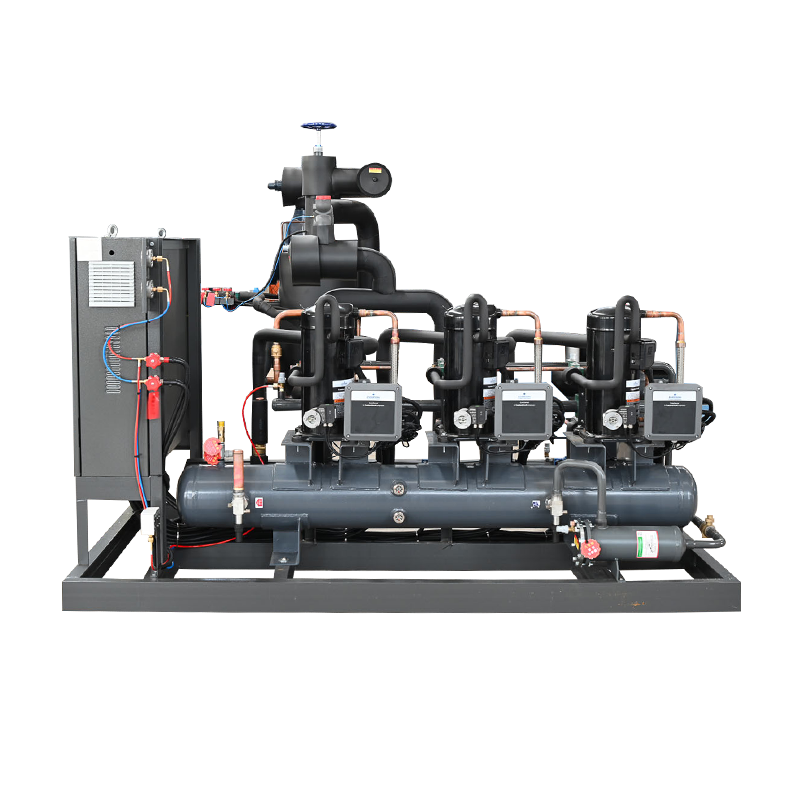
Compressor brand matters because service life and spare parts follow the brand. Lanxi builds its units around internationally recognised brands such as Bitzer, Hanbell, Fusheng, Refcomp, and RFC, so the compressor inside the unit is one that local technicians already understand. For medium and large cold stores, a Bitzer screw unit is a solid starting point, while piston parallel racks give facilities the redundancy they need for critical duty.
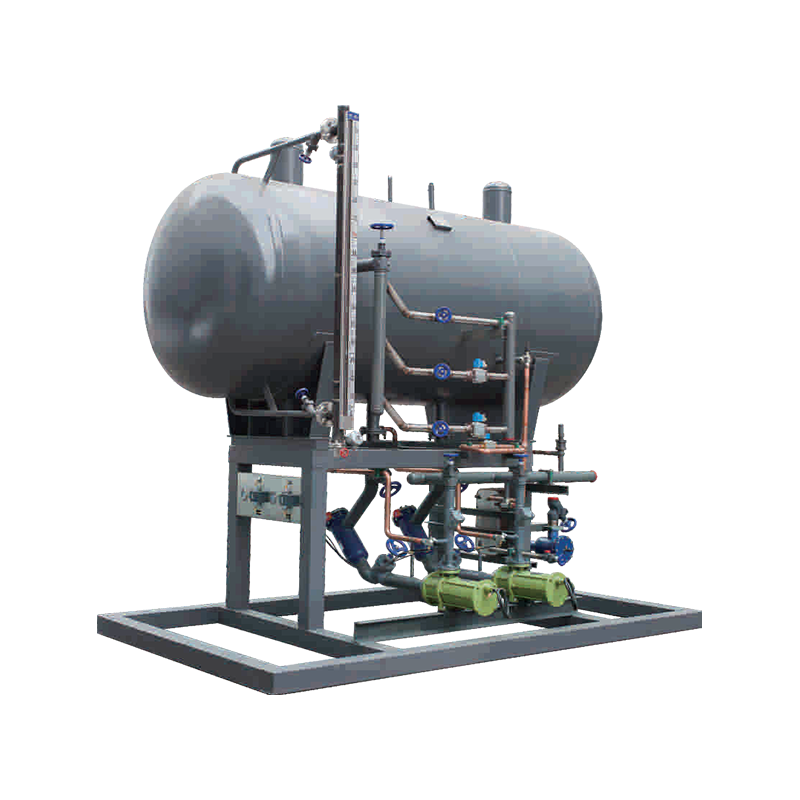
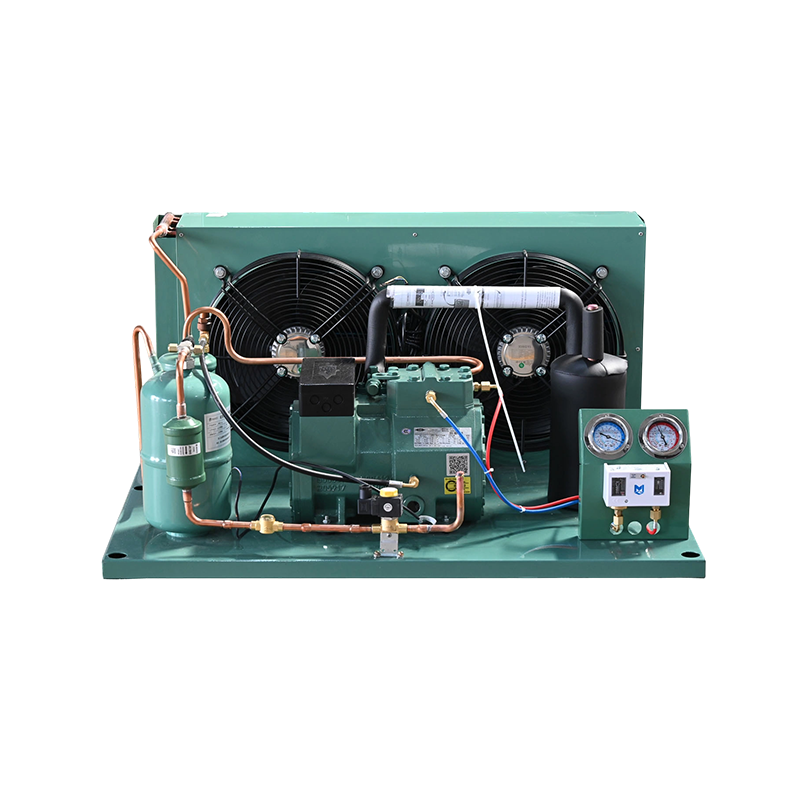 Wholesale Bitzer Screw Unit Suppliers, Factory - Zhejiang Lanxi Refrigeration EqZhejiang Lanxi Refrigeration Equipment Co., Ltd is China wholesale Bitzer Screw Unit suppliers and factory,The Bitzer screw unit is an in...View Product →
Condenser and Evaporator: Match the Whole Loop
A compressor is only as good as the components around it. An undersized condenser raises head pressure, reduces capacity, and increases energy use. An oversized evaporator can cause poor oil return and unstable superheat. The condenser and evaporator must be matched to the compressor and to the application.
Air-Cooled or Evaporative Condensing
For most projects the choice is between air-cooled and evaporative condensing. Air-cooled condensers are simpler to install, need no water, and suit moderate climates, which makes them the standard choice for packaged units. Evaporative condensers reject heat more efficiently in hot conditions and can reduce compressor power draw, but they add water treatment and maintenance. For a practical comparison, see our guide to air-cooled condensers and industrial air coolers. In large process installations, a well-maintained evaporative condenser can justify its higher first cost through lower operating power.
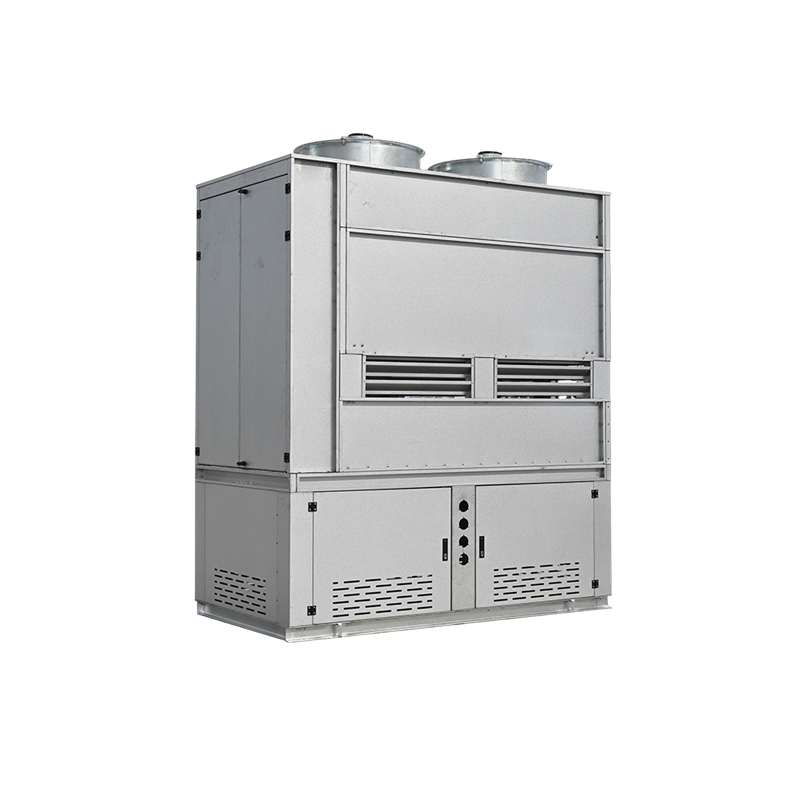 Wholesale Evaporative Condenser Suppliers, FactoryZhejiang Lanxi Refrigeration Equipment Co., Ltd. is China evaporative condenser suppliers and fan motor evaporator factory, offers wholes...View Product →
The Air Cooler Is Where the Room Feels the Unit
On the evaporator side, the air cooler must match the room's humidity, temperature, and airflow needs. Fin spacing determines frost behaviour: narrow spacing suits clean, dry rooms, while wider spacing is better in high-humidity freezers where frost builds quickly. Water defrost clears large coils faster than electric defrost but requires drainage and a water supply. Airflow pattern also matters; double-side discharge units distribute cold air more evenly across wide rooms. For a typical cold room up to a few hundred square meters, a DD series cold blower offers a practical balance of capacity, airflow, and footprint.
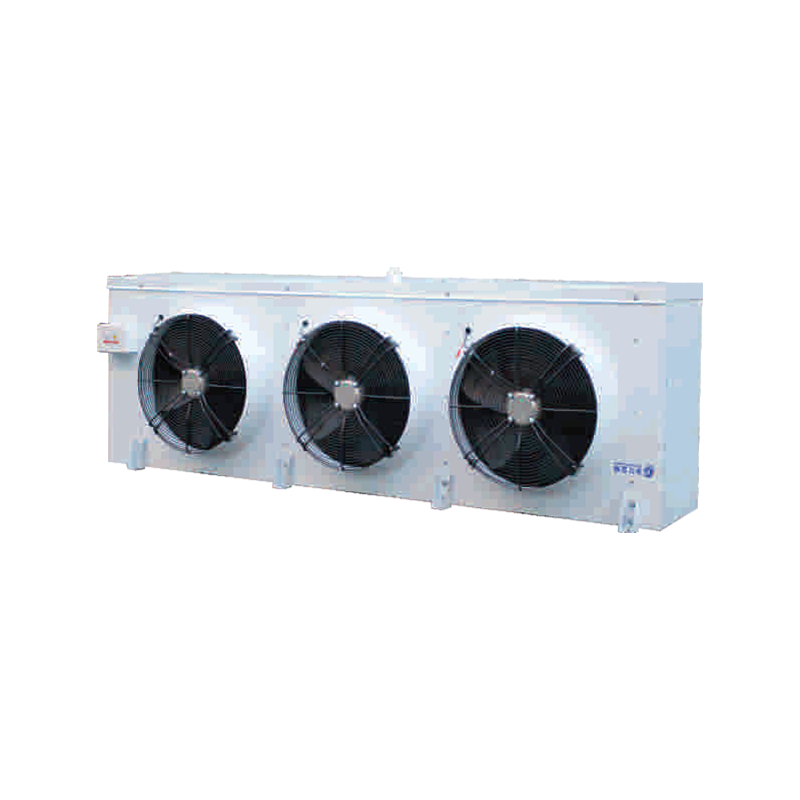 Wholesale DD Series Cold Blower Suppliers, Factory - Zhejiang Lanxi RefrigeratioZhejiang Lanxi Refrigeration Equipment Co., Ltd is China wholesale DD Series Cold Blower suppliers and factory,The DD Series Cold Blower ...View Product →
Match the Unit to the Application
Different industries push the same unit in different ways. A food processing room faces frequent door openings, warm product loads, and strict hygiene requirements. A cold-chain warehouse needs stable holding temperature and dependable operation during peak receiving hours. A pharmaceutical facility demands precise control, alarms, and often duplicated capacity. A blast freezer needs the unit to pull a large warm load down quickly, which is far more demanding than steady holding duty. Write your application down as a duty profile that includes peak loads and defrost frequency, and give that profile to the supplier when asking for a proposal.
This is where a manufacturer's experience becomes visible. Lanxi designs the complete system, from compressor unit to air cooler and condenser, so the installation is delivered as a matched set rather than a collection of unrelated parts. Custom configurations, project planning, and full system solutions are part of the service, which matters when your building, climate, or product load does not fit a standard catalog selection.
Key Takeaways Before You Buy
- Calculate the true heat load instead of guessing from room volume. Include product load, door openings, and defrost heat.
- Choose the compressor family by operating profile: piston for smaller or part-load duty, screw for continuous high-capacity cold storage.
- Verify the compressor brand has local service and spare parts availability; the brand is part of the unit's long-term reliability.
- Size the condenser for the hottest ambient condition you will see, not the average.
- Select the air cooler by fin spacing, airflow, and defrost method, and confirm rated capacity at your actual evaporating temperature.
- Ask for the unit's capacity at your operating conditions, and check how the supplier handles solution design and after-sales support.
A refrigeration unit protects product quality, energy costs, and process uptime for a decade or more. If you start with the heat load and treat the compressor, condenser, and evaporator as one system, you will avoid the mismatched-component failures behind most premature breakdowns. That is the real difference between buying a box of parts and buying a refrigeration unit that actually works.
-
On a 38°C summer afternoon, a food processing plant in eastern China watched its air-cooled condens...
READ MORE -
Condenser: The Core Heat Rejection Component of All Refrigeration & HVAC Systems Every functiona...
READ MORE -
A maintenance supervisor running a 400 kW cold store in a subtropical climate noticed that the pack...
READ MORE -
When a food-processing plant in a water-scarce region evaluates its refrigeration options, the cond...
READ MORE -
A dual discharge unit cooler — also known as a double side discharge air cooler, dual-flow evaporato...
READ MORE -
What Is an Industrial Air Cooler and How Does It Work in a Refrigeration System? Picture a medium-s...
READ MORE

- Email: [email protected]
- Phone: +86-15258555916
- Add: 301 Punan Avenue, Pukou Street, Shengzhou City, Shaoxing City, Zhejiang Province.China
Copyright © Zhejiang Lanxi Refrigeration Equipment Co., Ltd. All Rights Reserved.
浙ICP备2022034605号-1
 Custom Refrigeration Equipment Manufacturers
