
-
 +86-15258555916
-
 [email protected]

 English
 中文简体
中文简体 русский
 Tiếng Việt
Choosing the Right Industrial Air Cooler: A Complete Buying Guide for Your Facility
Content
In a busy cold storage room or food processing line, a poorly selected industrial air cooler can cause more than just a few extra kilowatt-hours. You may see frequent defrost cycles, uneven temperatures across the room, and compressor run hours that climb far beyond what your original refrigeration plan estimated. The root cause is often not the compressor or the cabinet. It is the air cooler quietly failing to keep up. This guide lays out the selection factors that matter most, and explains how a manufacturer with real production experience, such as Zhejiang Lanxi Refrigeration Equipment Co., Ltd., can help you specify the right unit for your exact application.
What Is an Industrial Air Cooler and How Does It Work?
An industrial air cooler is a heat exchanger that moves cold energy from refrigerant to air. In a typical refrigeration system, the cooler is the evaporator installed at the end of the refrigeration circuit. Compressed refrigerant is condensed, then expanded into the cooler's coil. A fan draws air from the room or process area over the finned coil, and heat transfers to the refrigerant, cooling the air before it is circulated back. Because the coil surface temperature is below the dew point, moisture from the air condenses and can freeze into frost. Defrost systems, whether electric, hot gas, or water, are used to keep the coil clear and maintain cooling capacity.
The performance of this single component affects how hard the compressor must work, how long the defrost cycles last, and whether your product stays at the right temperature. That is why selecting the correct industrial air cooler deserves the same attention as selecting the compressor or condenser.
Where Industrial Air Coolers Need to Be Handled with Care
The right air cooler for one facility is not necessarily right for another. A meat processing plant needs fast pull-down after each loading cycle, plus frequent cleaning. A pharmaceutical warehouse may need precise temperature control and hygienic surfaces. A logistics cold store might face high humidity and long periods with no human access, which affects defrost scheduling.
In practice, purchasing teams often supply only the room size and target temperature. They forget to mention how much product enters the room per day, how often doors open, or whether the space is exposed to direct sunlight. These data gaps push the supplier to design a safety margin that is either too large or too small. Oversized air coolers cause short cycling and excessive defrosting; undersized units run continuously and still raise the product temperature. Both outcomes increase energy costs and lead to avoidable downtime.
Key Selection Criteria for an Industrial Air Cooler
We recommend evaluating an industrial air cooler on five core factors. Each one changes the equipment list and the long-term running cost.
Cooling Load and Room Dimensions
Start with the actual heat load, not just the room volume. Include heat from insulation, people, electric motors, and new product batches. For example, a cold store with a high loading rate and frequent door opening can have a peak load far above the average. If the air cooler is chosen from a nominal capacity table without considering the peak load, the room may struggle to recover temperature after each door cycle.
Provide your supplier with the room size, product temperature, loading ratio, and insulation condition. A responsible manufacturer will run a load calculation and recommend a unit with a reasonable safety margin, not an oversized one.
Temperature Range and Defrost Method
The required room temperature determines the fin pitch and defrost method. For medium-temperature rooms around 0°C to +10°C, the DL series cold blower is often the right choice because it delivers a good balance of air flow and coil efficiency. The DL series is available in multiple sizes and works well in meat processing and storage rooms where steady, even air distribution matters.
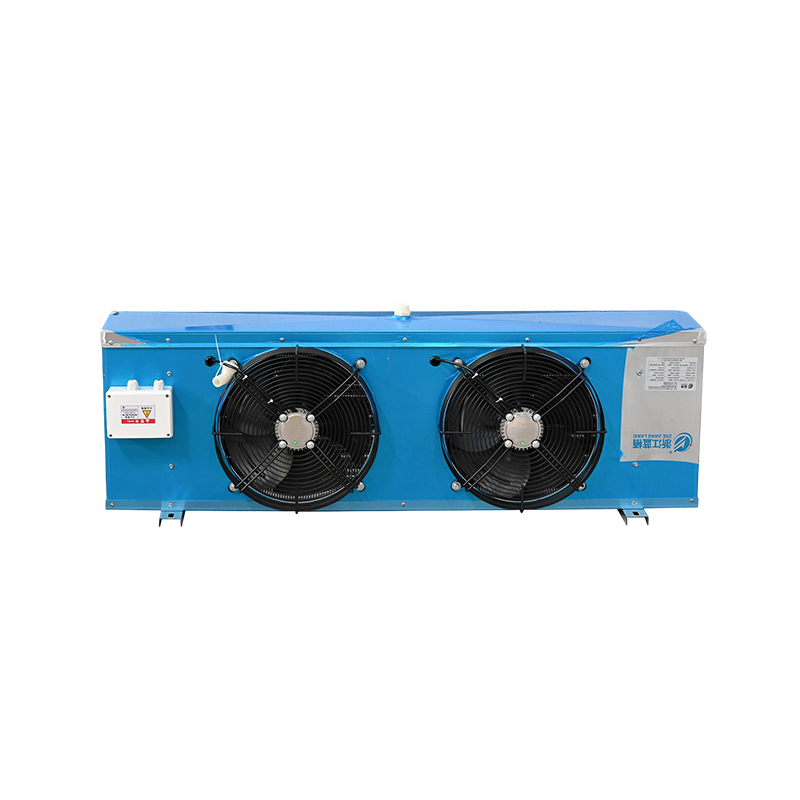 DL Series Cold BlowerThe DL series cold blower is specifically designed for preservation, freezing, and refrigeration environments. Suitable for cold storage rooms around 0℃, it effectivel...View Product →
For rooms below -18°C, frost accumulation becomes a serious problem. The DJ series cold blower with a wider fin pitch reduces frost buildup and maintains capacity between defrost cycles. It is common in low-temperature warehouses and blast freezers.
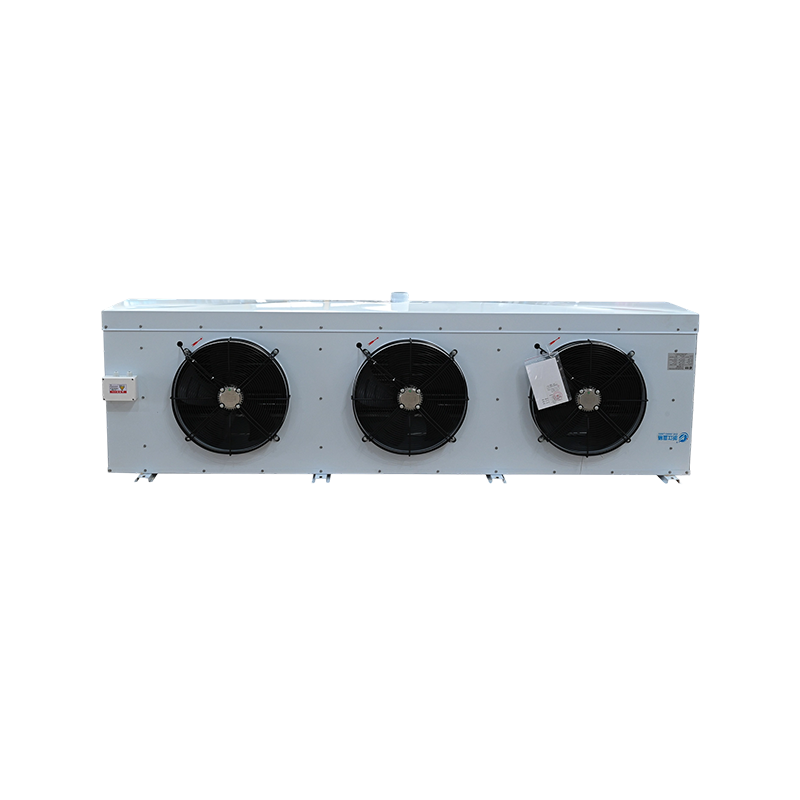 DJ Series Cold BlowerThe DJ Series Cold Blower is designed for cold storage environments around -25°C and is widely used in food storage, frozen processing, cold chain logistics, and other...View Product →
When the application may shift between medium and low temperature, or when the same line processes different products, the DD series cold blower offers flexibility. It can be configured for electric or hot gas defrost and handles both high and low temperature duty in many industrial settings.
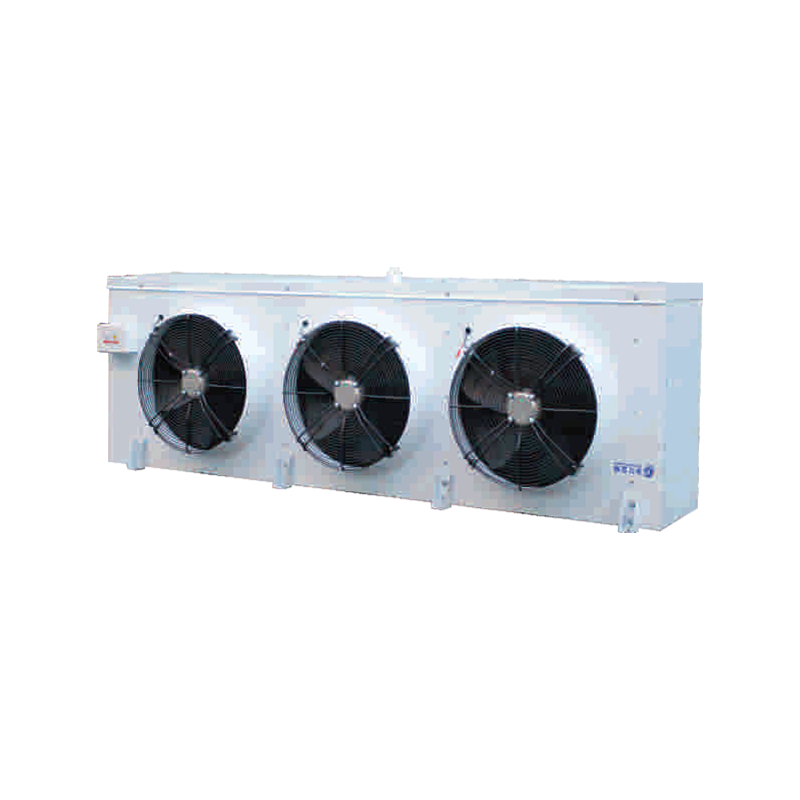 DD Series Cold BlowerThe DD Series Cold Blower is designed for preservation, freezing, and refrigeration applications, widely used in food processing, warehousing, cold chain logistics, an...View Product →
Air Flow and Throw Distance
Air flow is measured in cubic meters per hour or CFM, and throw distance describes how far the air jet travels before its velocity drops. In a tall warehouse, a high throw model is necessary to move air to the floor. In a short processing room, a compact unit with lower flow may avoid directing cold air onto workers. Ask the supplier for a performance curve. A unit with airflow that is too weak leaves dead zones; one that is too strong can disturb the product and increase noise.
Material and Corrosion Resistance
Industries with high humidity or brine exposure demand corrosion-resistant materials. Look for stainless steel housing or galvanized steel with a protective coating. The thickness of the casing and the fin material also affect the service life. A cheap cooler with thin fins and untreated edges can corrode within a few years. The cost of replacing a welded or outdoor mounted unit often exceeds the saving gained from buying the cheaper product.
Manufacturer Support and Customization
A reliable manufacturer should provide more than a catalog. It should help you design the system, select the refrigerant and defrost method, and adapt the unit to your site conditions. Zhejiang Lanxi Refrigeration Equipment Co., Ltd. has been designing and manufacturing refrigeration equipment since 2014. Its product range includes air coolers, aircooled condensers, evaporative condensers, screw and piston compressor units, and barrel pump units. All compressor units use well-known international brands such as Bitzer, Hanbell, and Refcomp, which gives you confidence in system efficiency and reliability. The company also provides solutions for food processing, cold chain logistics, and pharmaceutical industries, with service in Chinese, English, Russian, and Vietnamese.
For a deeper look at how aircooled condensers and industrial air coolers interact in a complete refrigeration system, read our full guide on aircooled condensers and industrial air coolers.
Installation and Maintenance Considerations
Even the best air cooler can underperform if installed incorrectly. Mount the cooler so that the supplied air blows along the longest axis of the room. Avoid blocking the return air path. The unit should be high enough to avoid damage from forklifts, but not so high that the air jet cannot reach the floor.
Condensate and defrost water must be drained away. If you use a water defrost system, check that the drain line is sloped and not subject to freezing. For electric defrost, ensure the elements are rated for the local voltage and the power supply is adequate.
Maintenance is simple but important. Clean the coil and fans at least once per season in normal duty. In dusty or food processing environments, more frequent cleaning is required. Check the drain pan for biofilms and inspect the fan motor bearings regularly. A structured maintenance plan extends the life of the cooler and protects your refrigeration system from unexpected failure.
How to Evaluate an Industrial Air Cooler Manufacturer
The most useful evaluation is to look at what the manufacturer does, not what it claims. Ask for:
- Product line breadth: Does it cover medium, low, and dual-temperature coolers with different defrost options?
- Production capability: Does it have its own manufacturing base?
- Component strategy: Does it use internationally recognized compressors?
- Customer service: Does it offer English, Russian, Vietnamese or other language support for your export market?
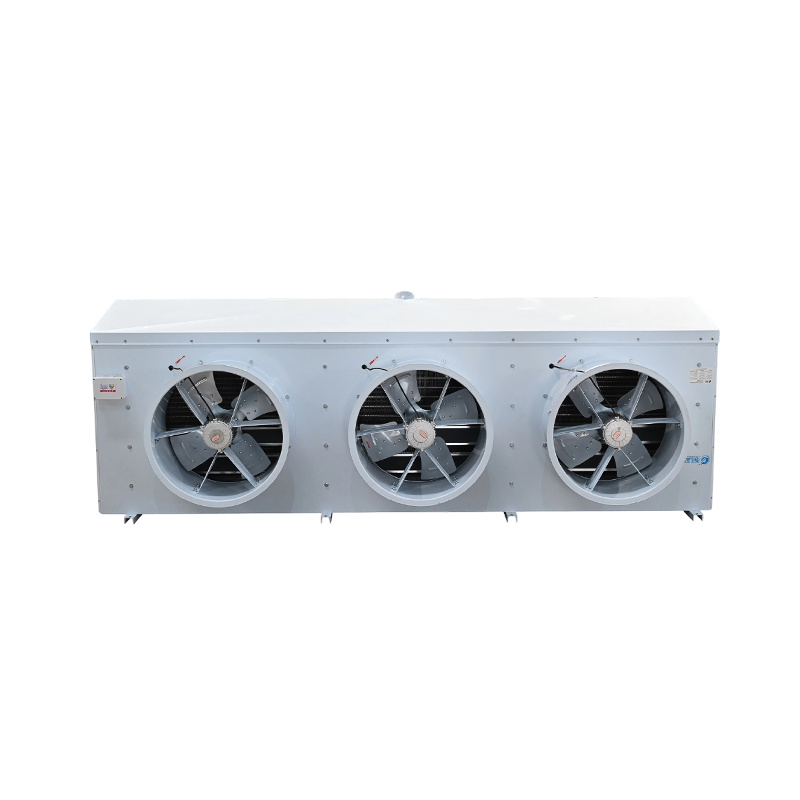
Lanxi's air cooler series includes not only the DL, DJ, and DD series, but also single-side and double-side outlet models, floor-standing units, and water-defrosting cold blowers. This variety means you can source different configurations from one factory. The company also offers solution design and project planning as part of its service, which helps you avoid mismatched equipment.
What You Should Do Next
Before you request a quote, write down your room dimensions, product type, target temperature, daily loading, door opening frequency, and any special conditions such as washdown or exposure to salt air. Share this with the supplier and ask for a calculated cooling load plus recommended air cooler model. Compare the defrost method, air flow, material, and service support.
If you choose a manufacturer that understands both equipment and system design, the industrial air cooler will do its job quietly. If you skip this step, the whole refrigeration system pays the price in higher energy bills, more repair downtime, and unstable product quality. The best time to get the selection right is before the equipment is installed.
-
Looking for an affordable, energy-saving alternative to air conditioners for residential, commercia...
READ MORE -
Complete Condenser Selection Guide: Choose the Right Condenser for Industrial & HVAC Systems A c...
READ MORE -
Walk into a cold storage room and feel the air near the door. If one corner is warmer than another,...
READ MORE -
What Air-Cooled Condenser and Industrial Air Cooler Technologies Actually Do An Air-Cooled Condense...
READ MORE -
What Is an Industrial Air Cooler and How Does It Work in a Refrigeration System? Picture a medium-s...
READ MORE -
The manufacturer with the lowest quoted price is rarely the one that delivers the lowest total cos...
READ MORE

- Email: [email protected]
- Phone: +86-15258555916
- Add: 301 Punan Avenue, Pukou Street, Shengzhou City, Shaoxing City, Zhejiang Province.China
Copyright © Zhejiang Lanxi Refrigeration Equipment Co., Ltd. All Rights Reserved.
浙ICP备2022034605号-1
 Custom Refrigeration Equipment Manufacturers
