
-
 +86-15258555916
-
 [email protected]

 English
 中文简体
中文简体 русский
 Tiếng Việt
Industrial Air Cooler: How to Select the Right Unit for Cold Storage & Processing
Content
Walk into a cold storage room and feel the air near the door. If one corner is warmer than another, or the temperature drifts upward every afternoon, the industrial air cooler mounted inside the room is usually the first place to look. It must handle heat from product, people, motors, doors, and lighting with enough air movement and coil surface to keep the space within specification.
What an Industrial Air Cooler Does in a Refrigeration System
An industrial air cooler is the evaporator side of a refrigeration system. Low-pressure liquid refrigerant enters the coil through an expansion valve, boils as it absorbs heat, and fans pull room air across the finned surface. The result is cold air discharged into the room, while refrigerant gas returns to the compressor.
Because the cooler is the component that directly controls the space temperature, small changes in its design have large effects. A coil with 20 percent less surface area can reduce capacity by more than 20 percent at the same temperature difference, and an undersized air throw can leave warm zones on the far side of the racks.
The role is different from an air-cooled condenser. The condenser rejects heat from the refrigerant to the outside air; the industrial air cooler absorbs heat from the room and transfers it to the refrigerant. If you need a side-by-side explanation of both components, our air-cooled condenser and industrial air cooler guide walks through the system layout and common specification mistakes.
How to Choose the Right Industrial Air Cooler
Start the selection with the total heat load at the design room temperature. The cooler's capacity is then matched to the load with a suitable temperature difference (TD), not to the room volume alone.
Cooling Capacity and Temperature Difference
TD is the difference between the air temperature entering the cooler and the evaporating temperature of the refrigerant. A room held at -25°C with refrigerant evaporating at -32°C has a TD of 7 K. The same coil at 10 K TD will produce more capacity, which is why catalogue ratings are meaningless unless the TD is stated.
For a cold store, a lower TD usually means higher relative humidity and less product drying. For a blast freezer, a moderate TD is accepted because freezing speed matters more than drying loss. Whatever the choice, verify that the quoted capacity is at the same TD, refrigerant, and evaporating temperature for every bid.
Air Throw, Fan Placement, and Room Layout
Air throw is the distance the cooling air travels before the fan's velocity slows. Long rooms need either multiple coolers along the length or a unit with a longer projection. Ceiling-mounted coolers are common, and the Aircooler cold blower line covers many cold stores with a single-row or double-row coil arrangement.
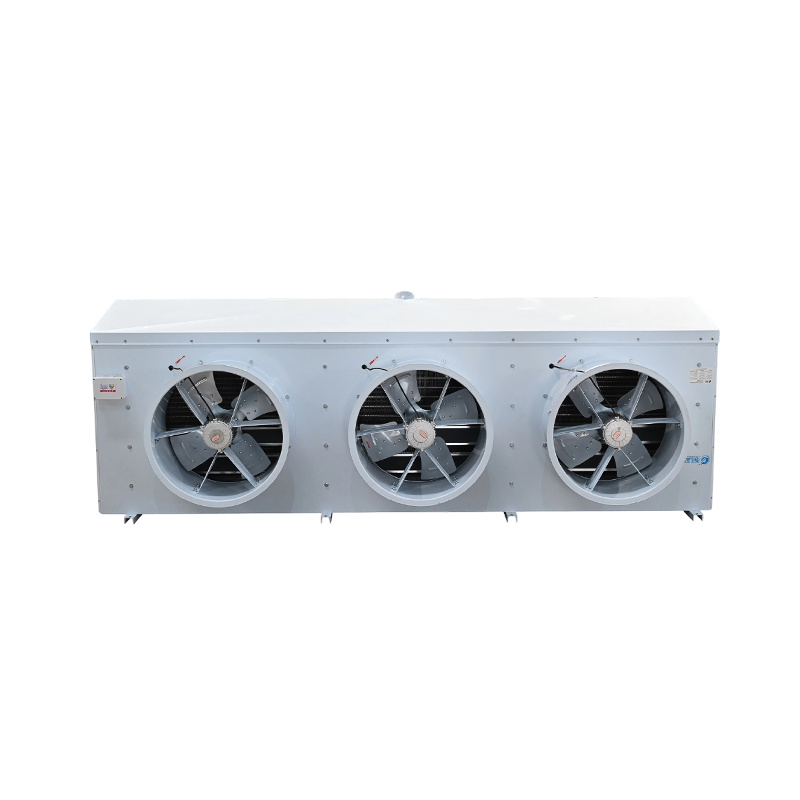 Aircooler Cold Blower for Long Cold Storage RoomsThis ceiling-mounted unit with electric defrosting suits long cold stores needing consistent air throw. Its corrosion-resistant casing and stainless steel heating elements support reliable low-temperature operation, making it worth evaluating for temperature-sensitive facilities.View Product →
In high-bay warehouses, a floor-mounted outlet air cooler is often a better choice because the discharge can be directed along the floor into rack aisles while return air moves back at ceiling level.
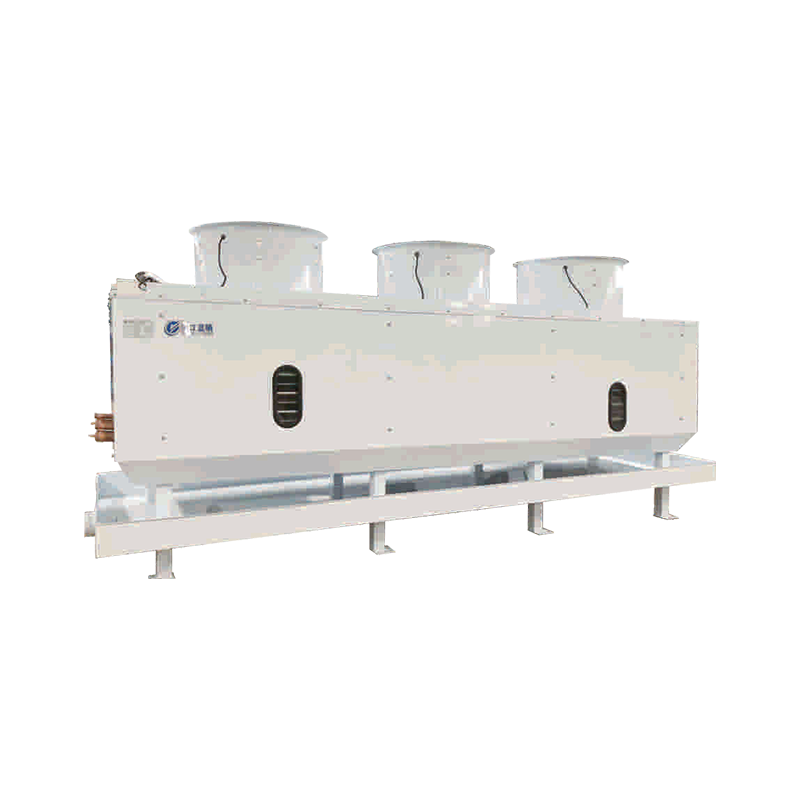 Floor Mounted Outlet Air Cooler for High-Bay WarehousesDesigned with top discharge to direct airflow along floors into rack aisles, this floor-mounted unit helps prevent air short-circuiting in tall storage areas. It is relevant when supply and return openings need separation for even cooling.View Product →
If the discharge and return openings of any cooler are too close to each other, air can short-circuit and leave the room uneven. Keep the supply jet away from rack faces, columns, and aisle openings that cause the air to stall.
Defrost Type and Frequency
In rooms below 4°C, frost builds on the coil whenever the surface is below freezing. Thick frost insulates the coil and reduces airflow, so defrost is necessary. Electric, hot gas, and water defrost systems each work in different situations.
| Method | How it works | Best for | Operating note |
|---|---|---|---|
| Electric | Heating elements in the coil melt frost during timed cycles. | Small to medium freezers and processing rooms. | Adds heat to the room; keep cycles short. |
| Hot gas | Discharge gas from the compressor is routed through the coil. | Large cold stores and distribution centres. | Low power draw during defrost, but piping must handle oil return. |
| Water | Water spray or cascading water removes the frost. | High-humidity plants and rooms with heavy frost. | Requires good drainage and water treatment to prevent scaling. |
Match the defrost strategy to door traffic and coil size. A room that is frequently opened will need more defrosts, while a sealed storage room may run for hours without one. In large processing rooms with heavy ice loads, a water-defrosting cold blower is a practical complement to the defrost table.
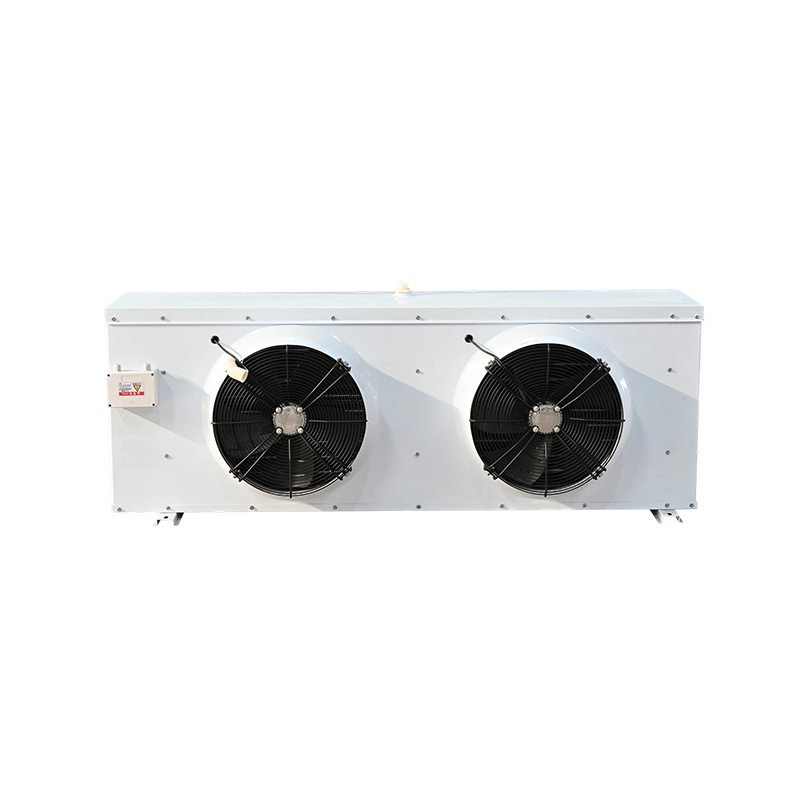 Water Defrosting Cold Blower for High-Traffic Processing RoomsWith water-based defrosting that handles frequent door openings and heavy ice loads, this blower reduces maintenance in busy processing environments. Its staggered coil design supports stable temperature control, complementing wider fin spacing needs in dusty or humid conditions.View Product →
Fin Spacing and Coil Protection
Fin spacing is determined by air cleanliness and humidity. A clean cold room can use 6 mm fins, but a packing line with dust or fat vapour can block the same coil in weeks. For those applications, wider 10 mm fin spacing, coated coils, or stainless steel drain pans will reduce cleaning frequency and corrosion.
If the system uses ammonia, the coil metals must be compatible. If the room is near a coastal plant, ask for the manufacturer's corrosion protection and specify the casing material in your purchase order. These details decide whether the cooler lasts five years or fifteen.
Efficiency and Long-Term Operating Cost
The fan motor runs whenever the room needs cooling, which is most of the time. EC fans are now common on industrial air coolers because they throttle down when the room is stable. Replacing a constant-speed AC fan with an EC option can reduce annual fan energy use by a meaningful margin in rooms with a steady load pattern.
More important than the fan is the coil surface. A cooler with a larger face area and proper circuiting operates at a higher saturated suction temperature. That reduces the compressor lift and lowers power consumption per kilowatt of refrigeration. When comparing quotes, look at the declared capacity at the actual design TD, not just the fan motor power.
Refrigerant distribution should not be ignored. If a cooler is circuited for a single expansion valve and the room has a high load variation, the evaporator can flood or starve. In rack systems, an industrial air cooler with multiple circuits and a distributor gives better control over several temperature zones.
Installation and Maintenance Practices That Prevent Downtime
An industrial air cooler can be well selected and still underperform if it is installed without enough clearance for air return and service. Leave at least the distance recommended by the manufacturer between the cooler and the ceiling or wall, and keep the discharge area free of pipework and cable trays.
Drain pans and drain lines are the most common failure point. A blocked drain forces water to spill into the room or freeze in the pan. Use heated drain pans in freezers, add a P-trap that allows the pan to drain without warm air entering, and inspect the drain line before the humid season changes the room conditions.
Maintenance should follow a fixed schedule: check fan blades for ice, measure motor current, clean the fin face without bending the fins, and verify that defrost heaters or hot gas valves operate at the correct times. A sensor drift in the defrost termination thermostat may leave the cooler running with a block of ice, so calibration is part of the job.
Finally, keep the coil clean. Many industrial processes, especially food trimming and meat packing, create airborne protein that collects on the fin surface. A regular washdown with an approved cleaner and a rinse will restore capacity more than any control adjustment.
When an industrial air cooler is chosen and installed well, the rest of the refrigeration system works less. The compressor cycles normally, room temperature holds within a reasonable band, and defrost does not become a daily struggle. The starting point is clear: match the coil to the actual load, select the air throw and defrost type for the room, and protect the fin surface from the environment.

-
What Is an Industrial Air Cooler and How Does It Work in a Refrigeration System? Picture a medium-s...
READ MORE -
Looking for an affordable, energy-saving alternative to air conditioners for residential, commercia...
READ MORE -
Manufacturer Evaluation The manufacturers worth shortlisting are the ones that build their own com...
READ MORE -
In a busy cold storage room or food processing line, a poorly selected industrial air cooler can ca...
READ MORE -
Complete Condenser Selection Guide: Choose the Right Condenser for Industrial & HVAC Systems A c...
READ MORE -
For large open facilities, warehouses, and manufacturing plants, an industrial air cooler provides...
READ MORE

- Email: [email protected]
- Phone: +86-15258555916
- Add: 301 Punan Avenue, Pukou Street, Shengzhou City, Shaoxing City, Zhejiang Province.China
Copyright © Zhejiang Lanxi Refrigeration Equipment Co., Ltd. All Rights Reserved.
浙ICP备2022034605号-1
 Custom Refrigeration Equipment Manufacturers
