
-
 +86-15258555916
-
 [email protected]

 English
 中文简体
 русский
 Tiếng Việt

Industrial Air Cooler Selection Guide: Types, Performance & Best Practices
Content
Industrial air coolers do the actual cooling work inside a cold room. It is the air cooler — the evaporator with fans and finned coil — that pulls warm air out of the space and sends cooled air back in. Get this component wrong and the whole plant underperforms, regardless of the compressor package. The practical conclusion first: size the air cooler from the calculated cooling load and room temperature, then verify defrosting, air throw, fin spacing, and corrosion protection.
How an Industrial Air Cooler Fits Into the Refrigeration Cycle
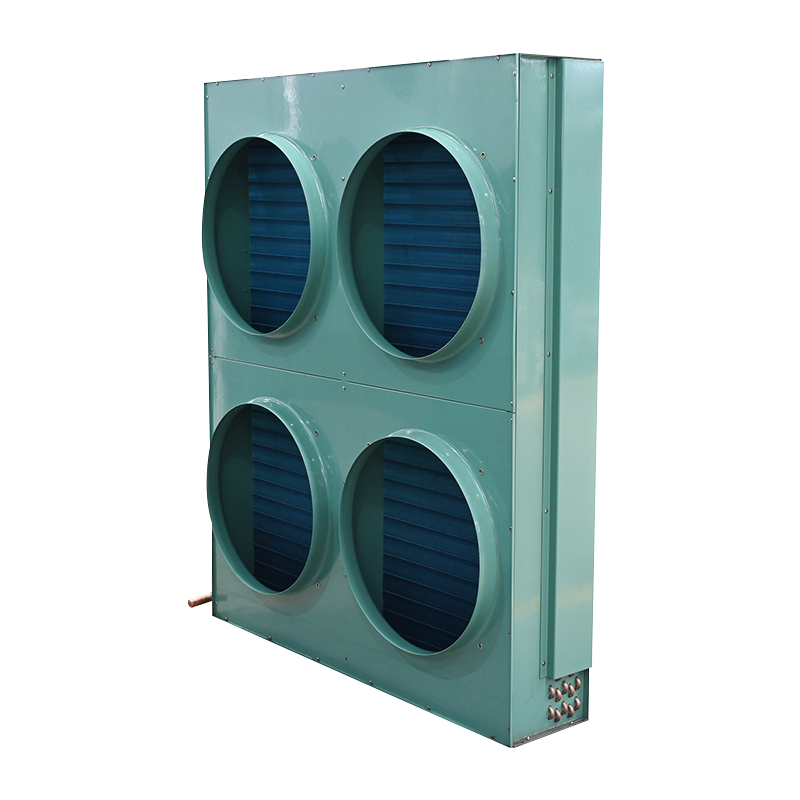
Every mechanical refrigeration system moves heat in four stages. The compressor raises the pressure and temperature of the refrigerant vapor. The condenser rejects that heat to outside air or water. The expansion device drops the pressure. And the air cooler, acting as the evaporator, absorbs heat from the room. Inside the air cooler, liquid refrigerant boils at low pressure, drawing heat through the coil wall and the fins. Axial fans force room air across the finned surface and discharge it back into the space.
Because the heat exchange happens directly in the stored area, the air cooler determines how quickly the room responds to door openings, product loading, and fan operation. Two implications follow. First, the nominal capacity is only meaningful at a stated temperature difference (TD) between room air and evaporating temperature; a unit rated at 10 K TD delivers noticeably less when designed at 6 K TD. Second, every watt of fan motor power is discharged into the room as heat, so motor load must be included in the cooling load calculation.
Main Types of Industrial Air Coolers
Manufacturers classify industrial air coolers by the temperature band they serve, and the common naming convention follows that logic. The DJ series is the usual choice for medium-temperature chilling rooms and fresh produce storage. The DL series is built for low-temperature frozen storage, typically around -18°C to -25°C. The DD series handles deep-freeze and rapid-freezing duty, where the coil surface temperature falls below -25°C and frost forms aggressively.
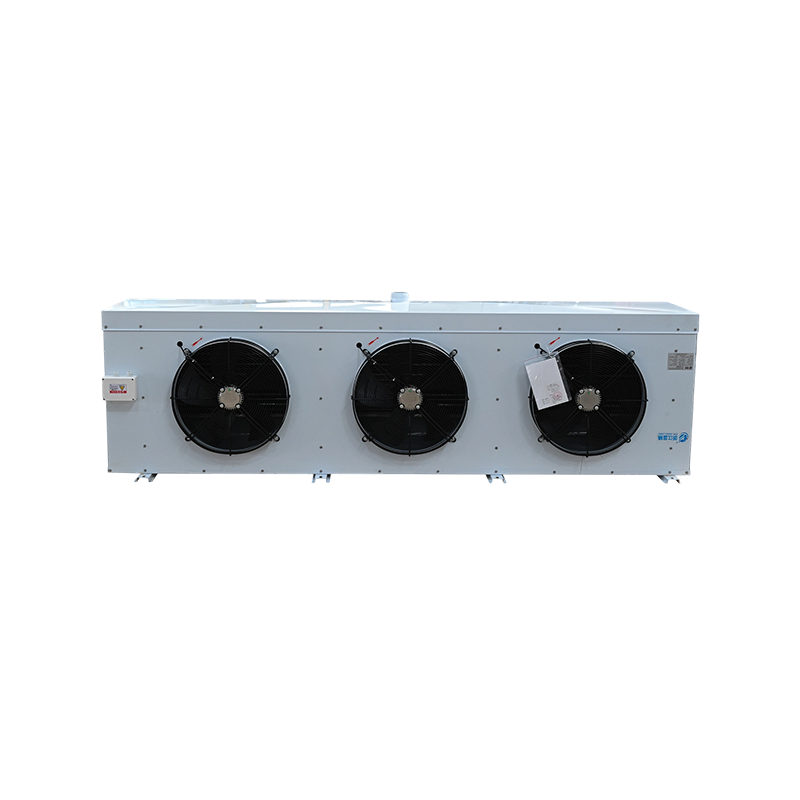 DJ Series Air Cooler for Medium-Temperature Cold RoomsThis series suits chilling rooms and fresh produce storage, with models from 1.9 to 46.5 kW. Its powder-coated steel casing and even electric defrosting ensure reliable, uniform cooling.View Product →
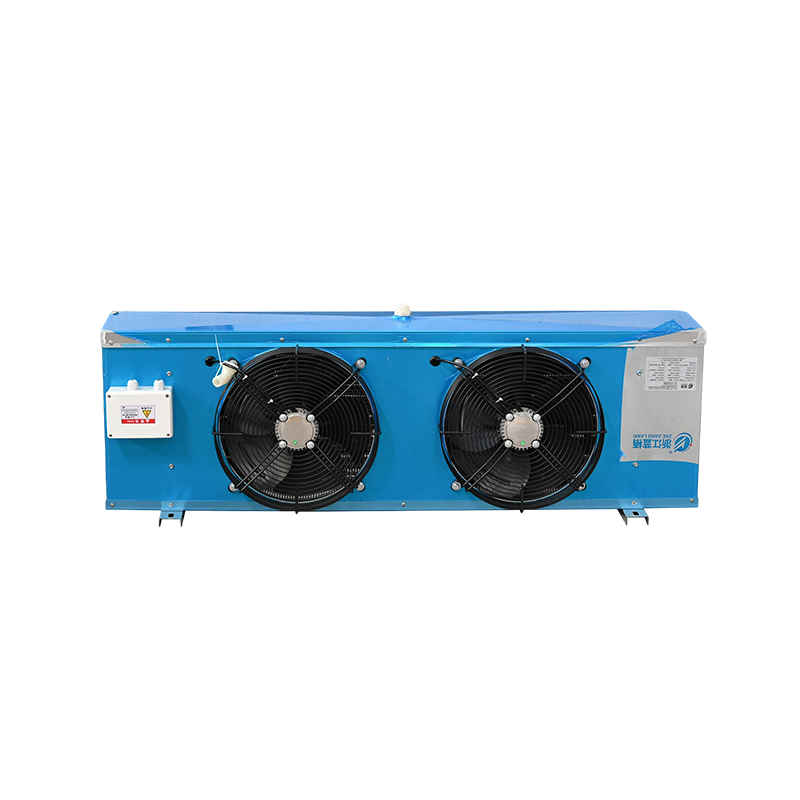 DL Series Air Cooler for Low-Temperature Frozen StorageBuilt for frozen storage around -18°C to -25°C, this series offers efficient heat exchange with copper-aluminum coils. Models span 4.3 to 116 kW for diverse cold-room layouts.View Product →
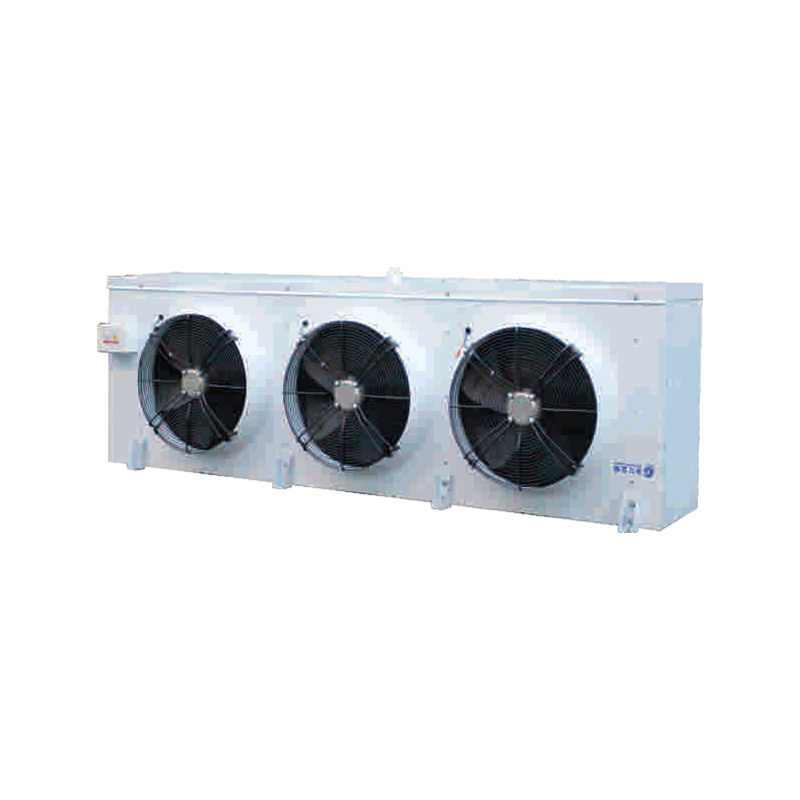 DD Series Air Cooler for Deep-Freeze and Rapid-Freezing DutyDesigned for aggressive frost conditions below -25°C, this series delivers strong airflow and efficient defrosting. Capacities range from 3.0 to 80.3 kW for heavy freezing tasks.View Product →
| Series | Typical room duty | Usual temperature range | Defrost approach |
|---|---|---|---|
| DJ | Chilling, processing, fresh storage | About -5°C to +10°C | Air or electric |
| DL | Frozen food storage | About -18°C to -25°C | Electric or water |
| DD | Deep-freeze, rapid freezing | Below -25°C | Electric, heavy-duty |
Layout variants matter as much as the series. Double-side discharge units throw air in two directions, which suits long or wide rooms and reduces dead zones. Floor-mounted air coolers work better where ceilings are low. Water-defrosting units suit large, high-humidity rooms, where electric heaters cost too much and take too long.
- DJ series — medium-temperature chilling
- DL series — low-temperature frozen storage
- DD series — deep-freeze and rapid freezing
- Double-side discharge — long and wide rooms
- Floor-mounted outlet air cooler — low ceilings
- Water-defrosting cold blower — high-humidity rooms
What Actually Decides the Right Air Cooler
Start with the cooling load, not the room volume. The load includes product pull-down, respiration heat of fresh produce, infiltration through doors, door openings, lighting, people, forklifts, and the air cooler fans themselves. Add a working margin of 10–15 percent; the extra capacity absorbs peak-season door traffic and shortens recovery after loading.
The chart above is an indicative priority order, not a formula. Once the required capacity is fixed, the room temperature band decides the series, and the defrost method follows from the temperature and humidity profile. A small -20°C freezer can live with electric defrost; a large meat chiller with wash-down requirements is usually better served by water defrost.
Air Throw and Placement
Air throw is the distance the discharge air travels before its velocity drops to roughly 0.25 m/s. In rooms longer than 15–20 metres, a single short-throw unit creates hot spots. Double-side discharge units are the practical answer; they double the effective throw and keep the temperature uniform. Mount the unit so the discharge is not blocked by racking or stacked pallets.
Fin Spacing and Corrosion Protection
Fins add heat transfer area and collect frost. In high-humidity rooms, wider fin spacing of around 6–8 mm slows frost bridging and extends the interval between defrosts. In clean, low-humidity rooms, tighter 3–4 mm spacing gives more surface area in a smaller footprint. If the room is washed down regularly, specify the coil casing and drain pan for that environment, or the unit will corrode before the compressor wears out.
The Real Cost of Delayed Defrosting
Frost is a self-reinforcing problem. As it builds on the coil, it blocks airflow and adds thermal resistance. The fans work harder, and the compressor sees a lower evaporating temperature, so system efficiency drops. In frost-heavy rooms, a coil left without defrost for several hours can lose 20–30 percent of its usable capacity.
The right defrost cycle is not a setting you can forget. Electric defrost is simple to control and works well below -18°C. Water defrost is faster and cheaper in large, high-humidity rooms, provided drainage and water supply are designed correctly. Hot-gas defrost gives the fastest recovery but adds piping and control complexity. Whatever the room uses, size the drip tray heater for the coldest condition; an unheated tray turns defrost water into an ice block under the coil.
Common Selection Mistakes on Industrial Projects
Most problems with industrial air coolers do not show up on day one; they show up after a season of operation. Avoid these repeated mistakes:
- Sizing from room volume instead of the calculated heat load. It gives either a warm room or a unit that short-cycles.
- Choosing electric defrost for a large wet room. Energy costs climb and defrost downtime eats into usable operating hours.
- Ignoring air throw. Dead zones form at the far end of long rooms, and product temperature drifts beyond specification.
- Mounting the unit beside the door. Every door opening pushes warm air straight into a unit already working at capacity.
- Forgetting fan motor heat in the load calculation. Motor heat is removed by the same coil, so it adds directly to the required capacity.
- Comparing quotations without checking the rated TD. The same coil at 8 K TD delivers roughly 25–30 percent more capacity than at 6 K TD; a quote based on a higher TD may look cheap but can be undersized in service.
Match the Air Cooler to the Rest of the System
The air cooler does not work alone. The condensing unit must be selected at the same evaporating temperature as the air cooler rating; otherwise the delivered capacity will not match the design sheet. A lower evaporating temperature raises the compressor power draw per kilowatt of cooling, so a smaller TD can improve system efficiency at the cost of more coil area. The balance depends on the application. Our full guide to air-cooled condensers and industrial air coolers explains the component-by-component matching logic in more detail.
For new plants, buy the air cooler and the condensing unit from a single supplier using the same design temperature basis. A manufacturer that builds both air coolers and condensing units can be held accountable for the match. You can review the complete range on the company website.
When you prepare a specification for an industrial air cooler, bring four numbers to the table: the calculated cooling load, the room air temperature, the desired relative humidity, and the defrost cycle requirement. The rest is engineering detail — air throw, fin spacing, coil casing material, drain tray heating, fan motor selection — and it should be worked out with the supplier, not picked from a brochure. Get these decisions right, and the air cooler will quietly deliver the product temperature your operation depends on, year after year.
-
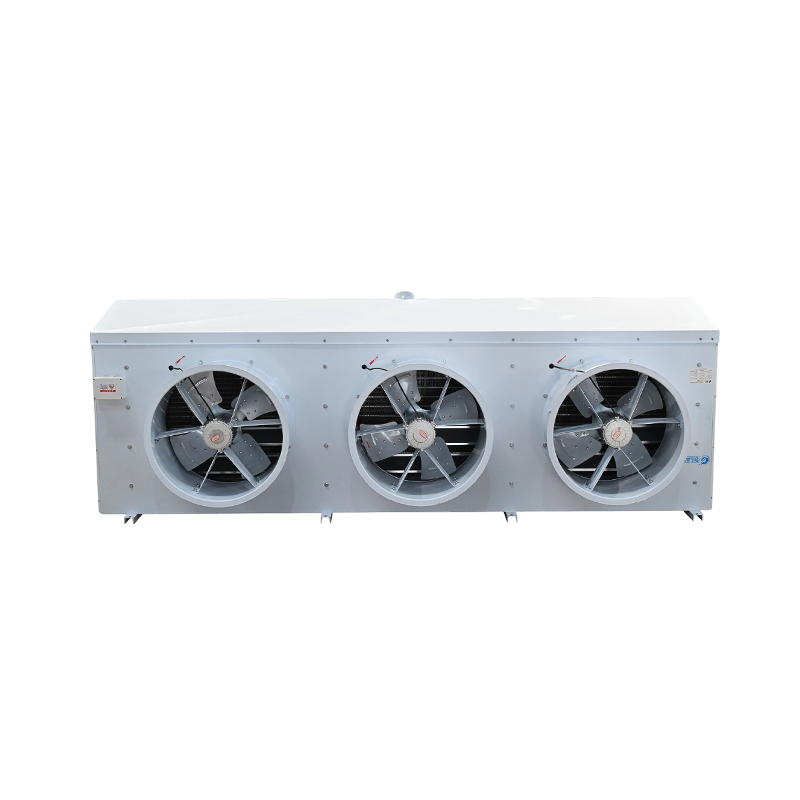
What Is an Industrial Air Cooler and How Does It Work in a Refrigeration System? Picture a medium-s...
READ MORE -
What Air-Cooled Condenser and Industrial Air Cooler Technologies Actually Do An Air-Cooled Condense...
READ MORE -
Looking for an affordable, energy-saving alternative to air conditioners for residential, commercia...
READ MORE -
When a food-processing plant in a water-scarce region evaluates its refrigeration options, the cond...
READ MORE -
When a food processor plans a new -18°C freezer, the first equipment decision is usually about the ...
READ MORE -
Condenser: The Core Heat Rejection Component of All Refrigeration & HVAC Systems Every functiona...
READ MORE

- Email: [email protected]
- Phone: +86-15258555916
- Add: 301 Punan Avenue, Pukou Street, Shengzhou City, Shaoxing City, Zhejiang Province.China
Copyright © Zhejiang Lanxi Refrigeration Equipment Co., Ltd. All Rights Reserved.
浙ICP备2022034605号-1
 Custom Refrigeration Equipment Manufacturers
