
-
 +86-15258555916
-
 [email protected]

 English
 中文简体
 русский
 Tiếng Việt

Refrigeration Unit Selection Guide: Types, Sizing, Efficiency and Costs
Content
Every summer, the freezer at the far end of a cold storage facility drifts 3-4°C above its -18°C set point, while the monthly energy bill climbs by 15-18%. Adjusting the thermostat or adding refrigerant does not fix the real problem, which is usually a refrigeration unit that was never matched to the actual load, the local climate, or the operating pattern of the building.
The selection rule is straightforward: choose the compressor for reliability, the condenser for site conditions, and the evaporator for the application. This guide explains how those three choices interact, how to size a unit honestly, and which procurement questions separate a durable system from a costly mistake.
What a Refrigeration Unit Actually Does
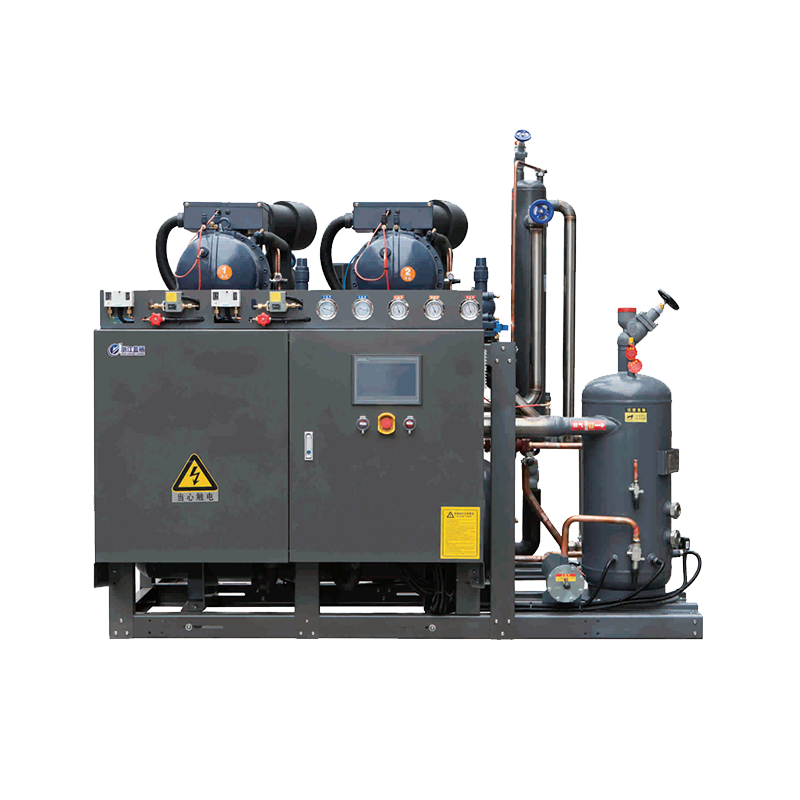
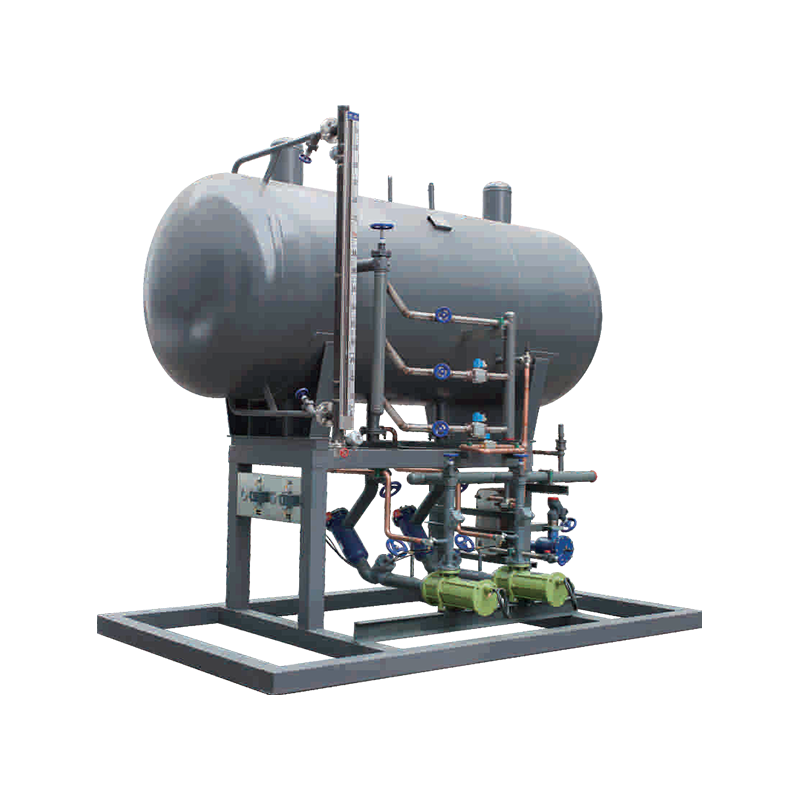
A refrigeration unit is a coordinated set of components that moves heat out of a controlled space. In the most common industrial layout, a condensing unit houses the compressor and the condenser, while one or more air coolers stand inside the cold room. The expansion valve meters refrigerant into the evaporator, where it boils and absorbs heat; the compressor then raises the vapor's pressure and temperature so the condenser can reject that heat to air or water.
Three conclusions matter to the buyer:
- The compressor sets capacity, reliability, and part of the efficiency.
- The condenser governs how much energy is wasted when outside temperatures rise.
- The evaporator controls temperature uniformity across the room.
Because these components are matched at the factory, the quality of that matching affects daily performance more than any single component specification.
Three Configuration Choices That Define a Unit
Compressor: piston or screw
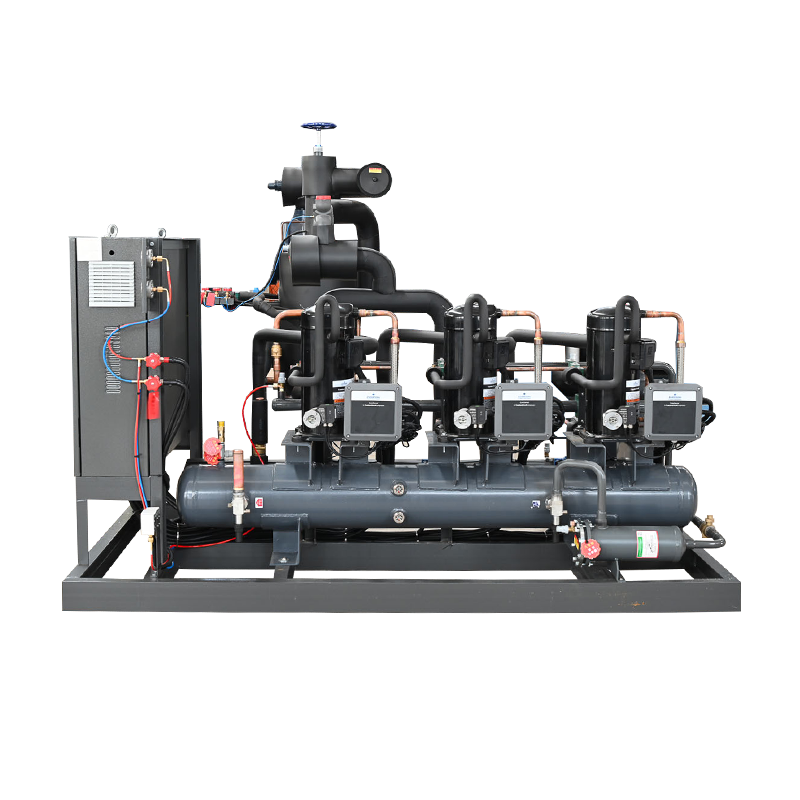
Piston compressors dominate small and medium capacities, roughly below 40 kW, with lower first cost and simple service. Their moving parts - valves, rings, and bearings - demand more attention under continuous high-load duty. Screw compressors take over above that range, earning their higher first cost through better partial-load efficiency and fewer wearing parts, especially in low-temperature work. As a rule of thumb, above 40 kW of required capacity, a screw unit repays the price premium within three to five operating seasons.
Condensing method: air, water, or evaporative
Air-cooled units are the default because installation is simple and no water is required. The drawback is that condensing pressure rises with ambient temperature: each extra Kelvin of condensing temperature adds roughly 1.5-2% to compressor power, and in a climate reaching 38-40°C in summer, that penalty can reach 15-25% at peak times.
Water-cooled units use a shell-and-tube condenser fed from a cooling tower, keeping condensing temperature low and stable. The price is water treatment, tower maintenance, and winter freeze protection. Evaporative condensers cool the refrigerant directly with a water spray, achieving condensing temperatures close to the wet-bulb level. They give the best year-round efficiency in dry climates but demand disciplined water management.
| Method | Typical condensing temp. | Relative energy use | Water need | Best fit |
|---|---|---|---|---|
| Air-cooled | Ambient + 12-15 K | Baseline | None | Small/medium units, dry sites |
| Water-cooled | Wet-bulb + 8-10 K | 85-90% | Cooling tower | Large plants with a water loop |
| Evaporative | Wet-bulb + 5-8 K | 80-87% | Spray + bleed-off | Hot/dry climates, continuous load |
Sizing: Why Capacity Calculations Matter
An undersized refrigeration unit runs continuously and still cannot hold set point on warm days. An oversized unit short-cycles, wasting energy, stressing the compressor, and ruining humidity control. The practical target is a unit that runs about 18-20 hours per day at the design condition - enough reserve for extreme days, but not so much that cycling becomes frequent.
The cooling load in a -18°C freezer is unevenly distributed:
Typical Cooling Load Breakdown in a -18°C Cold Room
Product load is the most volatile: the moment warm goods enter the room, the load can double within the hour. The calculation must therefore use the incoming product temperature and daily throughput, not just the storage set point. Add a 5-10% safety margin for uncertainty and up to 10% for planned expansion. Beyond that, excess capacity creates more operating problems than it solves.
Efficiency: Where the Real Cost Lives
Over ten years, energy consumption normally represents 70-80% of the total ownership cost of an industrial refrigeration unit. First cost is a small slice of the total, yet many quotations are compared as if it were the whole picture. The truly expensive unit is the one whose efficiency collapses under the actual ambient temperatures at your site.
For the same cooling duty at a site with a 35°C summer design temperature, relative annual consumption by condensing method is shown below.
Relative Annual Energy Use by Condensing Method (air-cooled = 100)
These figures assume at least 4,000 running hours per year. For a unit that operates only a few months in summer, the simplicity of an air-cooled design is worth the efficiency gap. Refrigerant choice also matters: modern low-GWP blends such as R-448A and R-449A perform close to legacy R-404A with about 65% lower global warming potential, making them the safer long-term choice for new units in most markets.
Matching Unit Design to Your Application
Each downstream industry changes the priority list. Food processing calls for stainless steel evaporators, IP-rated motors, and water defrost because rooms are washed down frequently. In cold-chain logistics, door openings dominate the load, so air recovery speed and defrost reliability matter more than the steady-state efficiency figure. In pharmaceutical storage, temperature uniformity and alarm capability drive the design, and the unit must support validation with documented sensor output.
| Application | Primary concern | Design implication |
|---|---|---|
| Food processing | Hygiene, washdown | Stainless steel, water defrost, high IP ratings |
| Cold storage / logistics | Door traffic, variable load | Larger evaporator surface, fast defrost, remote alarms |
| Pharmaceutical | Uniformity, validation | Redundant units, precision sensors, history logging |
| Brewing / dairy | Multiple temperature zones | Several evaporators per unit, suction groups |
The common thread is a refrigeration unit configured for the room, not chosen from a generic table. A manufacturer that matches evaporator surface, defrost type, and capacity to the actual process delivers a unit that stays within tolerance through every season.
Independent Units or a Centralized System?
For a facility with one to four cold rooms, independent refrigeration units are usually the better answer. Each room gets its own system, a failure stays contained, and future capacity simply means adding another unit. The downsides appear as the plant grows: many condensers on the roof, many small compressors to service, and weaker part-load performance across the site.
Above roughly 100 kW of total load, a centralized rack with several compressors in parallel becomes attractive. It gives finer system-level capacity control, a smaller condenser footprint, and one machine room for maintenance. The trade-off is that redundancy and a written service plan become essential, because one failure can affect several rooms.
Many operators choose a hybrid layout: a rack for the main storage hall and small independent units for critical pharmaceutical or quarantine chambers. Ask your supplier to quote both arrangements using the same load data before deciding.
Specification Checklist for Buyers
Whenever you request a quotation for a refrigeration unit, give every supplier the same information:
- Design ambient temperature - summer maximum and winter minimum.
- Room dimensions, insulation type, and panel thickness.
- Warmest incoming product temperature and daily throughput.
- Door size and expected opening frequency.
- Set point and tolerance, for example -18°C ± 2°C.
- Defrost preference: electric, water, or hot gas.
- Annual operating hours and electricity tariff structure.
- Site constraints: machine room size, rooftop access, and available voltage.
Then ask each supplier to state capacity at your design ambient, not at the industry's nominal rating point of 32°C ambient. A unit rated 15 kW at nominal conditions may deliver only 13 kW at 40°C ambient, and that gap decides whether your room reaches set point in summer.
The right refrigeration unit holds the required temperature reliably at the lowest ten-year cost, not at the lowest purchase price. Start with the compressor type, fit the condenser to the climate, and size the evaporator to the room. Then work with a manufacturer that calculates your actual load and builds the complete system around it. Zhejiang Lanxi Refrigeration Equipment Co., Ltd. applies this philosophy to every air cooler, condenser, and screw or piston unit it builds, so the equipment performs in the field exactly as it does in the design calculation.
-
A cold storage manager in a food plant once called us about a unit that could not pull a 200 square...
READ MORE -
A maintenance supervisor running a 400 kW cold store in a subtropical climate noticed that the pack...
READ MORE -
A poultry processor needed 480 kW of condensing capacity for a new ammonia plant room. There was no...
READ MORE -
Condenser: The Core Heat Rejection Component of All Refrigeration & HVAC Systems Every functiona...
READ MORE -
On a 38°C summer afternoon, a food processing plant in eastern China watched its air-cooled condens...
READ MORE -
When a food-processing plant in a water-scarce region evaluates its refrigeration options, the cond...
READ MORE

- Email: [email protected]
- Phone: +86-15258555916
- Add: 301 Punan Avenue, Pukou Street, Shengzhou City, Shaoxing City, Zhejiang Province.China
Copyright © Zhejiang Lanxi Refrigeration Equipment Co., Ltd. All Rights Reserved.
浙ICP备2022034605号-1
 Custom Refrigeration Equipment Manufacturers
