
-
 +86-15258555916
-
 [email protected]

 English
 中文简体
 русский
 Tiếng Việt

Evaporative Condenser Guide: How It Works, Sizing and Selection Criteria
Content
- 1 What an Evaporative Condenser Actually Is
- 2 How the Loop Works, Step by Step
- 3 Evaporative Condenser, Cooling Tower, or Air-Cooled?
- 4 Why Condensing Temperature Costs More Than the Condenser
- 5 Sizing Rules and Selection Criteria
- 6 Water Treatment and Maintenance Reality
- 7 When Another Condenser Is the Better Answer
- 8 What to Check Before You Buy
A poultry processor needed 480 kW of condensing capacity for a new ammonia plant room. There was no room for a cooling tower basin, the water tariff was climbing, and the site sits in a river delta where summer wet-bulb temperatures hover near 27 °C. The plant ended up with an evaporative condenser, and compressor power came in roughly a quarter below the air-cooled option quoted first.
That trade-off is the whole story of evaporative condensers. They reject heat by evaporating a thin film of water over a refrigerant coil, which lets the refrigerant condense close to the ambient wet-bulb instead of the ambient dry-bulb. Lower condensing temperature means lower compressor power. The price is water treatment, a continuous purge stream, and a maintenance routine that has to be taken seriously.
What an Evaporative Condenser Actually Is
An evaporative condenser is a condenser and a cooling tower combined in a single casing. Refrigerant flows through a closed coil, water is sprayed over the outside of that coil, and a fan pulls air across the wetted surface. The refrigerant never touches the water or the air.
Almost all of the heat leaves with the water vapour. Evaporating one kilogram of water absorbs roughly 2,450 kJ at typical conditions. Rejecting 1 kW of heat for one hour means 3,600 kJ, so the unit evaporates about 1.5 kg of water per kWh of heat rejected. Add the bleed needed to control dissolved solids and the drift loss, and total make-up lands near 1.8 to 2.2 kg per kWh.
Because evaporation is driven by wet-bulb temperature, the coil can condense refrigerant at only 3 to 6 °C above the design wet-bulb. An air-cooled condenser working against dry-bulb air typically needs 10 to 15 °C of approach, and it moves several times more air to get there. That gap in condensing temperature is where the energy saving lives.
How the Loop Works, Step by Step
- Hot, superheated discharge gas from the compressor enters the condensing coil.
- A pump lifts water from the sump to a header of spray nozzles above the coil.
- Water falls as a thin film over the coil tubes while a fan draws air through the casing, usually upward and counter to the water.
- Part of that film evaporates. The latent heat it absorbs comes out of the refrigerant inside the tube, which condenses into liquid.
- Liquid refrigerant drains to the receiver, while unevaporated water falls back into the sump and recirculates.
- Make-up water replaces the evaporated portion, a controlled bleed drains concentrated solids, and drift eliminators catch droplets that would otherwise leave with the exhaust air.
Only 1 to 2 percent of the circulating water evaporates on each pass. That matters for design: the pump is sized for recirculation, not consumption, and the water treatment system is sized for a small, steady make-up stream.
Evaporative Condenser, Cooling Tower, or Air-Cooled?
The choice comes down to which heat sink you can reach, how much water you can afford, and how much space you have.
| Criterion | Evaporative condenser | Cooling tower with water-cooled condenser | Air-cooled condenser |
|---|---|---|---|
| Driving temperature | Wet-bulb, latent heat | Wet-bulb, latent heat | Dry-bulb, sensible heat |
| Typical condensing temperature | 3 to 6 °C above wet-bulb | 4 to 8 °C above wet-bulb | 10 to 15 °C above dry-bulb |
| Main equipment | One packaged casing | Tower plus shell-and-tube condenser plus an extra water loop | One casing |
| Water make-up | About 1.8 to 2.2 kg per kWh rejected | Similar evaporation plus tower losses | None |
| Footprint | Small to moderate | Largest of the three | Large, needs unobstructed air |
| Maintenance focus | Water chemistry, coil condition, spray nozzles | Water chemistry, fill, tower structure | Coil cleaning, fan drives |
Where the numbers are close, the tower route involves two machines and an additional pump loop, which is why it is usually reserved for large plants that already run a central water system. Air-cooled wins when water is scarce, expensive, or restricted by the site permit. A fuller discussion of that trade-off appears in our note on the key advantages of air-cooled condensers over water-cooled ones.
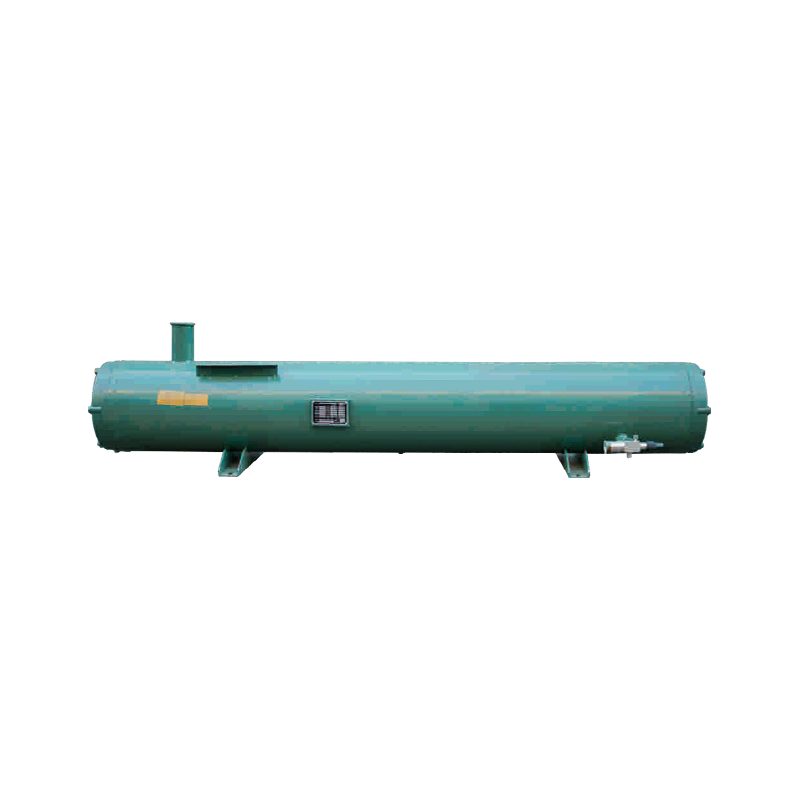 HY-SL Water Cooled Condenser SeriesWorth reviewing when weighing water-cooled capacity against air-cooled alternatives for high-load industrial refrigeration; HY-SL spans 5HP to 140HP.View Product →
Why Condensing Temperature Costs More Than the Condenser
On a typical ammonia or HFC screw system, every 1 °C of extra condensing temperature adds roughly 2 to 3 percent to compressor power. That single rule decides most evaporative condenser projects.
Index values are relative compressor power for a single-stage screw compressor, with condensing at 30 °C set to 100. The slope shifts a little with refrigerant and compressor type, but it stays steep in every case. On a 500 kW duty running 6,000 hours a year, the difference between 35 °C and 45 °C is worth more than the condenser itself.
Sizing Rules and Selection Criteria
Duty and margin
Start from the compressor duty, not the nameplate of the old condenser. Multiply by 1.15 to 1.25 to cover desuperheating, fouling allowance, and pull-down load. A 480 kW ammonia duty therefore calls for a nominal 550 to 600 kW condenser.
Design wet-bulb
Use a statistically based wet-bulb, typically the value exceeded for 1 percent of annual hours, not the record high. Sizing for the worst half-day in ten years adds coil surface that sits unused for 8,700 hours.
Fan type, cells, and altitude
- Axial fans move more air per kW and suit clean, open rooftops.
- Centrifugal fans handle ducted discharge and quieter installations.
- Multi-cell units allow one cell to shut down at part load instead of running every fan slowly.
- Above roughly 1,000 m elevation, fan volume flow needs correction; a unit sized at sea level will fall short on capacity.
Materials and refrigerant
For ammonia, stainless or heavy-duty hot-dip galvanized coil construction holds up better than standard galvanized tube, and coastal sites need the same treatment. Note also that an evaporative condenser holds a larger refrigerant charge than a shell-and-tube condenser of equal duty, which matters for ammonia charge limits and for HFO cost.
Winter operation
Most units can run dry in cold weather, but only if they were ordered with that in mind: modulating dampers or variable speed fans for capacity control, a sump heater, and freeze protection on the spray pump and piping.
Water Treatment and Maintenance Reality
Scale is the quiet killer. A one-millimetre mineral layer on the coil adds resistance between the water film and the refrigerant, so the compressor compensates with a higher condensing temperature, which is the exact cost the evaporative condenser was bought to avoid.
Cycles of concentration typically run between 3 and 5 on a properly treated system. Beyond that, the bleed rate has to rise to prevent hardness salts from plating out on the coil, and water consumption climbs with it. A practical schedule looks like this:
- Weekly: check spray coverage, sump level, and that the bleed valve is genuinely flowing.
- Monthly: water analysis for conductivity, pH, hardness, and biocide residual.
- Quarterly: inspect nozzles, drift eliminators, and coil face for scale or biofouling.
- Annually: fan bearings and drives, casing corrosion, and a full water treatment audit.
Drift eliminators and a disciplined biocide programme are also a public health control. An open water circuit that is warm, wet, and lightly loaded is exactly the environment where Legionella can establish itself, so the maintenance plan is not optional paperwork.
When Another Condenser Is the Better Answer
Evaporation stops making sense in a few clear situations. Small distributed loads rarely justify pumps, water treatment, and a permanent bleed line. Desert and high-altitude sites with scarce or costly water often find air-cooled condensers cheaper across a twenty-year life. Sites with no capacity to run a water treatment and Legionella management programme should not install an open water circuit at all.
The chart is a starting point, not a verdict. Noise limits, refrigerant charge rules, roof structural capacity, and the local cost of water all push the decision one way or the other, and a two-route comparison on paper is cheap insurance before you commit to a plant room layout.
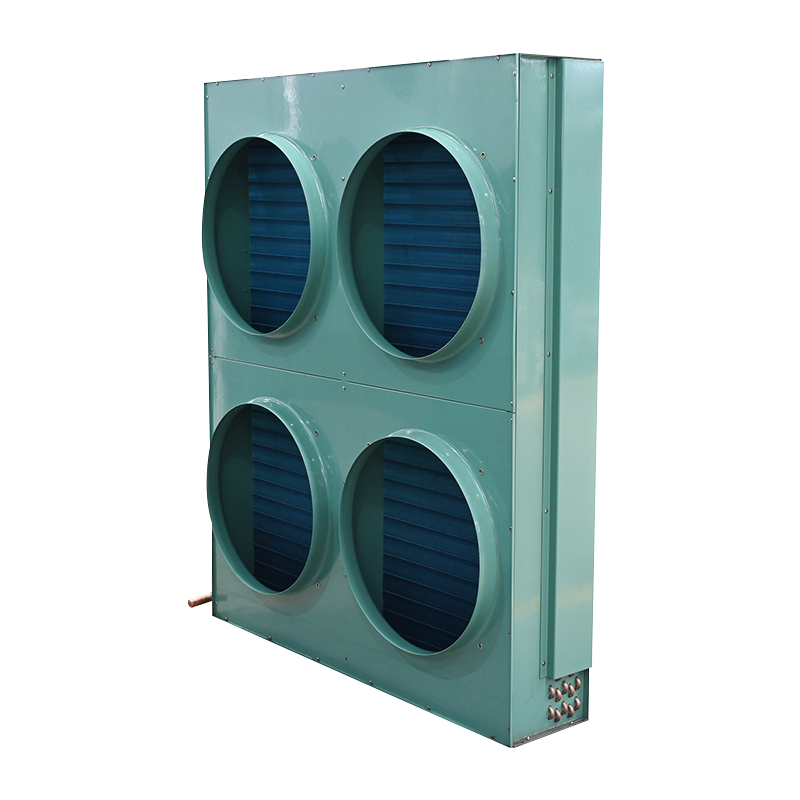 FNH Model Series Air-Cooled CondenserA useful air-cooled option to compare before committing to plant layout, with FNH models from 7.6 kW to 57.4 kW.View Product →
What to Check Before You Buy
Zhejiang Lanxi Refrigeration Equipment builds evaporative condensers alongside air coolers, air-cooled condensers, screw and piston units, and barrel pump packages, and supplies food processing, cold chain, pharmaceutical, and cold storage projects in China and overseas. Condensers and compressor packages are matched at the design stage, and the unit range runs on Bitzer, Frascold, Fusheng, Hanbell, Refcomp, and RFC compressors.
When you compare quotations for an evaporative condenser, ask for these five items in writing:
- Guaranteed capacity at a stated wet-bulb, refrigerant, and site altitude.
- Coil material and the corrosion protection applied after fabrication.
- Fan type, motor rating, and the part-load control method.
- Make-up water quality limits and the recommended bleed rate.
- Spare parts list and the maintenance intervals you are expected to meet.
The full condenser family, from evaporative models through FNH, FNU, FNV, and FNVB air-cooled units to water-cooled shells, is listed in our condenser series overview.
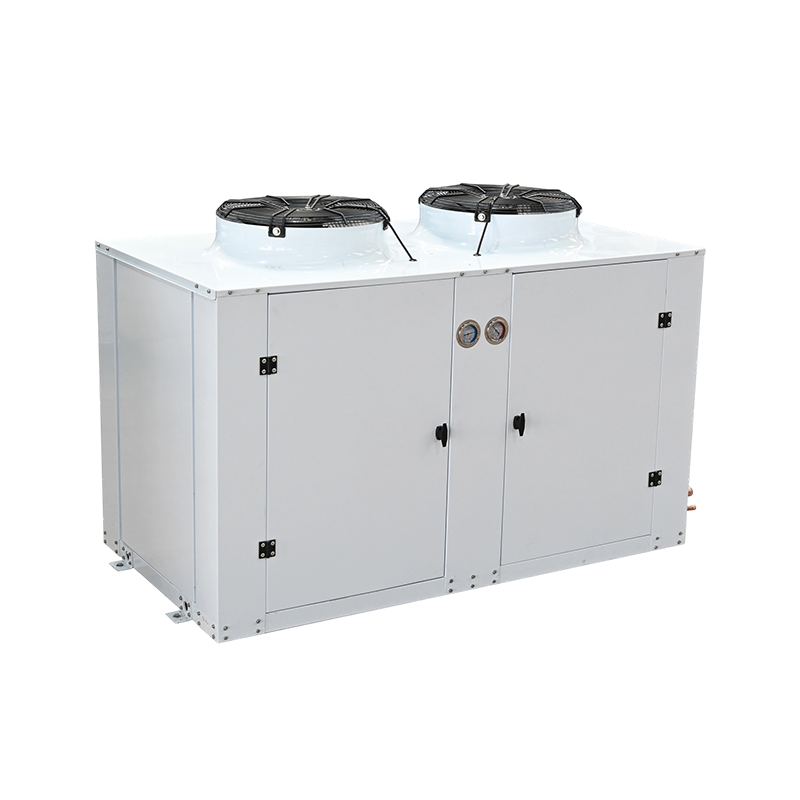
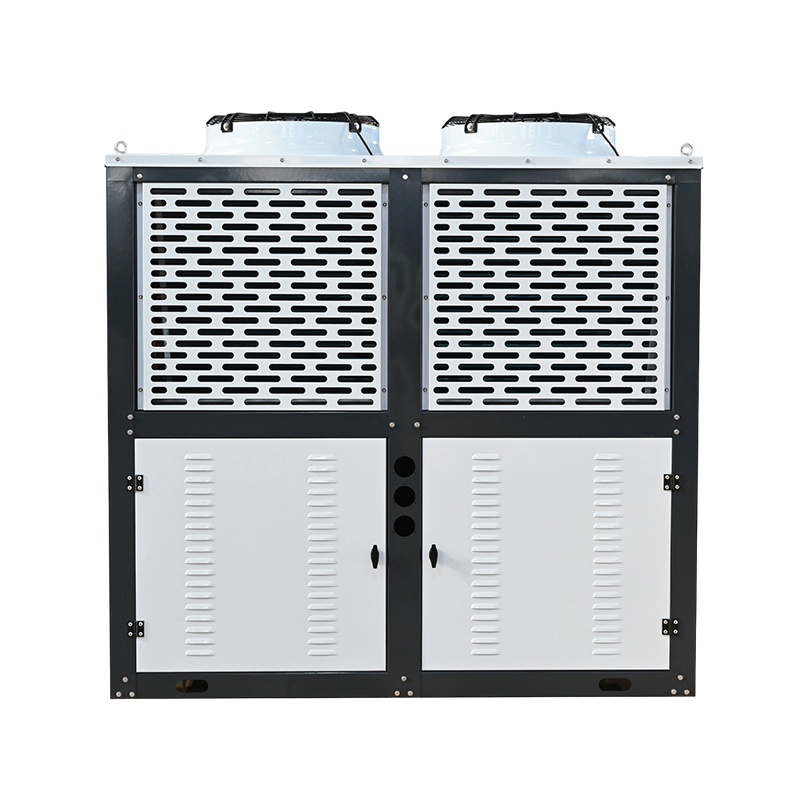
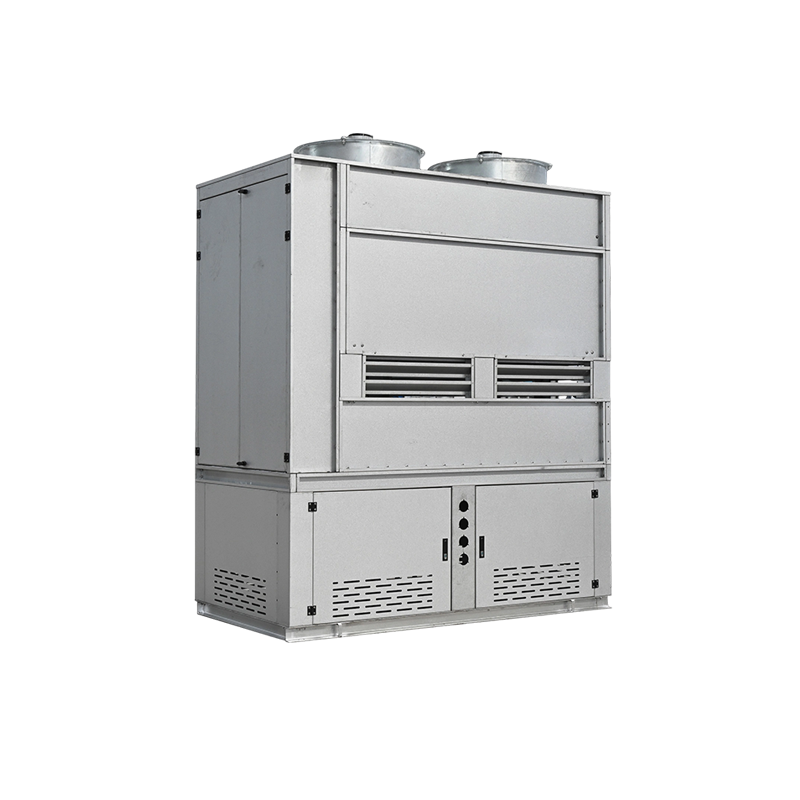 Evaporative Condenser for Industrial Refrigeration SystemsReview this evaporative condenser for lower condensing temperatures and energy savings in industrial refrigeration, with maintenance possible without system shutdown.View Product →
If you take one number away from all of this, take the condensing temperature. An evaporative condenser holding 35 °C in a climate where an air-cooled unit would run at 48 °C is not a marginal gain; it decides whether the plant's energy bill stays comfortable. Water treatment, coil inspection, and a purge stream that somebody actually monitors are the ongoing price for that.


-
A freezer warehouse holding -30°C rooms loses money quickly once summer heat drives condensing pres...
READ MORE -
A maintenance supervisor running a 400 kW cold store in a subtropical climate noticed that the pack...
READ MORE -
When a food-processing plant in a water-scarce region evaluates its refrigeration options, the cond...
READ MORE -
A cold storage manager in a food plant once called us about a unit that could not pull a 200 square...
READ MORE -
Condenser: The Core Heat Rejection Component of All Refrigeration & HVAC Systems Every functiona...
READ MORE -
In modern industrial refrigeration and HVAC systems, energy efficiency, compact footprint and stabl...
READ MORE

- Email: [email protected]
- Phone: +86-15258555916
- Add: 301 Punan Avenue, Pukou Street, Shengzhou City, Shaoxing City, Zhejiang Province.China
Copyright © Zhejiang Lanxi Refrigeration Equipment Co., Ltd. All Rights Reserved.
浙ICP备2022034605号-1
 Custom Refrigeration Equipment Manufacturers
