
-
 +86-15258555916
-
 [email protected]

 English
 中文简体
中文简体 русский
 Tiếng Việt
Industrial Air Cooler Guide | Refrigeration Unit Selection for Cold Storage
Content
- 1 What Is an Industrial Air Cooler and How Does It Work in a Refrigeration System?
- 2 Industrial Air Cooler vs. Air Conditioner vs. Air-Cooled Condenser: Key Differences
- 3 Types of Industrial Air Coolers for Cold Storage and Processing Facilities
- 4 Key Selection Criteria When Specifying an Industrial Air Cooler
- 5 How the Air Cooler Works with Other Refrigeration Unit Components
- 6 Industry Applications of Industrial Air Coolers
- 7 How to Choose a Reliable Industrial Air Cooler Supplier
- 8 Conclusion: Building an Efficient Refrigeration Unit Around the Right Air Cooler
What Is an Industrial Air Cooler and How Does It Work in a Refrigeration System?
Picture a medium-sized cold room built to hold frozen food at -22°C. The compressor unit and condenser sit outdoors, but the equipment that actually controls the temperature inside the room is the industrial air cooler mounted near the ceiling. It is the component operators see every day, and it is the part most likely to undermine performance if it is undersized or mismatched with the rest of the refrigeration unit.
An industrial air cooler, also called a cold blower or unit cooler in cold storage practice, is the heat-absorption end of a complete refrigeration unit. It does not produce cold by itself. It removes heat from the room air and transfers that heat to refrigerant flowing through its coil. The refrigerant then carries the heat to the condenser, where it is released outside.
Position the air cooler in a vapor-compression cycle and the picture becomes clear. The compressor, condenser, expansion valve, and evaporator are the four core components of any refrigeration system, and in an industrial cold storage system the evaporator is the air cooler. Liquid refrigerant enters the finned tubes through the expansion valve. As it evaporates, it absorbs heat from the air that fans push across the finned surface, and the chilled air recirculates through the room.
Keep two levels of terminology separate. A refrigeration unit, or refrigeration system, is the complete engineered loop: the compressor unit, condenser, expansion valve, air cooler, and the piping and controls that connect them. An industrial air cooler is one component inside that loop. Sizing an air cooler without checking the compressor unit and condenser is a common source of short cycling, excessive defrost, and wasted energy.
For a closer look at how these components are built, compare the industrial air cooler cold blower units in the product range before you move into detailed system sizing.
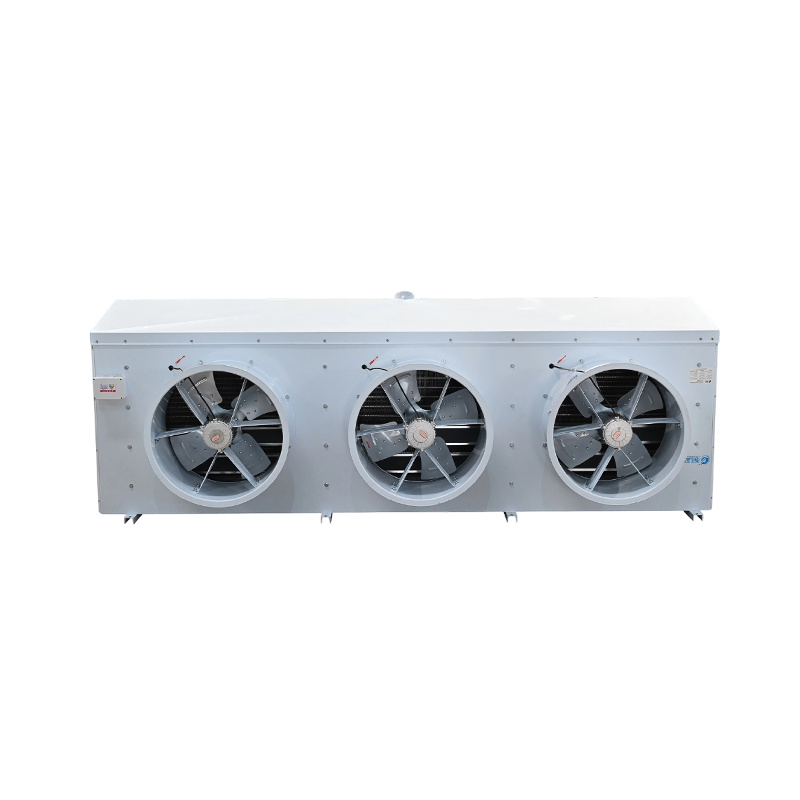 Wholesale Aircooler Cold Blower Suppliers, Factory - Zhejiang Lanxi RefrigeratioZhejiang Lanxi Refrigeration Equipment Co., Ltd is China wholesale Aircooler Cold Blower suppliers and factory,The Aircooler Cold Blower ...View Product →
Industrial Air Cooler vs. Air Conditioner vs. Air-Cooled Condenser: Key Differences
Three terms are often mixed up in industrial refrigeration discussions: industrial air cooler, air conditioner, and air-cooled condenser. They describe completely different pieces of equipment, and confusing them leads to incorrect specifications.
An industrial air cooler is an evaporator installed inside the space to be cooled, absorbing heat from the room air. An air-cooled condenser sits at the opposite end of the loop: it is the heat-rejection component installed outdoors or in a machine room, releasing absorbed heat to the surrounding air. The two cannot replace each other, because a condenser does not cool the room and an air cooler does not reject heat to the environment. An air conditioner is a complete packaged system with its own compressor, condenser, expansion valve, and evaporator, designed primarily for human comfort rather than process or storage duty.
| Equipment | Role in the cycle | Typical location | Primary function |
|---|---|---|---|
| Industrial air cooler | Evaporator (heat absorption) | Inside the cold room | Removes heat from room air and transfers it to the refrigerant |
| Air-cooled condenser | Condenser (heat rejection) | Outdoors or in a machine room | Releases absorbed heat to the outside air |
| Air conditioner | Complete packaged cooling unit | Indoor and outdoor sections | Provides comfort cooling with its own compressor, condenser, and evaporator |
Operating conditions set them apart even further. A cold storage air cooler may run at evaporating temperatures from roughly -35°C to -5°C, handling frost buildup, high moisture loads from frequent door openings, and continuous duty in food, pharmaceutical, or chemical environments. Comfort air conditioners are not built for those conditions, which is why they have no place in a serious cold storage design.
Types of Industrial Air Coolers for Cold Storage and Processing Facilities
Air cooler selection starts with two questions: what temperature must the room hold, and how should air be distributed through the space? Both answers lead to a specific series and a specific airflow configuration.
DD, DL, DJ Series Air Coolers — Which One Matches Your Storage Temperature?
Manufacturers commonly structure air cooler lines around temperature bands, and the DD, DL, and DJ series labels are the most widespread convention. DD series air coolers for high-temperature cold storage serve chilled rooms around 0°C to 5°C, where thin frost and light duty allow a compact coil. DL series cold blowers for medium-temperature applications fit rooms down to roughly -18°C and need a deeper coil and a more capable defrost system. DJ series cold blowers for low-temperature freezers are built for deep-freeze rooms at -25°C and below, with wide fin spacing, stronger fans, and heavy-duty defrost.
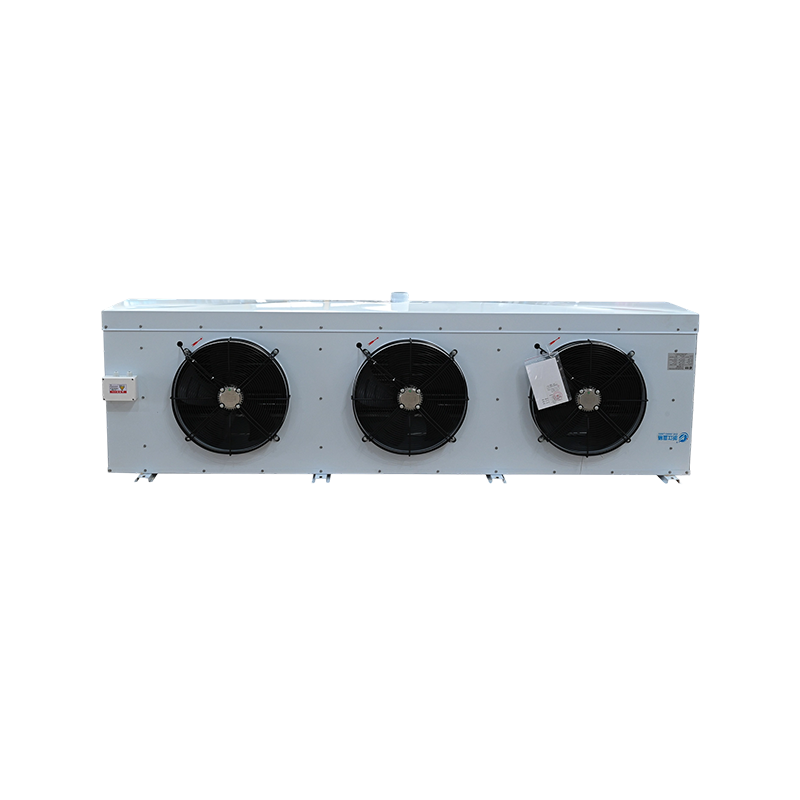 Wholesale DJ Series Cold Blower Suppliers, Factory - Zhejiang Lanxi RefrigeratioZhejiang Lanxi Refrigeration Equipment Co., Ltd is China wholesale DJ Series Cold Blower suppliers and factory,The DJ Series Cold Blower ...View Product →
As room temperature drops, evaporating temperature drops with it. A cooler that performs well in a +5°C chilled room will frost up quickly and lose capacity in a -25°C freezer, so the temperature range is the first filter in every selection.
Airflow Configuration: Dual-Side Discharge vs. Floor-Mounted Air Coolers
Nominal capacity alone does not guarantee an even room temperature. The cooler must distribute air across the entire storage volume, and the airflow pattern has to match the room shape and stacking pattern.
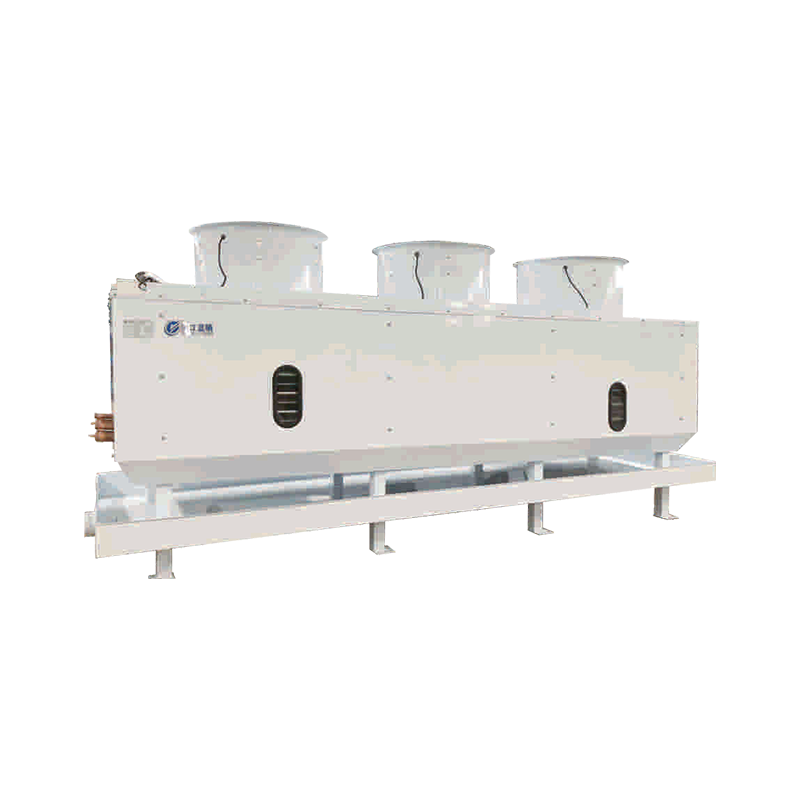
Ceiling-mounted dual-side discharge air coolers throw air in two opposite directions, which suits long, narrow cold rooms and high-bay freezers. The air sweeps the full length of the space and reduces temperature stratification between floor and ceiling.
Where headroom is limited, or where racks and dense product loading block overhead airflow, floor-mounted outlet air coolers are a practical alternative. They deliver air horizontally at low level, are easier to reach for maintenance and defrost drainage, and work well when ceiling height is too low for an effective ceiling-mounted throw. The trade-off is floor space, so their position must be planned around forklift traffic and loading operations.
Key Selection Criteria When Specifying an Industrial Air Cooler
When you issue an inquiry, use a specification checklist rather than a vague request. These parameters determine whether the cooler will hold the room temperature and run efficiently.
- Heat exchange capacity: express the cooling load in kW or kcal/h, covering product load, infiltration, fan heat, defrost heat, and internal heat sources.
- Evaporating temperature match: the cooler's design evaporating temperature must sit inside the operating envelope of the compressor unit.
- Fan quantity and total airflow: airflow drives air throw and temperature distribution, and it must match the room geometry.
- Fin spacing: in freezers, wider fin spacing slows frost build-up and lengthens the interval between defrost cycles.
- Defrost method and cycle: electric, water, and hot-gas defrost have different energy costs, cycle times, and suitability. Water defrosting air coolers are a common choice where water supply and drainage are available.
- Material and protection options: food and pharmaceutical environments may require corrosion-resistant coatings or IP-rated motors.
- Noise and energy consumption: fan power and defrost energy can add significantly to operating cost in continuous-duty plants.
Fin spacing and defrost deserve extra attention in low-temperature rooms. Frost accumulates continuously on the coil. If the spacing is too tight, airflow decays quickly and the cooler enters defrost too often, pushing the room temperature up and down and stressing the compressor. The right design depends on the load profile, door-opening pattern, and available defrost energy source.
Once the air cooler parameters are fixed, move to the rest of the loop. The condenser must reject the room load plus the compressor heat, so review the air-cooled condenser series before finalizing the compressor and piping arrangement.
How the Air Cooler Works with Other Refrigeration Unit Components
A refrigeration unit works as one team. The air cooler absorbs heat from the room, the compressor unit raises refrigerant pressure and temperature, the condenser rejects the heat outside, and the expansion valve meters refrigerant back into the cooler. Every component must operate within the same evaporating and condensing envelope.
The most frequent mismatch found in the field is an air cooler specified for one temperature range and a compressor unit specified for another. Compressors have defined application limits. If the evaporating temperature falls outside that range, capacity drops, oil return becomes unreliable, and the compressor runs hot. Always cross-check the design evaporating temperature of the air cooler against the application range of the compressor unit.
For plants where water is available and heat loads are high, an evaporative condenser can be considered instead of an air-cooled condenser. It typically rejects heat at a lower condensing temperature, improving system efficiency, but it adds water treatment and maintenance requirements. The choice affects total operating cost and must be coordinated with the compressor unit and air cooler capacity.
Matching Screw and Piston Compressor Units to Your Cooling Load
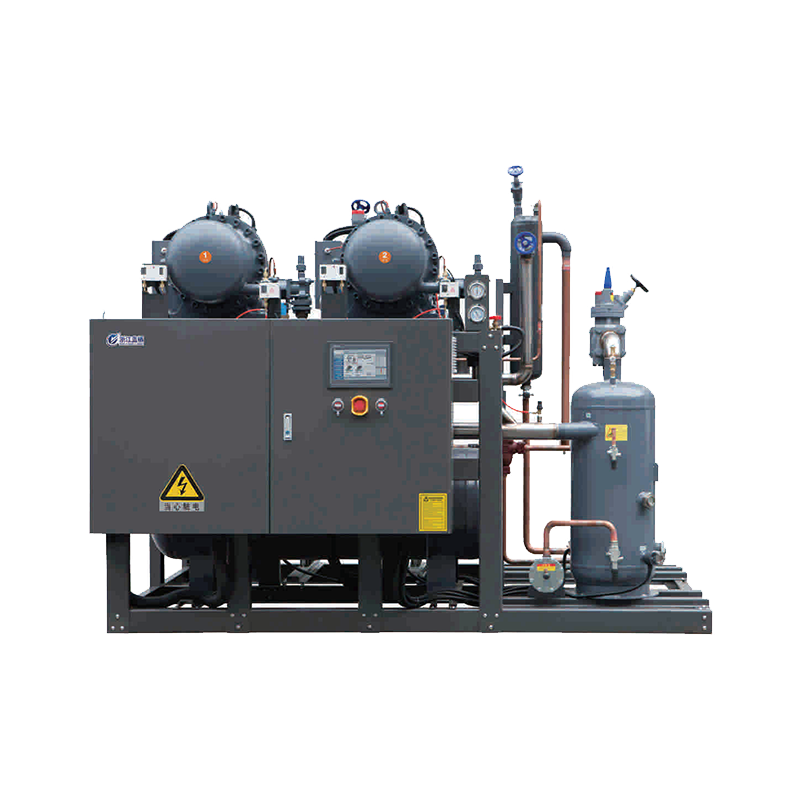
Piston compressor units are common for small and medium cold rooms. They are simple, responsive, and available in parallel configurations that stage capacity to match partial loads by starting and stopping individual compressors, which saves energy below full load. For larger plants that run close to full load for long periods, screw compressor units provide better part-load efficiency in the medium-to-high capacity range and longer service intervals. On a large low-temperature store, the design commonly centers on screw compressor refrigeration units configured with internationally recognized compressors.
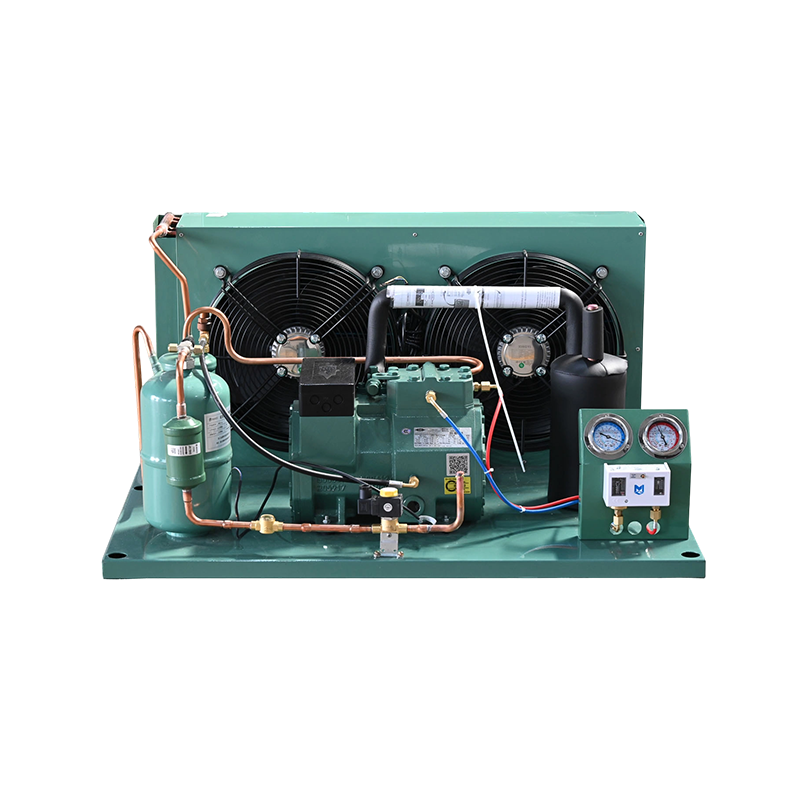 Wholesale Bitzer Screw Unit Suppliers, Factory - Zhejiang Lanxi Refrigeration EqZhejiang Lanxi Refrigeration Equipment Co., Ltd is China wholesale Bitzer Screw Unit suppliers and factory,The Bitzer screw unit is an in...View Product →
Why Compressor Brand Selection Matters for Refrigeration Reliability
The compressor determines how long the system runs before major maintenance and how efficiently it turns electricity into cooling. International brands such as Bitzer, Frascold, Fusheng, Hanbell, Refcomp, and RFC are widely used in industrial refrigeration and have established service networks. According to the company, its compressor unit lines are available with several of these international brands, giving buyers a choice based on budget, temperature, and service accessibility. From a purchasing standpoint, a supplier offering multiple brand options usually has stronger integration capability than one locked into a single platform. Ask which compressors are available for your temperature range and confirm that spare parts and technical support are realistic for your location.
Industry Applications of Industrial Air Coolers
The same air cooler concept serves different industries, but the load profile changes the specification.
- Food processing: cooling rooms, rapid chilling lines, and freezing tunnels need fast heat removal and cleanable surfaces. Corrosion-resistant coatings and defrost systems that keep up with high moisture loads are standard requirements.
- Cold chain logistics: distribution warehouses face frequent door openings, fast goods turnover, and continuous refrigeration demand. Robust fans, generous coil surface, and dependable defrost keep temperatures stable and protect perishable goods.
- Pharmaceutical and chemical storage: temperature stability and backup capacity come first. Facilities often oversize the coil to reduce temperature gradients and compressor cycling, and they demand strict quality documentation.
- Frozen storage and blast freezing: deep-freeze stores at -25°C or lower, and blast freezers that pull product temperature down quickly, need low-temperature air coolers with wide fin spacing, high airflow, and heavy-duty defrost.
Use the industry context to set the safety margin. A food processing line that cannot stop cannot afford temperature drift from an undersized cooler or an incorrect defrost schedule.
How to Choose a Reliable Industrial Air Cooler Supplier
Supplier selection should focus on capability and system knowledge, not only the price of a single cooler. A reliable partner should demonstrate the following.
- Complete product line: when one supplier covers air coolers, condensers, and compressor units, system matching risk drops because the design is coordinated internally.
- Recognized compressor brands: international compressor options indicate integration experience and flexibility across budgets and temperature requirements.
- Custom design service: the supplier should size the air cooler, set defrost intervals, and propose the complete refrigeration unit layout, not just quote a catalog model.
- Quality and after-sales support: documented quality control, clear communication, and a practical approach to spare parts and commissioning support.
- Export experience: multilingual sales channels and international shipping experience make documentation and packaging more reliable for overseas buyers.
According to the company, the Lanxi Cool range covers air cooler series, air-cooled and evaporative condensers, and screw and piston compressor units configured with international compressor brands. The company describes its manufacturing philosophy as fine manufacturing for a greener future, with an emphasis on build quality and energy-conscious design. Verify those claims through technical discussion, drawings, and references, then build a shortlist around them.
Conclusion: Building an Efficient Refrigeration Unit Around the Right Air Cooler
The industrial air cooler is the part of the refrigeration unit that products actually feel. It must match the room temperature, the airflow pattern, the frost load, and the compressor unit that drives the whole loop.
The selection path works best in order. Define the temperature band, choose the airflow configuration, specify heat exchange capacity and defrost method, then match the cooler to a compressor unit and condenser from the same system design.
When the load profile and room layout are ready, take them to a supplier that can quote the complete package. A system-level proposal, with air cooler, compressor unit, and condenser designed together, is the most reliable way to build a cold room that holds temperature, controls energy cost, and keeps operating.

-
Walk into a cold storage room and feel the air near the door. If one corner is warmer than another,...
READ MORE -
Looking for an affordable, energy-saving alternative to air conditioners for residential, commercia...
READ MORE -
What Air-Cooled Condenser and Industrial Air Cooler Technologies Actually Do An Air-Cooled Condense...
READ MORE -
When a food processor plans a new -18°C freezer, the first equipment decision is usually about the ...
READ MORE -
Air Refrigeration Units Use Air Itself as the Refrigerant An air refrigeration unit — also known as...
READ MORE -
In a busy cold storage room or food processing line, a poorly selected industrial air cooler can ca...
READ MORE

- Email: [email protected]
- Phone: +86-15258555916
- Add: 301 Punan Avenue, Pukou Street, Shengzhou City, Shaoxing City, Zhejiang Province.China
Copyright © Zhejiang Lanxi Refrigeration Equipment Co., Ltd. All Rights Reserved.
浙ICP备2022034605号-1
 Custom Refrigeration Equipment Manufacturers
