
-
 +86-15258555916
-
 [email protected]

 English
 中文简体
中文简体 русский
 Tiếng Việt
Dual Discharge Unit Cooler: Applications, Benefits and Selection Guide
Content
- 1 What Is a Dual Discharge Unit Cooler?
- 2 How Does a Dual Discharge Unit Cooler Work?
- 3 Top Applications: Where Are Dual Discharge Unit Coolers Used?
- 3.1 1. Cold Storage and Freezer Warehouses
- 3.2 2. Food Processing and Preparation Rooms
- 3.3 3. Dairy and Beverage Production
- 3.4 4. Meat, Poultry and Seafood Processing
- 3.5 5. Fruit and Vegetable Cold Rooms
- 3.6 6. Pharmaceutical and Medical Cold Storage
- 3.7 7. Cold Chain Logistics and Distribution Centres
- 3.8 8. Supermarkets and Retail Cold Rooms
- 3.9 9. Ice Factories and Quick-Freezing Facilities
- 3.10 10. Chemical and Industrial Storage
- 4 Key Advantages of Dual Discharge Unit Coolers
- 5 Dual Discharge vs Single Discharge Unit Cooler
- 6 How to Choose the Right Dual Discharge Unit Cooler
- 7 Frequently Asked Questions
- 8 Ready to Specify a Dual Discharge Unit Cooler?
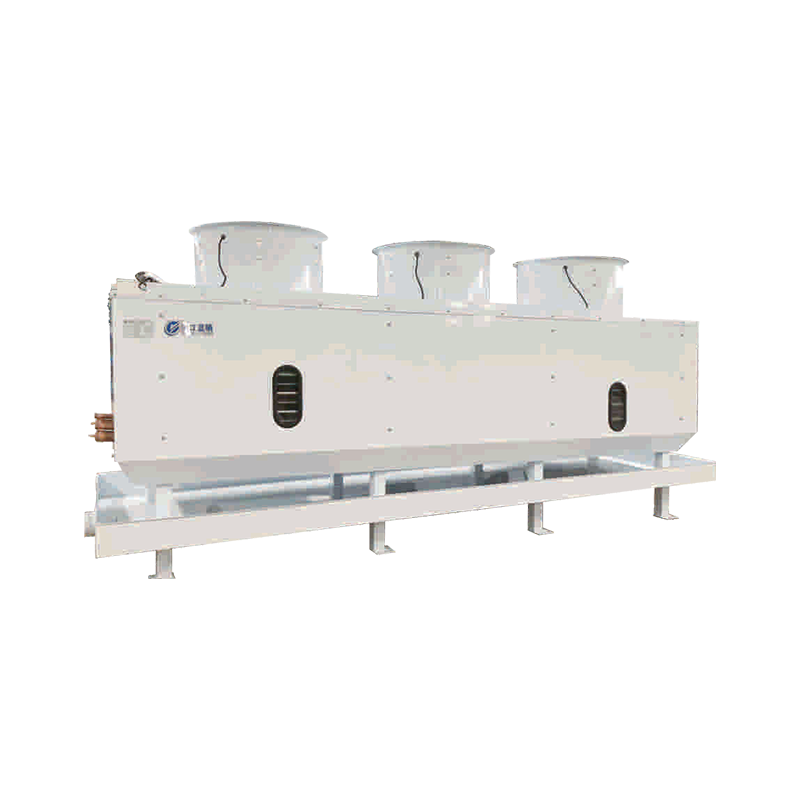
A dual discharge unit cooler — also known as a double side discharge air cooler, dual-flow evaporator or double-sided air discharge unit — is a refrigeration evaporator that discharges cold air from two opposite sides of the unit instead of a single direction.
Compared with a standard single-discharge evaporator, the two-way airflow delivers more balanced air distribution across the full storage area. This makes dual discharge unit coolers a common choice for cold rooms, freezer rooms, food processing plants, dairy production, pharmaceutical storage, and refrigerated logistics centres where stable, uniform product temperature is critical.
What Is a Dual Discharge Unit Cooler?
A dual discharge unit cooler is a ceiling- or wall-mounted evaporator with fans arranged so that cooled air is pushed evenly from both sides of the housing. Warm room air is drawn into the fin-and-tube coil, heat is absorbed by the evaporating refrigerant, and the cooled air is returned to the room through two opposing discharge faces.
The result is a wide, symmetrical air pattern that covers the room more evenly than a single-direction unit. In cold rooms with wide layouts, low ceilings, shelving or tall product stacking, single-direction airflow can leave "dead zones" and temperature hotspots. The dual discharge design reduces these problems and is often specified where product quality depends on consistent temperature.
How Does a Dual Discharge Unit Cooler Work?
The operating principle is the same as any forced-draught evaporator:
- Room air is drawn in through the coil inlet, usually from the bottom of the unit.
- Refrigerant evaporates inside the tubes, absorbing heat from the air passing over the fins.
- One or more axial fans discharge the chilled air evenly from both sides of the unit.
- The symmetrical airflow keeps circulating until the room reaches the set-point temperature.
Because the air is distributed from two faces, the unit can serve a wider floor area per fan set, which often means fewer units are needed to cool a given room compared with single-discharge designs.
Top Applications: Where Are Dual Discharge Unit Coolers Used?
1. Cold Storage and Freezer Warehouses
Dual discharge unit coolers are widely used in medium-temperature (MT) and low-temperature (LT) cold stores. Typical installations include:
- Frozen meat warehouses around −25 °C with room spans of 15–30 m
- Ice cream and frozen dairy holding rooms around −28 °C
- Frozen food packaging and palletising areas
For large, heavily loaded rooms, the even air throw of a dual discharge unit keeps product temperature stable from one end of the room to the other.
2. Food Processing and Preparation Rooms
Food processing and preparation rooms need gentle, even airflow to avoid product dehydration and local overcooling. Dual discharge coolers with bottom air intake and two-side discharge produce mild, uniform airflow, making them a common fit for food operation rooms at around 0 °C to −18 °C. Their flat profile also keeps valuable ceiling and working space clear.
3. Dairy and Beverage Production
Dairies and beverage plants use dual discharge air coolers in production and work rooms. The double-sided air circulation cools the room efficiently and evenly, and the flat ceiling design allows optimal use of the space above production lines. Easy access to the coil and drain pan supports quick cleaning in hygienic environments.
4. Meat, Poultry and Seafood Processing
Slaughterhouses, cutting rooms and seafood processing blast-holding zones (often −30 °C to −35 °C) rely on robust dual discharge evaporators for rapid, uniform cooling. Stainless steel and corrosion-protected options handle wet, wash-down environments.
5. Fruit and Vegetable Cold Rooms
Fresh produce is sensitive to local freezing and dehydration. A dual discharge unit avoids the "overly cold area directly under the unit" problem common to some single-discharge designs, protecting produce from local cold damage while maintaining high humidity levels that keep fruits and vegetables fresh longer.
6. Pharmaceutical and Medical Cold Storage
Pharmaceutical cold rooms and GSP/GMP-style storage require strict temperature uniformity to protect medicines, vaccines and blood products. The balanced airflow of dual discharge coolers helps maintain compliance with storage temperature requirements, including in rooms with irregular layouts.
7. Cold Chain Logistics and Distribution Centres
3PL cold chain logistics centres with multi-chamber frozen storage and busy dock areas need temperature stability while goods are continuously loaded and unloaded. Dual discharge evaporators provide the even cooling required to keep perishable goods within specification during high-traffic operation.
8. Supermarkets and Retail Cold Rooms
Retail and supermarket cold rooms — from reach-in and walk-in cabinets to low-ceiling commercial cold rooms of roughly 20–200 m³ — benefit from the symmetric discharge of dual-flow coolers. The airflow is distributed along the whole room, avoiding cold spots under the unit and improving microclimate quality for displayed goods.
9. Ice Factories and Quick-Freezing Facilities
Ice production and blast-freezing lines demand high heat-exchange efficiency and even air distribution across the freezing surface. Dual discharge unit coolers are commonly specified for these high-load applications.
10. Chemical and Industrial Storage
In chemical and industrial storage where corrosion resistance matters, dual discharge coolers with protective coatings or stainless steel construction are used to keep sensitive materials at a stable temperature over long periods.
Key Advantages of Dual Discharge Unit Coolers
- Uniform temperature distributionacross the full width of the room, reducing hotspots and cold spots.
- Elimination of dead air zonesbehind shelving, racks and stacked pallets.
- Low-ceiling friendly:the flat profile uses vertical space efficiently and suits rooms with limited headroom.
- Fewer units per room:wide two-way coverage can reduce the number of evaporators and fans required.
- Gentler airflow:suitable for food handling and preparation areas where strong single-direction draughts can damage product.
- Easier installation and maintenance:simple ceiling mounting and good access to the coil and drain pan for cleaning.
- Energy efficiency:better air distribution means the unit reaches set-point faster and holds it with less cycling.
Dual Discharge vs Single Discharge Unit Cooler
|
Feature |
Dual Discharge Unit Cooler |
Single Discharge Unit Cooler |
|
Air discharge |
Two sides, wide symmetrical coverage |
One direction |
|
Temperature uniformity |
Excellent across large / irregular rooms |
Good; can leave dead zones |
|
Low-ceiling rooms |
Ideal — flat profile |
May need more units |
|
Food processing rooms |
Preferred — gentle, even flow |
Acceptable for simple layouts |
|
Large or heavily racked rooms |
Better coverage per unit |
Often requires additional units |
|
Typical applications |
Cold stores, food & dairy plants, pharma, logistics |
Small cold rooms, walk-ins, simple layouts |
How to Choose the Right Dual Discharge Unit Cooler
When selecting a dual discharge air cooler for your project, check these points:
- Room size and ceiling height— confirm the air throw and cooling capacity (kW) match the room dimensions.
- Storage temperature— choose a medium-temperature or low-temperature series for the required set-point (e.g. 0 °C–+10 °C for MT, −18 °C and below for LT).
- Fin spacing— closer fin spacing (3–4 mm) suits medium-temperature rooms; wider spacing (6–7 mm or more) is recommended for low-temperature and high-humidity rooms to reduce frost build-up.
- Defrost method— electric, hot-gas or water defrost depending on room temperature and operating hours.
- Material— galvanised steel for standard dry rooms; stainless steel or coated coils for wet, wash-down, marine or corrosive environments.
- Refrigerant compatibility— confirm the unit is rated for your refrigerant (e.g. R404A, R448A, R449A, R507A or lower-GWP options such as R290 in appropriate systems).
- Noise level— important for food processing rooms where operators work near the units.
- Electrical supply— voltage and frequency for your target market (e.g. 220–240 V / 50 Hz, 380–415 V / 50 Hz, or 60 Hz markets).
Frequently Asked Questions
What temperature range do dual discharge unit coolers cover?
Dual discharge unit coolers are available for both medium-temperature rooms (roughly 0 °C to +10 °C, and chill rooms up to +15 °C) and low-temperature freezer rooms (down to about −35 °C). High-temperature units with wider fin spacing are also available for rooms above freezing, such as food preparation areas at 5–12 °C.
Are dual discharge coolers suitable for freezer rooms?
Yes. Low-temperature dual discharge series with wider fin spacing and appropriate defrost systems are widely used in freezer rooms, frozen meat warehouses and ice cream distribution centres.
Do dual discharge unit coolers save space?
Because of their flat ceiling-mount profile and wide two-way air throw, dual discharge units often allow a room to be cooled with fewer units, freeing floor and ceiling space for storage and processing.
How is a dual discharge unit cooler defrosted?
Common defrost options are electric heating elements, hot-gas defrost and water defrost. The right choice depends on room temperature, humidity and how often the room door is opened.
Why is even air distribution important in a cold room?
Uneven air distribution causes temperature differences that can spoil food, damage produce, create condensation and raise energy consumption. Uniform airflow keeps every product at the correct temperature and reduces running costs.
Ready to Specify a Dual Discharge Unit Cooler?
If you are planning a cold room, freezer warehouse, food processing line or pharmaceutical storage facility, our team can help you size and select the right dual discharge unit cooler for your project. Contact us with your room dimensions, target temperature and capacity requirements for a professional recommendation.
LANXI Refrigeration — professional refrigeration equipment manufacturer and supplier. OEM/ODM available for global projects.
-
What Is an Industrial Air Cooler and How Does It Work in a Refrigeration System? Picture a medium-s...
READ MORE -
A cold storage manager in a food plant once called us about a unit that could not pull a 200 square...
READ MORE -
When a food-processing plant in a water-scarce region evaluates its refrigeration options, the cond...
READ MORE -
Looking for an affordable, energy-saving alternative to air conditioners for residential, commercia...
READ MORE -
When a food processor plans a new -18°C freezer, the first equipment decision is usually about the ...
READ MORE -
Condenser: The Core Heat Rejection Component of All Refrigeration & HVAC Systems Every functiona...
READ MORE

- Email: [email protected]
- Phone: +86-15258555916
- Add: 301 Punan Avenue, Pukou Street, Shengzhou City, Shaoxing City, Zhejiang Province.China
Copyright © Zhejiang Lanxi Refrigeration Equipment Co., Ltd. All Rights Reserved.
浙ICP备2022034605号-1
 Custom Refrigeration Equipment Manufacturers
