
-
 +86-15258555916
-
 [email protected]

 English
 中文简体
 русский
 Tiếng Việt

Industrial Air Cooler Selection Guide: Coils, Defrost, Airflow and Load Matching
Content
- 1 Air Cooler Selection Starts With the Room, Not the Cabinet
- 2 Two Kinds of Air Cooler, Two Different Jobs
- 3 Match Capacity to Load, Airflow, and Temperature Difference
- 4 Coil and Fin Spacing Decide Defrost and Cleaning Risk
- 5 Defrost Method: Choose by Frost, Water, and Downtime
- 6 Compare Quotes Like an Operator, Not a Shopper
- 7 Installation and Maintenance Shape Real Performance
- 8 The Practical Bottom Line
Air Cooler Selection Starts With the Room, Not the Cabinet
A cold room that reaches temperature slowly, drips from the ceiling, or runs long defrost cycles usually points to a mismatch around the air cooler: coil surface, airflow, fin spacing, defrost, or drain planning. The cabinet is visible, but the room load and operating profile decide whether that cabinet works.
In industrial refrigeration, an air cooler is the evaporator inside the room. It absorbs heat from the air and transfers it to refrigerant. In a portable evaporative cooler, the same phrase describes a different product that cools outside air with water-soaked pads. Both are called air coolers, yet they solve different problems. The practical conclusion is simple: define the room first, then choose the cooler type, coil, defrost method, and controls.
Two Kinds of Air Cooler, Two Different Jobs
An evaporative air cooler is a ventilation and comfort device. It pulls in outside air, passes it through a wet pad, and delivers cooler air by evaporation. It works best in dry climates with open or well-ventilated spaces. It does not create a sealed cold room, and it adds moisture to the air.
An industrial air cooler, often called a unit cooler or cold blower, is a refrigeration evaporator. It circulates room air across a finned coil, removes heat, and sends it to the condensing unit or compressor rack. It is designed for cold stores, food processing, pharmaceutical rooms, and other controlled-temperature spaces. The table below shows why the two products should not be compared on price alone.
| Feature | Portable evaporative air cooler | Industrial air cooler |
|---|---|---|
| Primary job | Cool outside air by evaporation | Remove heat from a refrigerated room |
| Air path | Outside air through a wet pad | Room air across a finned coil |
| Temperature control | Limited by wet-bulb conditions | Set by refrigerant and controls |
| Moisture effect | Adds humidity to the air | Condenses moisture and drains it |
| Typical use | Workshops, dry climates, open spaces | Cold stores, food plants, pharma rooms |
| Selection basis | Airflow, pad condition, ventilation | Load, temperature, defrost, airflow |
For a refrigerated room, the industrial unit cooler is the relevant choice. It is built around a finned coil, fan section, defrost system, drain pan, and controls. The evaporative cooler is a comfort or ventilation device, not a replacement for a refrigeration evaporator.
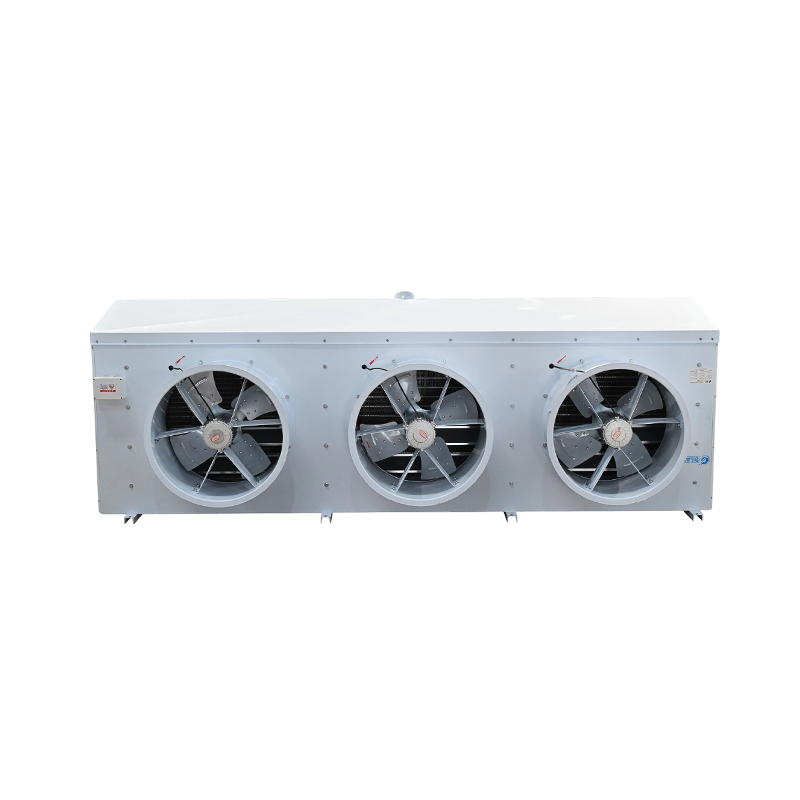 Aircooler Cold Blower with Electric DefrostFor refrigerated rooms, this unit cooler uses electric defrost and a powder-coated steel casing; check its model range against stated design conditions.View Product →
Match Capacity to Load, Airflow, and Temperature Difference
Capacity is not a single number on a label. Air cooler performance changes with room temperature, refrigerant temperature, airflow, humidity load, and defrost interruptions. A unit rated for a certain duty at one temperature difference can be wrong at another. The quotation should state the design conditions, not just nominal kW.
Ask for the room load breakdown: transmission through walls and floor, product pull-down, respiring produce, door openings, people, lights, motors, and defrost heat. Then check the required air circulation. A cooler that is too small will run long and dry product; one that is oversized may short-cycle, waste fan energy, and create uneven temperatures.
The chart is a planning aid, not a product rating. In a frozen store, defrost and fin spacing deserve early attention because frost changes airflow and coil performance. In a chilled room, product load and humidity often dominate. In a processing room, washdown and hygiene may outrank compact cabinet size.
Coil and Fin Spacing Decide Defrost and Cleaning Risk
Fin spacing is one of the most practical specifications on an air cooler, and one of the easiest to overlook. Tight fins pack more surface into a smaller cabinet, but they block air and hold frost. Wider fins trade compactness for longer running time between defrosts and easier cleaning. The right choice depends on frost, dust, packaging, and washdown.
As a working rule, discuss fin spacing with the supplier using the actual room conditions rather than a generic preference. A freezer with heavy door traffic, open product, or high humidity may need wider spacing and a more robust defrost plan. A clean, stable chilled room may tolerate tighter fins and a more compact coil. Coil coating, tube material, and drain pan slope matter as much as fin count when moisture and cleaning are present.
Airflow path and fan selection
Airflow must reach the product, not just leave the cooler. Ceiling-mounted units need clear discharge and return paths. Floor-mounted or dual-discharge arrangements can help in aisles, but they can also create short circuits if the room layout is poor. Fan selection affects noise, throw, and energy use; it should follow the room, not the other way around.
For a deeper walkthrough of condenser and cooler selection, see the air-cooled condenser and industrial air cooler guide.
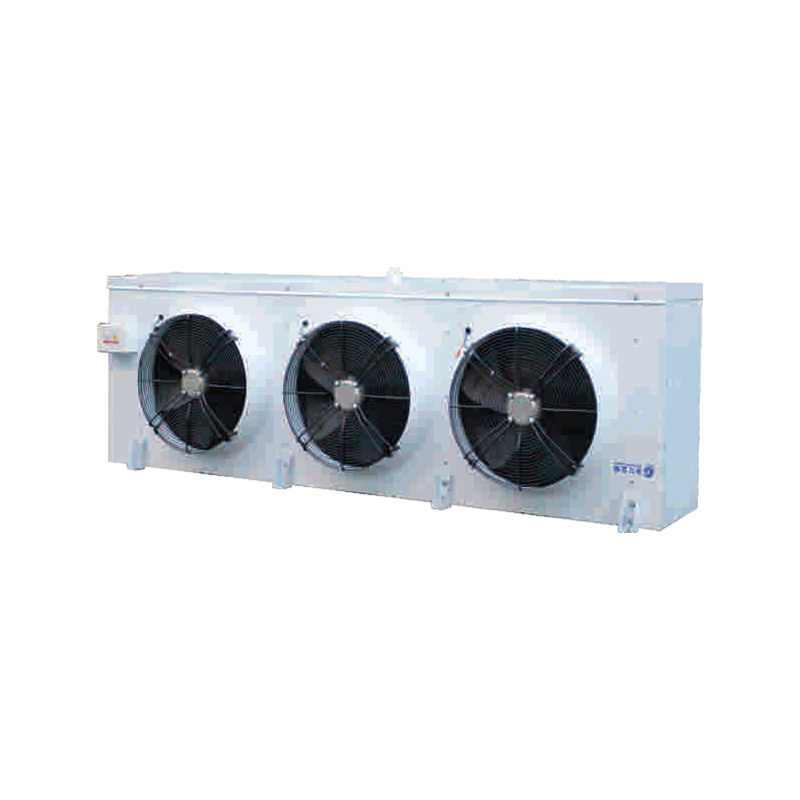 DD Series Cold Blower for Refrigeration and FreezingThis refrigeration air cooler uses electric defrost and mechanically expanded copper-aluminum coils; review its model capacities and defrost heaters for continuous cold-room operation.View Product →
Defrost Method: Choose by Frost, Water, and Downtime
Defrost is not an accessory. It is a repeated operating cycle that affects room temperature, product quality, energy use, and maintenance. The wrong method can add heat, create water problems, or lengthen downtime. The right method matches the frost load and the room's tolerance for interruption.
| Defrost method | Best fit | Watch-outs |
|---|---|---|
| Air defrost | Chilled rooms with light frost | Stops working below freezing; needs off-cycle time |
| Electric defrost | Freezers and simple control packages | Adds heat to the room; element and termination checks matter |
| Water defrost | Rooms with drainage and water access | Drain capacity, water quality, and freeze protection |
| Hot gas defrost | Suitable refrigeration systems with piping support | More valves and controls; needs correct design |
Water defrosting can be fast and effective in the right room, but it needs drain capacity, water quality, and freeze protection. Electric defrost is simple to control but adds heat to the room. Hot gas can be efficient in suitable systems but needs piping and controls. Air defrost works only above freezing and with low frost load.
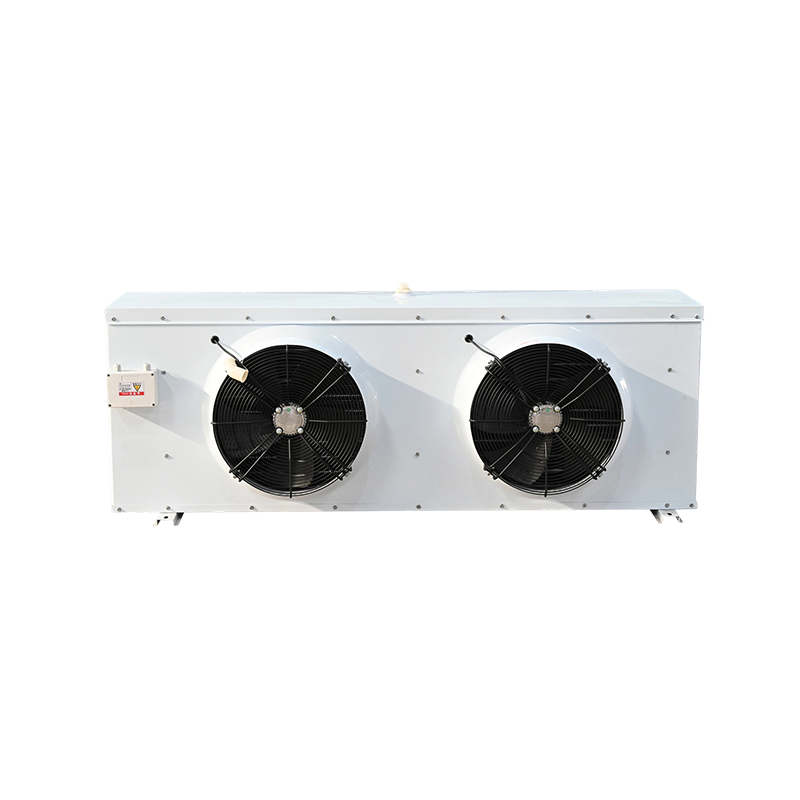 Water Defrosting Cold Blower for Low-Temperature CoolingThis low-temperature cooler automatically removes coil frost with water and airflow; compare its SDL, SDD, and SDJ models against drain capacity and maintenance needs.View Product →
Compare Quotes Like an Operator, Not a Shopper
Lowest price can be expensive if the quote hides weak assumptions. Two air coolers may look similar in a catalogue but differ in coil surface, fan motor efficiency, defrost controls, drain pan design, and service access. A useful comparison starts with the design conditions and ends with the maintenance plan.
- Design room temperature, refrigerant temperature, and required pull-down time.
- Load breakdown, including product, door openings, and defrost heat.
- Fin spacing, coil material, coating, and drain pan slope.
- Defrost method, cycle control, and water or drainage requirements.
- Airflow, throw, noise limit, and electrical data.
- Spare parts, service access, and warranty terms.
Also compare the physical fit. A cooler that cannot be removed for cleaning, or whose fan motors are hard to reach, will cost more over its life than the purchase price suggests. In food and pharmaceutical rooms, cleanability is part of performance.
Installation and Maintenance Shape Real Performance
Even a correctly selected air cooler can underperform if it is installed with a poor air path or maintained as an afterthought. Keep the coil clear, check fan rotation, confirm drain slope, and verify defrost termination. A cooler that ices at the drain or short-cycles on defrost will struggle regardless of nominal capacity.
- Leave service space for coil cleaning and fan access.
- Check that discharge air does not short-circuit back to the return.
- Confirm drain traps, pipe insulation, and freeze protection.
- Record defrost duration and room pull-down after commissioning.
- Inspect fan blades, motor mounts, and coil fins on a set schedule.
Track defrost duration, room pull-down, coil condition, and fan amps. These readings show whether the air cooler is keeping up or slowly losing performance. A rising defrost time or a growing temperature difference often appears before a full failure.
The Practical Bottom Line
Choose an air cooler by matching the room load, temperature, airflow, fin spacing, and defrost method before comparing cabinet size or headline price. For an evaporative cooler, confirm the climate and ventilation. For an industrial unit cooler, confirm the refrigeration duty and the maintenance reality.
If you are comparing industrial air coolers for a cold store, food plant, or pharmaceutical room, start with the room and operating profile. Then verify the coil, airflow, defrost, drain, and service access. That sequence keeps the purchase decision tied to performance instead of a catalogue photo.
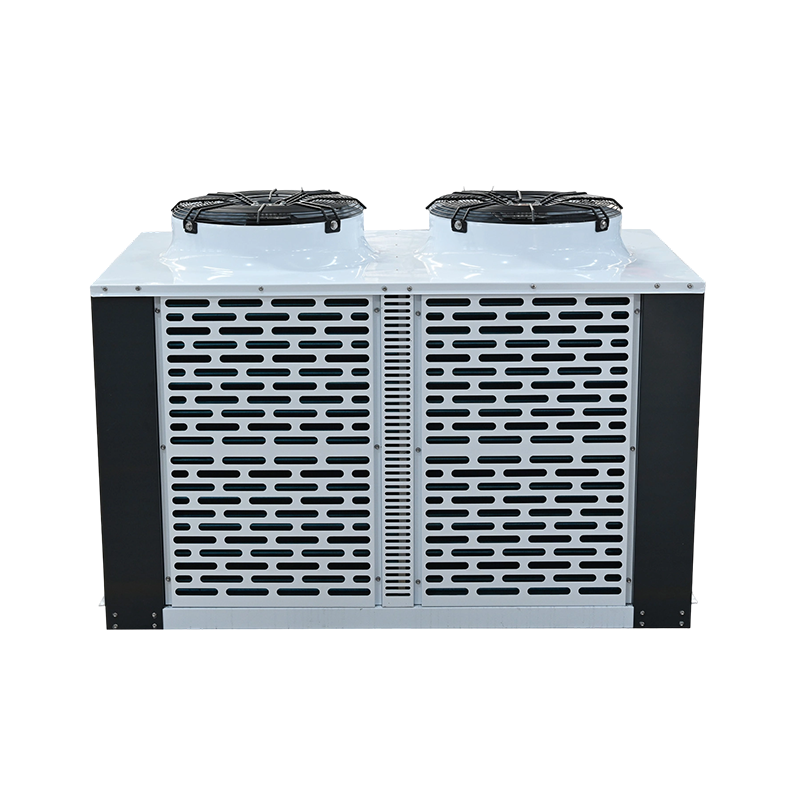
-
What Is an Industrial Air Cooler and How Does It Work in a Refrigeration System? Picture a medium-s...
READ MORE -
Industrial air coolers do the actual cooling work inside a cold room. It is the air cooler — the ev...
READ MORE -
What Air-Cooled Condenser and Industrial Air Cooler Technologies Actually Do An Air-Cooled Condense...
READ MORE -
Looking for an affordable, energy-saving alternative to air conditioners for residential, commercia...
READ MORE -
When a food-processing plant in a water-scarce region evaluates its refrigeration options, the cond...
READ MORE -
A 500-tonne cold store on an inland site has no dependable water supply, so the condenser decision ...
READ MORE

- Email: [email protected]
- Phone: +86-15258555916
- Add: 301 Punan Avenue, Pukou Street, Shengzhou City, Shaoxing City, Zhejiang Province.China
Copyright © Zhejiang Lanxi Refrigeration Equipment Co., Ltd. All Rights Reserved.
浙ICP备2022034605号-1
 Custom Refrigeration Equipment Manufacturers
